Every year, millions of Americans face unexpected medical bills that crush their finances. Some get stuck with debt they never agreed to. Others are pressured into signing forms they don’t understand. In 2025, patient protection laws are stepping in to stop these abuses - and New York is leading the charge.
What Changed in New York’s Healthcare Laws?
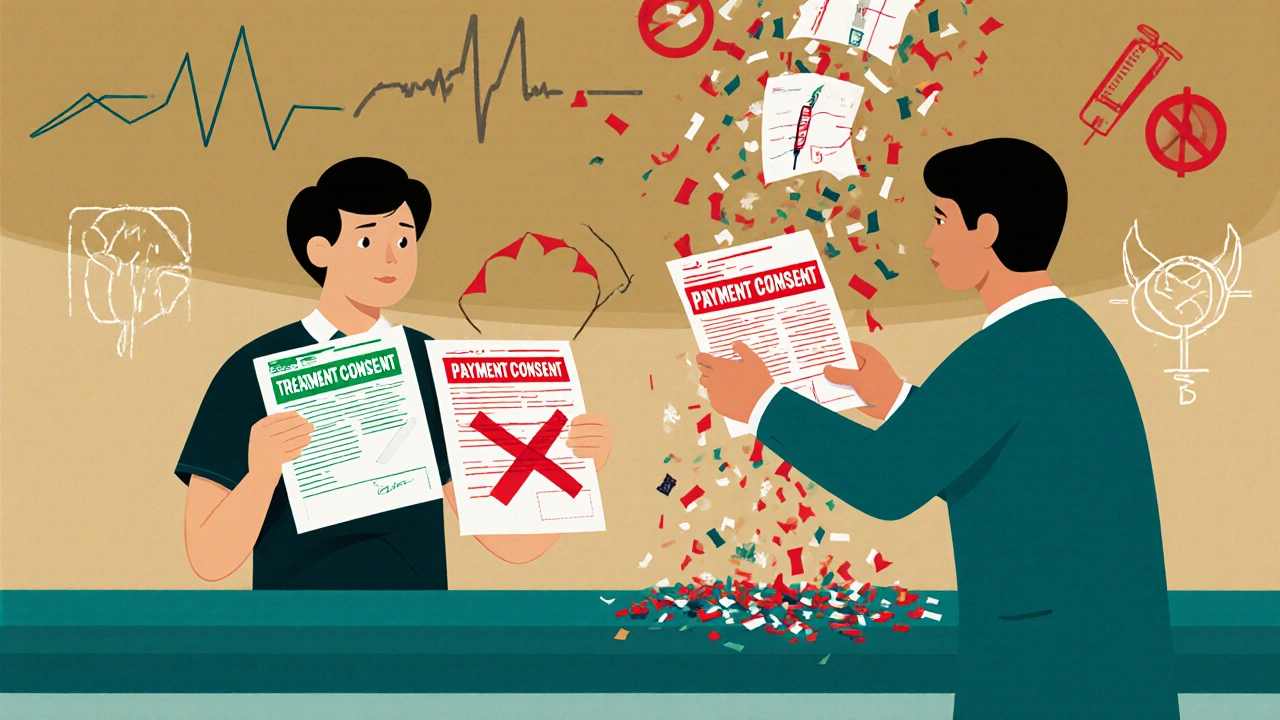
On October 20, 2024, three new state laws took effect that rewrote how healthcare providers handle patient consent and payments. These aren’t minor updates. They’re foundational changes designed to protect people from predatory billing practices that have gone unchecked for decades. One law, Public Health Law Section 18-c, made it illegal to combine consent for treatment with consent for payment. Before this, patients would sign one form at check-in that gave doctors permission to treat them and to bill them - often without realizing what they’d agreed to. Now, providers must get two separate signatures: one for care, one for payment. Violations can cost providers $2,000 per incident. But here’s the twist: as of August 7, 2025, enforcement of Section 18-c has been suspended. That doesn’t mean the law is gone. It means providers are waiting for clearer guidance from the state. Meanwhile, the other two laws are fully active and carrying real penalties.They Can’t Fill Out Your Credit Application for You
General Business Law Section 349-g shuts down a common trick used by clinics and hospitals: helping patients sign up for medical financing like CareCredit®. Before this law, staff would often fill out parts of the application, push patients to approve high-interest plans, or even suggest they "just sign here" to get their treatment faster. Now, that’s illegal. Providers can answer questions. They can explain options. But they can’t touch the application. The patient must complete every field themselves. Violations carry fines up to $5,000 per offense. This isn’t about stopping help - it’s about stopping manipulation. Medical financing products come with hidden fees, deferred interest, and credit checks that can damage your score. Patients deserve to make those decisions on their own, without pressure.No More Credit Cards on File Before Emergency Care
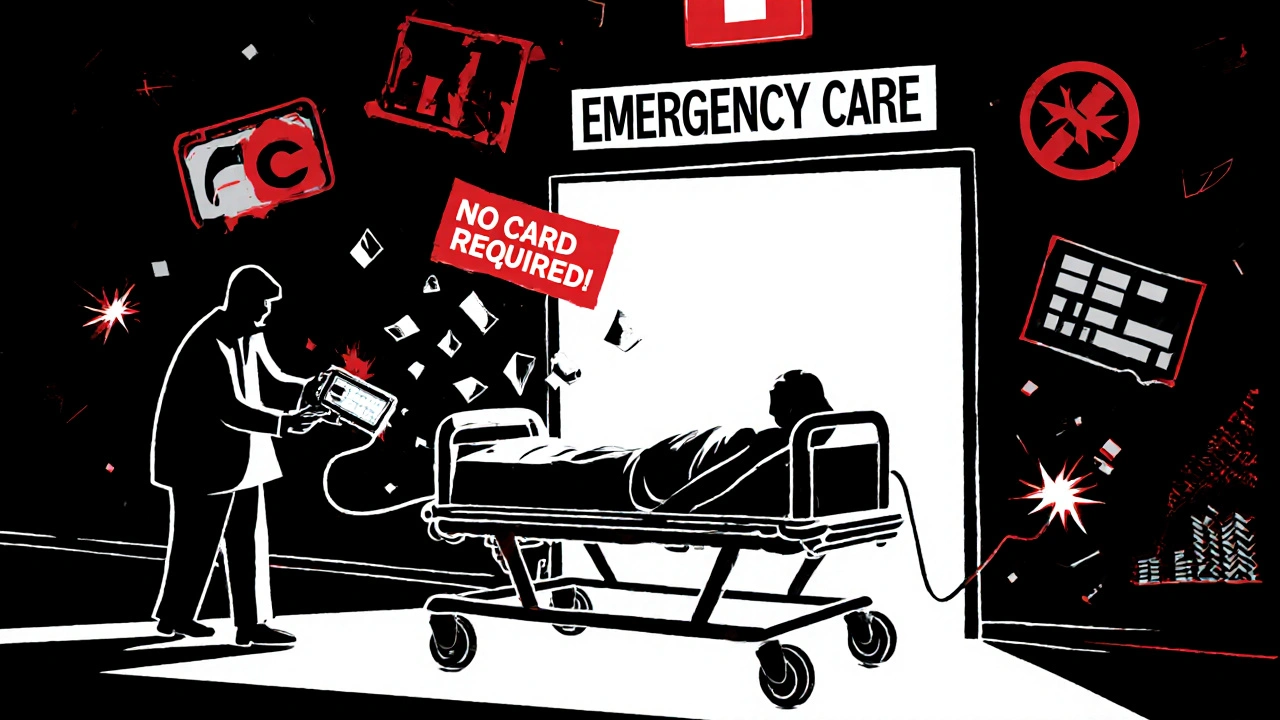
General Business Law Section 519-a is one of the strongest protections in the new package. It bans providers from requiring patients to hand over credit card details before receiving emergency or medically necessary services. Think about it: if you’re rushed to the ER after a car accident, you shouldn’t be asked to swipe a card before they stabilize you. Yet, that’s what happened in many places. Some hospitals even kept cards on file for future visits - a practice that left patients vulnerable to unauthorized charges. Now, providers must inform patients in writing that using a traditional credit card for medical bills removes their access to key protections. Only debt from healthcare-specific financing products - like CareCredit® - qualifies for state-level safeguards like limits on wage garnishment or liens on homes. Traditional credit card debt? No such luck.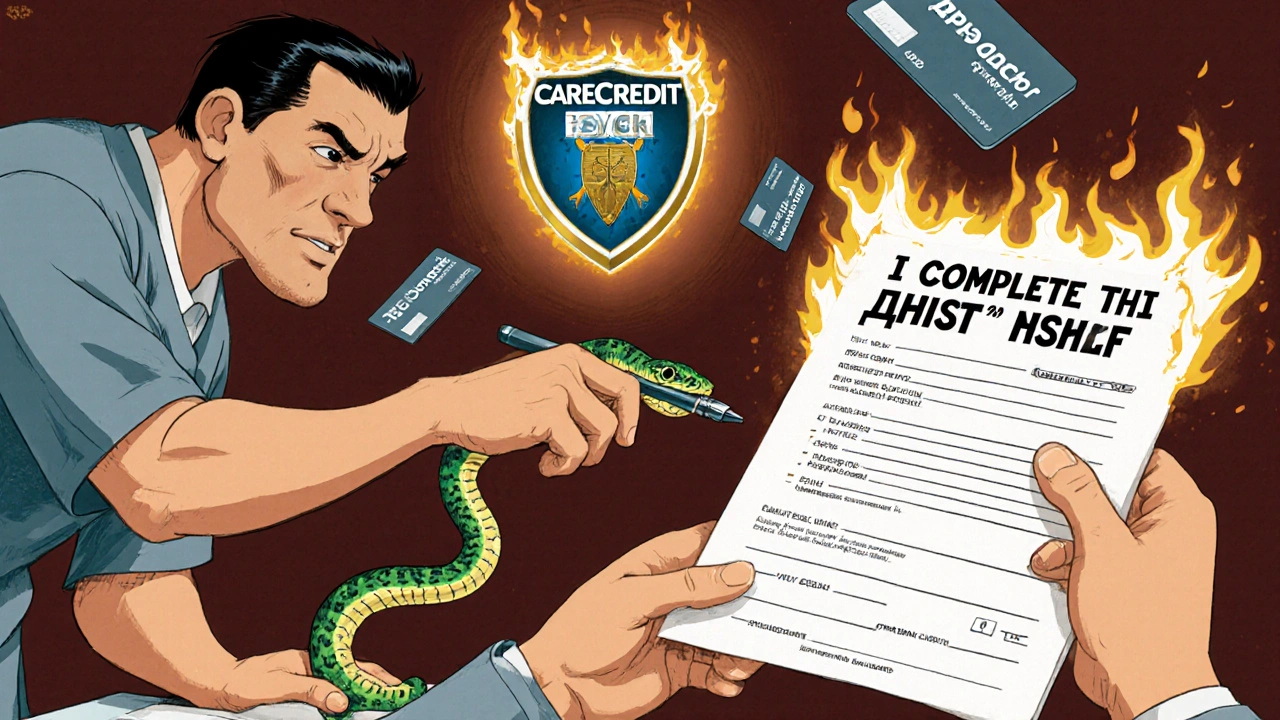
How This Compares to Federal Rules
You might think federal laws already cover this. They don’t - not fully. The No Surprises Act, which started in January 2022, stops surprise bills from out-of-network providers. If you go to an in-network hospital but get treated by an out-of-network anesthesiologist, you can’t be hit with a huge bill. That’s good. But it doesn’t touch what happens inside the hospital’s billing office. New York’s laws go further. They regulate how you’re asked to pay, what you’re told about your options, and whether you’re pressured into debt. Federal rules don’t require separate consent forms. They don’t ban credit card preauthorization. They don’t force providers to warn you about losing protections if you use a regular credit card. That’s why New York’s laws are seen as some of the toughest in the country. Other states are watching closely. Legal experts predict more will follow.Why This Matters to You
If you’ve ever been asked to sign a stack of papers at the doctor’s office, you’ve probably seen the problem. A 2022 Kaiser Family Foundation study found 74.6 million Americans had medical debt. By 2023, that number had grown to 100 million people carrying $195 billion in unpaid medical bills. The Consumer Financial Protection Bureau found that 9.2% of Americans under 65 had medical debt in collections. These aren’t just numbers. They’re people skipping meals, delaying rent, or losing their homes because of a single hospital visit. The new laws in New York are designed to break that cycle. They’re not perfect - the suspension of Section 18-c shows how messy implementation can be. But they’re a clear signal: patients deserve transparency, not traps.What Providers Must Do Now
Hospitals, clinics, and private practices in New York have had to overhaul their systems. That means:- Redesigning intake forms to separate treatment and payment consent
- Training staff to explain financing options without filling out applications
- Creating new scripts to warn patients about credit card risks
- Stopping the practice of keeping credit cards on file
- Keeping records of every consent and disclosure
What Patients Should Watch For
You don’t need a lawyer to protect yourself. Just know these three things:- If you’re asked to sign one form for both treatment and payment, say no. Ask for separate documents.
- If someone tries to help you fill out a CareCredit® or similar application, politely decline. Tell them you’ll complete it yourself.
- If you’re asked for a credit card before emergency care, you have the right to refuse. Providers cannot legally require it.
The Bigger Picture
New York’s laws didn’t come out of nowhere. They’re part of a national reckoning. In 2024, the CFPB finalized a rule to remove medical bills from credit reports entirely. That’s huge. For years, a single unpaid bill could tank your credit score - even if you were paying it off slowly or disputing the amount. Now, with medical debt no longer hurting credit scores, and with new state laws limiting how providers can pressure patients into debt, the system is slowly shifting. The goal isn’t to make healthcare free. It’s to make it fair. You shouldn’t have to choose between your health and your financial future.What’s Next?
The suspension of Section 18-c is a concern. But legal experts believe it’s temporary. The Department of Health is working on updated guidance. Meanwhile, the other two laws are active and enforceable. More states are likely to copy New York’s model. California, Illinois, and Massachusetts are already reviewing similar proposals. If you live outside New York, keep an eye out - your state might be next. For now, the message is clear: patients are no longer passive targets in the billing system. They’re protected consumers - and the law is finally catching up.Do these New York laws apply to me if I live in another state?
Not directly. These laws only apply to healthcare providers operating in New York State. But if you receive care in New York - even as a visitor - you’re protected under them. Other states are watching New York’s changes closely, and many are considering similar rules. If you’re concerned about medical debt, check your state’s health department website for updates on patient billing protections.
What happens if a provider still asks for my credit card before emergency care?
You have the right to refuse. Under New York’s General Business Law Section 519-a, providers cannot require a credit card before giving emergency or medically necessary services. If they insist, ask to speak to a supervisor. Document the incident - note the date, time, name, and what was said. You can file a complaint with the New York State Department of Health or the Attorney General’s office. Violations can result in fines of up to $5,000 per incident.
Can I still use CareCredit® or similar financing?
Yes - but only if you apply for it yourself. Providers can’t fill out the application, recommend specific plans, or pressure you into signing up. You’re free to choose financing if you want, but you must complete the process independently. Keep in mind: only debt from these healthcare-specific products qualifies for state protections like limits on wage garnishment. Using a regular credit card for medical bills removes those safeguards.
Why does it matter if my medical debt is from a credit card or a medical financing product?
Because the protections are different. Medical financing products like CareCredit® are regulated under health-specific laws. That means you may be shielded from wage garnishment, liens on your home, or aggressive collection tactics. Traditional credit card debt is treated like any other consumer debt - meaning collectors can sue you, take your wages, or damage your credit. New York’s laws force providers to tell you this difference upfront, so you can choose wisely.
Is there a federal law that protects me from medical debt?
Yes, but only partially. The No Surprises Act stops surprise bills from out-of-network providers. The CFPB’s 2024 rule removed medical bills from credit reports. But neither law controls how providers ask for payment, what forms they use, or whether they pressure patients into financing. That’s why states like New York are stepping in - to fill the gaps federal law leaves open.


11 Comments
jamie sigler-30 November 2025
Wow, so now I have to read three separate forms just to get my damn knee checked? I just want to leave with a prescription, not a law degree.
Bernie Terrien- 1 December 2025
This isn't protection-it's bureaucratic theater. Providers are now compliance bots, patients are still getting screwed via hidden copays and insurance loopholes. The real villain? The insurance middlemen.
Jennifer Wang- 1 December 2025
These legislative changes represent a significant advancement in patient autonomy and informed consent frameworks. The separation of treatment and payment consent aligns with ethical medical practice standards as codified by the AMA and WHO. Enforcement mechanisms, though temporarily suspended for Section 18-c, remain legally viable pending regulatory clarification.
stephen idiado- 3 December 2025
NYC overreach. You think this stops debt? It just shifts it to private equity billing firms. Real solution: single-payer. Everything else is window dressing.
Subhash Singh- 5 December 2025
Could you please clarify whether the prohibition on pre-authorizing credit cards applies to non-emergency procedures performed in an outpatient setting? The statutory language appears ambiguous in this context.
Geoff Heredia- 5 December 2025
They’re using this to track you. Credit card info? Consent forms? Don’t you see? This is the government’s first step to implant a medical ID chip. Next thing you know, they’ll deny you care if your credit score drops below 700. Wake up!
Tina Dinh- 6 December 2025
YESSSS!!! 🙌 Finally someone’s fighting the medical bill monsters!! This is what real change looks like!! 💪❤️ #PatientRights #NYCLead
Steven Howell- 6 December 2025
As someone who’s worked in public health policy across five states, I can say with confidence that New York’s approach is the most comprehensive in the U.S. The emphasis on distinguishing medical debt from consumer debt is not just legally sound-it’s culturally transformative. Other states should adopt this model, not because it’s trendy, but because it’s humane.
Robert Bashaw- 7 December 2025
They took away my right to let the nice receptionist help me sign up for CareCredit! Now I have to sit there alone, squinting at tiny fonts, wondering if I’m signing away my firstborn. This isn’t freedom-it’s emotional terrorism. I cried in the waiting room. My dog noticed. He licked my face. That’s the only love I got today.
Brandy Johnson- 7 December 2025
Another example of liberal overregulation. New York thinks it’s the center of the universe. This law won’t stop medical debt-it’ll just drive providers out of state. If you want real protection, stop complaining and get a better job with insurance. This isn’t a right-it’s a privilege earned through responsibility.
Peter Axelberg- 7 December 2025
Look, I get it. The system’s broken. But let’s be real-how many people actually read these forms anyway? I’ve been to three different hospitals in the last year, and every time, I just signed whatever they put in front of me. I didn’t even know there were separate consent forms until now. Honestly? I’m glad they’re forcing the issue. I just hope they make the paperwork actually readable. Like, no 12-point font with tiny disclaimers buried in the bottom. If I had to read all that, I’d probably just skip care altogether. And that’s the real tragedy here.