
It’s 2025. You’re taking a medication that’s been on the market for three years. You scroll through your phone and see a headline: “FDA Issues Warning on Common Blood Pressure Drug.” Your heart skips. Is this about yours? Should you stop taking it? Should you rush to the doctor? The truth is, you don’t need to panic - but you do need to be prepared.
Understand What a Drug Safety Alert Really Means
A drug safety alert isn’t a recall. It’s not always a sign that you’re in immediate danger. It’s a notice from the FDA or other health regulators that new data has surfaced - maybe from thousands of patient reports, or long-term studies - showing a possible risk tied to a medication. These alerts come after a drug has been approved and widely used. Clinical trials can’t catch every side effect. Real-world use does. For example, in May 2023, the FDA updated safety labels for all prescription stimulants used to treat ADHD. The new warning highlighted risks of misuse, addiction, and overdose - not because these drugs are suddenly dangerous, but because long-term data showed patterns that weren’t clear before. In July 2025, opioid manufacturers were told to revise prescribing guidelines for long-term use. In August 2025, the FDA removed a strict monitoring program for Clozapine, an antipsychotic, because new data showed the risks were lower than once thought. These aren’t random scares. They’re based on real data - over 1.2 million adverse event reports flow into the FDA’s MedWatch system every year. Most come from doctors and pharmacists. But patients like you? You’re part of that system too. Your reports matter.Don’t Rely on Social Media or News Headlines
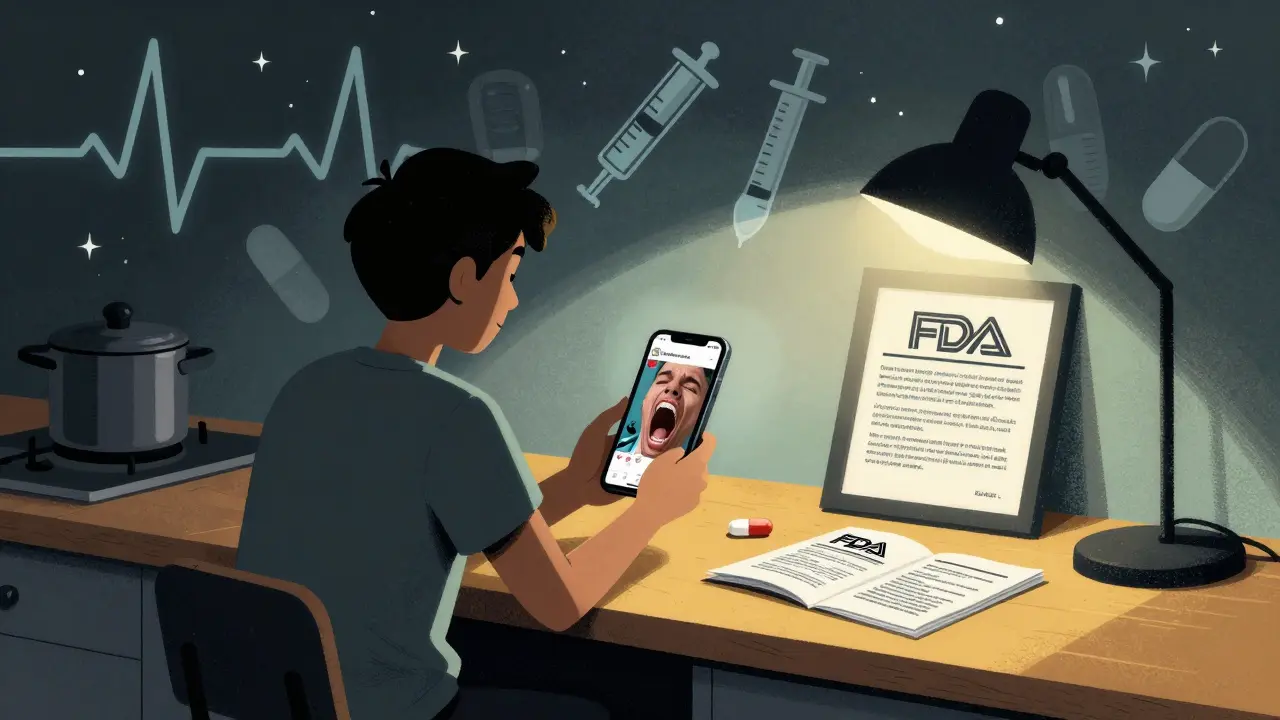
You see a viral post: “This drug causes brain damage!” Or a YouTube video with a dramatic voiceover: “Your doctor doesn’t want you to know this!” That’s not a safety alert. That’s fear-driven content. The FDA doesn’t post on TikTok. It doesn’t use clickbait. If you’re concerned, go straight to the source: FDA Drug Safety Communications. Search by your medication’s generic or brand name. You’ll find the full alert - with dates, specific risks, who it affects, and what doctors should do. Bring a printed copy to your appointment. Not a screenshot. Not a link. A printed page. Why? Because it shows you’ve done your homework. It saves time. And it tells your doctor you’re serious - not reactive.How to Bring It Up Without Sounding Confrontational
You walk into the clinic. Your appointment is 15 minutes. Your doctor is already behind schedule. How do you get them to listen? Don’t say: “I read your drug is dangerous. I’m quitting.” Say this instead: “I saw an FDA safety alert about [medication name], dated [month, year]. I wanted to understand if it applies to me, and if we need to adjust anything.” That’s it. Simple. Respectful. Opens the door for a real conversation. Studies show patients who use this exact phrasing are 68% more likely to have their concerns taken seriously. Those who say “My friend said this drug killed someone” or “I saw it on Facebook” are more likely to be dismissed - not because doctors are dismissive, but because they’re trained to rely on verified data, not anecdotes.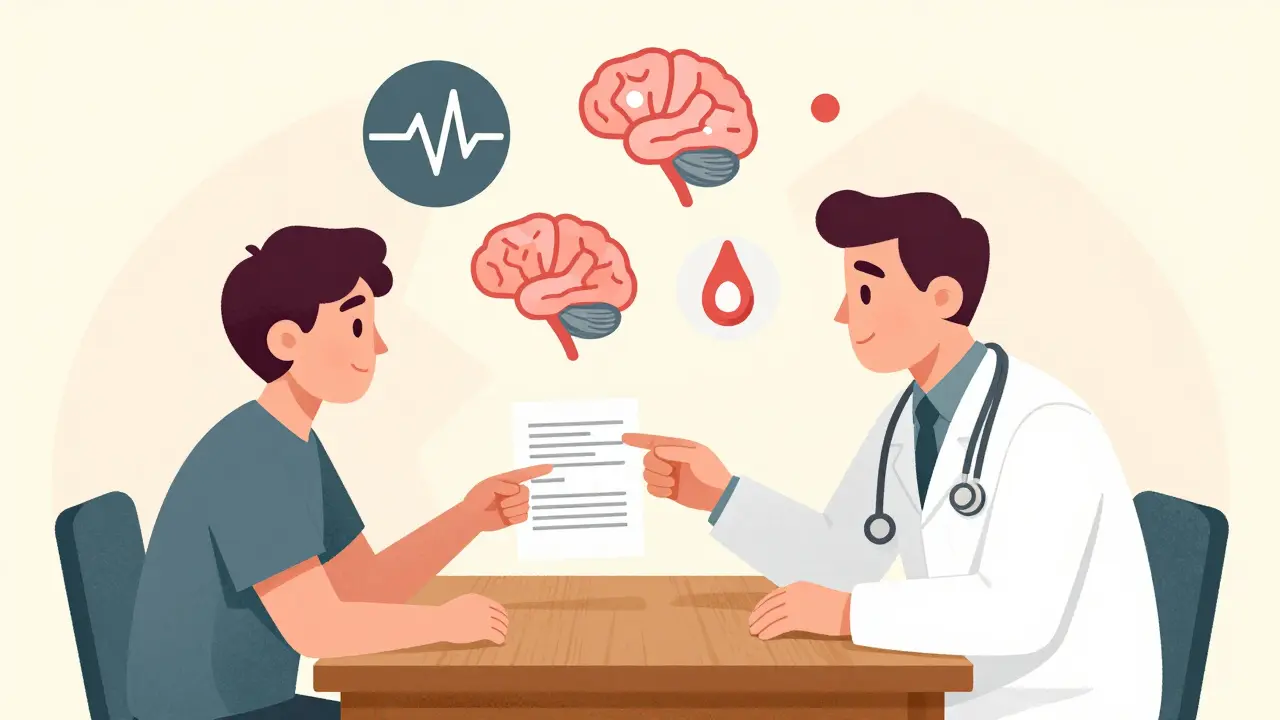
Ask the Right Questions
Once your doctor is listening, ask specific questions. Generic worries won’t help. Specific ones will. Here are the best ones to use:- Does this new information change how we should monitor my condition?
- Are there alternative medications that carry less risk for someone like me?
- Do I need additional tests - like blood work, EKGs, or MRIs - because of this alert?
- Is this risk something that affects everyone, or only certain groups - like older adults, people with kidney issues, or those on multiple medications?
Why Doctors Sometimes Overlook These Alerts
It’s not that they don’t care. It’s that they’re overwhelmed. Doctors get dozens of alerts a week - through email, pop-ups in their electronic records, text messages. Many are outdated, irrelevant, or duplicated. Studies show clinicians override 49% to 96% of these alerts in their systems. Sometimes, it’s because the alert doesn’t match the patient’s situation. Other times, it’s because the system is broken. That’s why your role matters. If you bring a clear, specific alert - printed, dated, from the FDA - you cut through the noise. You become the trigger that makes your doctor pause and look.What If Your Doctor Dismisses It?
Sometimes, they’ll say: “That alert doesn’t apply to you.” That’s often true. But if they say: “That’s just alarmist,” or “I’ve never seen that happen,” that’s a red flag. You have options:- Ask: “Can you show me the evidence that this doesn’t apply to me?”
- Request a referral to a specialist - like a cardiologist if it’s a heart drug, or a neurologist if it’s a brain-related medication.
- Ask for a second opinion. You have that right.
Timing Matters
Don’t wait until the end of your appointment to mention this. Don’t wait until you’re being handed your prescription. Raise it in the first two or three minutes. That’s when your doctor is most alert. When they’re still focused on you, not the next chart. A 2023 study in the Journal of General Internal Medicine found that patients who brought up safety concerns early were 50% more likely to have a meaningful discussion. Those who waited? Got a quick “We’ll monitor it” and moved on.What to Do After the Appointment
If your doctor says: “No changes needed,” ask for a plan.- Will you need a follow-up test in 3 months?
- Should you watch for specific symptoms - like dizziness, swelling, or unusual fatigue?
- Can you get a copy of the alert for your records?


11 Comments
Aliyu Sani-22 December 2025
man i just got hit with an alert for my BP med last week and honestly i thought my heart was gonna stop. but after reading the FDA page, it was just a warning for people with stage 4 kidney disease and i’m fine. it’s wild how noise overwhelms truth. the real danger ain’t the drug-it’s the algorithm feeding you panic. we need more folks like you who know how to dig past the clickbait.
Gabriella da Silva Mendes-22 December 2025
OMG I CANNOT BELIEVE THIS POST ISN’T ON TIKTOK YET?? 😱 Like seriously?? This is the most important thing I’ve read since the time I found out my coffee maker was a government spy. 🇺🇸🇺🇸🇺🇸 I’ve been telling my doctor for YEARS that Big Pharma is hiding the truth and now I have proof!! I printed 3 copies and handed one to my neighbor who’s on 17 meds and now she’s crying in the Walmart parking lot. #FDAisMyHero #StopTheCoverUp 🚨💊🔥
Kiranjit Kaur-23 December 2025
This is exactly what I needed today!! 🙌 I was scared after seeing a meme about my antidepressant causing ‘soul erosion’ (yes, that’s a real thing on Instagram now 😅) but I went straight to the FDA site like you said and found the alert was only for people over 70 on SSRIs + lithium. I’m 32 and in good health-so I breathed again. Thank you for reminding us that knowledge is calm. Also, signing up for FDA alerts now. My pharmacist will thank me later 💪❤️
Sam Black-23 December 2025
I’ve been a pharmacist for 18 years and I’ve never seen a post this balanced. Most people either panic or ignore. You’ve given folks the middle path: informed, not frantic. One thing I’d add-when you print the alert, don’t just bring the first page. Include the ‘Clinical Implications’ section. Doctors see 30 alerts a day. The ones who actually read the fine print? They’re the ones who notice you’ve done your homework. And that’s how you become a partner, not a patient. Also, if you’re on more than 5 meds, bring a list. Not a phone note. A paper list. It changes everything.
Cara Hritz-23 December 2025
Wait so you’re saying we should trust the FDA? Like the same FDA that approved Vioxx and then acted shocked when people started dying? LMAO. And you think printing a page helps? My cousin’s neurologist laughed at her when she brought in a 10-page PDF. She had to switch doctors. Also I think you meant ‘emoticon’ not ‘emoji’ and ‘pharmacist’ is spelled with an ‘s’ not a ‘z’ 🤦♀️
Jamison Kissh-23 December 2025
There’s a deeper layer here that no one’s talking about. The system isn’t broken-it’s designed to be noisy. Alerts flood in because the FDA is legally required to report *any* potential signal, no matter how weak. That’s why 96% get overridden. The real issue is epistemic humility. We’re told to trust science, but then bombarded with data that contradicts itself. Maybe the answer isn’t just printing PDFs-it’s learning to sit with uncertainty. Not every risk needs action. Sometimes, it just needs awareness. And patience.
Tony Du bled-24 December 2025
Yeah i read this and thought ‘finally someone gets it’. i took my lisinopril alert to my doc last week. didn’t say a word. just slid the paper across the desk. he looked at it, nodded, and said ‘yeah, we’re good’. didn’t even ask me if i’d read it. just knew. that’s the thing-most docs don’t need convincing. they just need you to show up with a clear signal. no drama. no yelling. just the facts. and maybe a coffee. i brought a coffee.
Kathryn Weymouth-25 December 2025
This is one of the most well-researched, thoughtful, and actionable pieces I’ve read on patient advocacy in years. The distinction between a safety alert and a recall is critical, and too few patients understand it. I’ve shared this with my book club, my mother’s support group, and even my sister’s oncologist. The phrasing suggestion-“I saw an FDA safety alert dated [month, year]”-is gold. It’s non-confrontational, evidence-based, and respects the clinician’s time. This should be required reading in medical schools.
Nader Bsyouni-26 December 2025
So you’re telling me the FDA is trustworthy because they didn’t say ‘brain damage’ in their alert? That’s the most naive thing I’ve read since someone said ‘trust the science’ during the 2020 mask debate. The system is a corporate puppet show. They remove monitoring for Clozapine? Sure. Because the drug maker paid for a ‘reanalysis’. You think your printed PDF changes anything? You’re just another cog in the machine. Wake up. The real danger isn’t the drug-it’s the illusion of control. You think you’re empowered? You’re just consuming a more polished version of the same scam.
Julie Chavassieux-27 December 2025
…
Herman Rousseau-28 December 2025
Just wanted to add-when you go to your doctor, don’t just bring the alert. Bring your medication list. And if you’re on more than three drugs, ask if they’ve checked for interactions. I had a patient last month who was on a blood pressure med, an antidepressant, and a painkiller-all flagged in separate alerts. But together? They caused a dangerous drop in heart rate. No single alert would’ve caught it. That’s why pharmacists exist. Talk to yours. They’re not just the people who hand you pills. They’re your safety net.