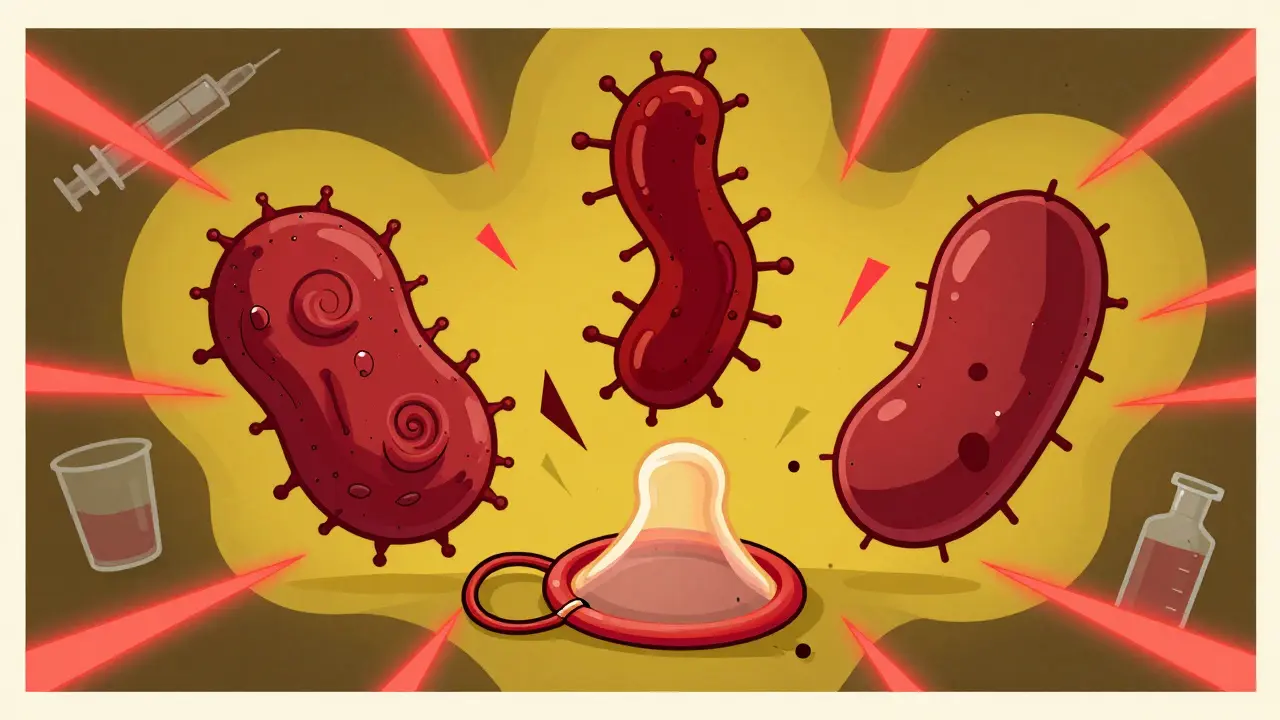
Every year, millions of people around the world get infected with chlamydia, gonorrhea, or syphilis - three of the most common bacterial sexually transmitted infections (STIs). In 2021 alone, the U.S. reported over 2.5 million cases of just these three infections. What’s alarming isn’t just the numbers, but how easily they spread and how often they go unnoticed. Many people don’t know they’re infected until serious damage has already happened - infertility, chronic pain, or even life-threatening complications. The good news? These infections are treatable. The better news? They’re preventable. But only if we understand how they work, how to catch them early, and how to stop them from spreading.
What You Need to Know About Each Infection
Chlamydia is caused by Chlamydia trachomatis a bacterium that infects the mucous membranes of the reproductive tract, rectum, and throat. It’s the most common bacterial STI globally, with 129 million new cases estimated in 2020. What makes chlamydia dangerous isn’t how it feels - it’s how it doesn’t feel. Up to 95% of infected women and half of infected men show no symptoms at all. When symptoms do appear, they’re often mistaken for something minor: unusual discharge, burning during urination, or spotting between periods.
Gonorrhea, caused by Neisseria gonorrhoeae a highly adaptable bacterium that thrives in warm, moist areas of the body, is the second most common. Like chlamydia, it often flies under the radar. But gonorrhea is more aggressive. It can spread to the bloodstream and cause disseminated gonococcal infection (DGI), which leads to joint pain, skin lesions, and even sepsis. In 2023, the CDC classified gonorrhea as an "urgent threat" because it’s becoming resistant to nearly every antibiotic we’ve used to treat it.
Syphilis, caused by Treponema pallidum a spiral-shaped bacterium that moves silently through the body, is less common but far more complex. It doesn’t just show up as one thing - it changes shape over time. The first sign is a painless sore, usually on the genitals or mouth. That sore heals on its own. Then, weeks later, a rash appears - often on the palms or soles - along with fever, swollen lymph nodes, and fatigue. If left untreated, syphilis can lie dormant for years before attacking the heart, brain, and nervous system. That’s why it was once called the "great imitator." In 2021, congenital syphilis (passed from mother to baby) jumped 273% in the U.S. since 2017. That’s not just a statistic - it’s a public health emergency.
How They’re Diagnosed
Testing is simple, but not everyone gets tested. Chlamydia and gonorrhea are usually detected with a urine sample or a swab from the genitals or throat. For women, a vaginal swab is just as accurate. Men who have sex with men should also get a rectal swab if they’ve had anal sex. Syphilis is different - it needs a blood test. The test looks for antibodies your body makes to fight the infection. In some cases, especially if neurological damage is suspected, a spinal fluid test may be needed.
One big mistake people make? Assuming no symptoms means no infection. That’s how chlamydia and gonorrhea spread so easily. You can have one, pass it on, and never know. That’s why regular testing is critical - especially if you’re under 25, have new partners, or don’t use condoms consistently. The CDC recommends annual testing for sexually active women under 25 and for anyone with new or multiple partners.
How They’re Treated
Here’s where things get practical. All three infections can be cured with antibiotics - if caught early.
For chlamydia, the standard is a single dose of azithromycin (1 gram) or a week-long course of doxycycline (100 mg twice daily). Cure rates are above 95% when taken correctly. But here’s the catch: you have to avoid sex for a full week after treatment. And your partner(s) need treatment too - even if they feel fine. Otherwise, you’ll just pass it back and forth.
Gonorrhea is trickier. Because of rising resistance, the CDC now recommends a one-two punch: a shot of ceftriaxone (500 mg) plus a single oral dose of azithromycin. Even this combo isn’t foolproof. In some areas, up to half of gonorrhea strains are already resistant to azithromycin. That’s why researchers are racing to get a new drug called zoliflodacin approved by 2025. Early trials show it works in 96% of cases.
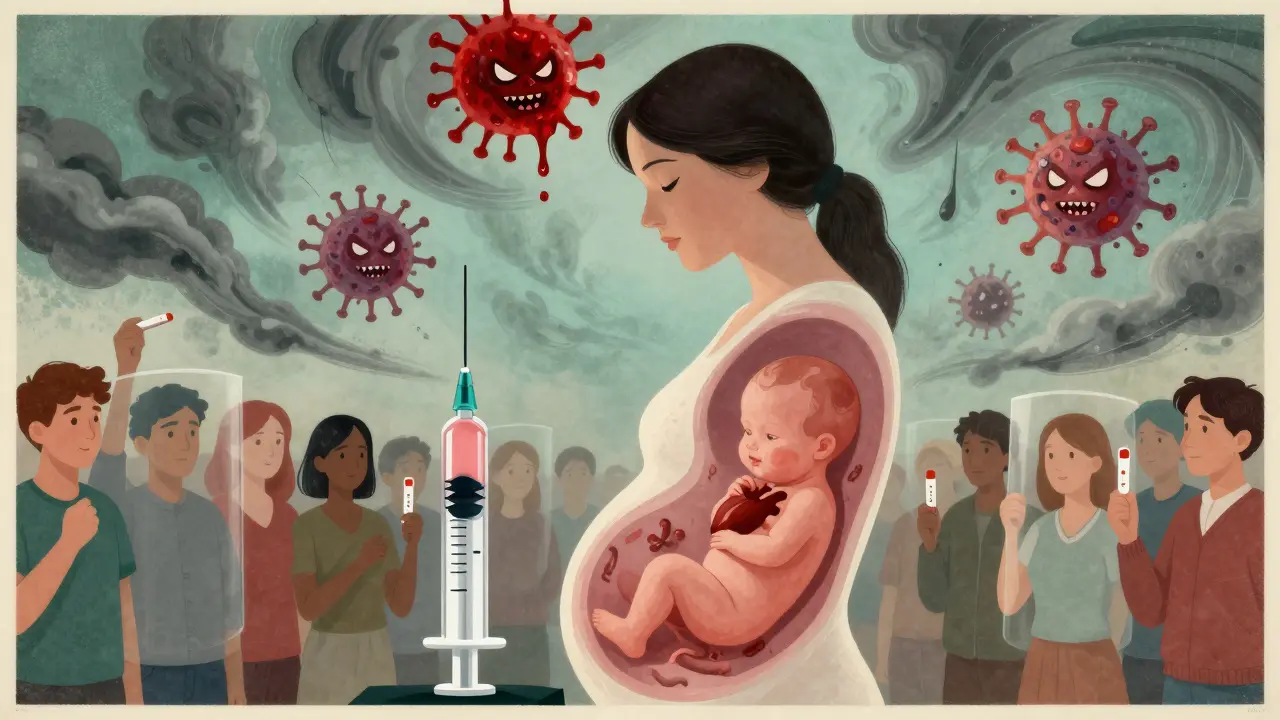
Syphilis treatment depends on how long you’ve had it. If it’s early (less than a year), one shot of benzathine penicillin G (2.4 million units) is enough. If it’s been longer - or if you’re pregnant - you need three weekly shots. Penicillin is still the gold standard. If you’re allergic, alternatives exist, but they’re less reliable. Pregnant women with syphilis must be treated immediately - otherwise, the baby can die, be born with severe deformities, or suffer lifelong neurological damage.
Why Partner Notification Matters
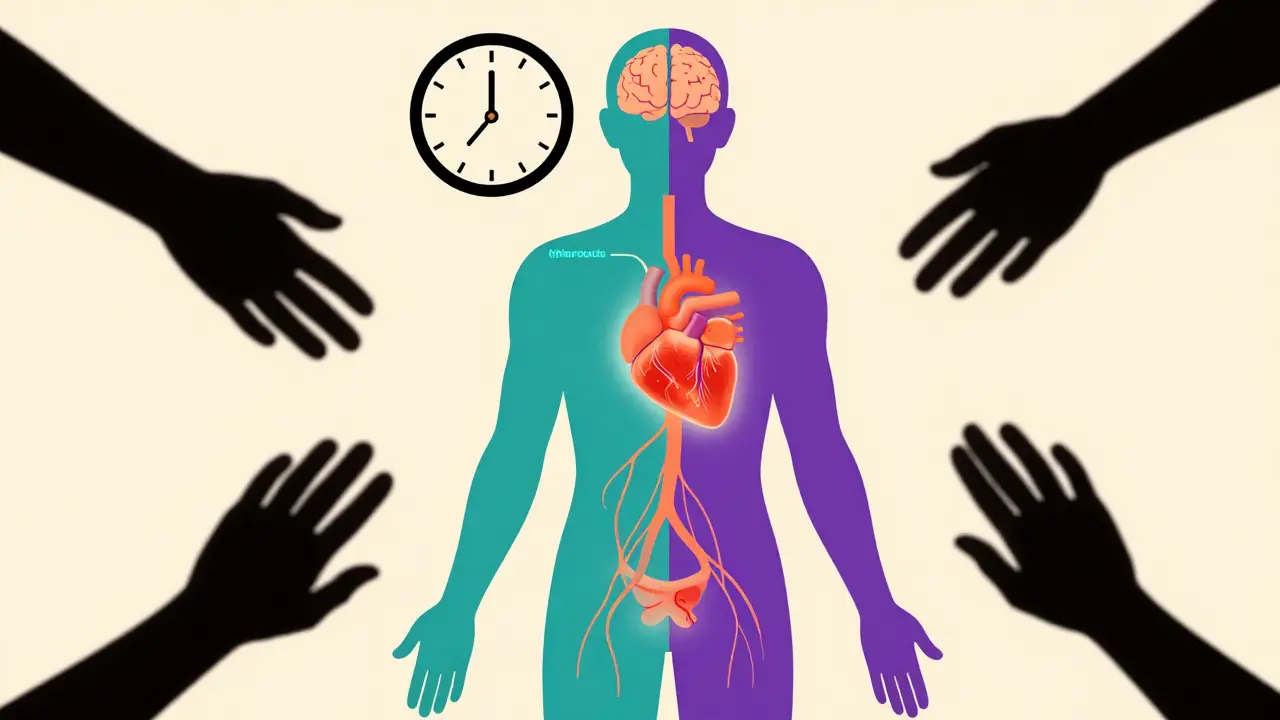
Treating yourself isn’t enough. If you test positive, you need to notify everyone you’ve had sex with in the past 60 days for chlamydia and gonorrhea - and up to 90 days for syphilis. This isn’t about blame. It’s about stopping the chain. Public health departments offer anonymous partner notification services. You can call them, and they’ll reach out without revealing your name. It’s confidential, effective, and often the only way to break the cycle.
The Rise of DoxyPEP
A new tool has emerged: doxycycline post-exposure prophylaxis, or DoxyPEP. If you’ve had condomless sex and are at high risk - like men who have sex with men or transgender women on PrEP - taking a single 200 mg dose of doxycycline within 72 hours can cut your risk of chlamydia, gonorrhea, and syphilis by up to 73%. But it’s not a magic bullet. Studies show it doesn’t work as well for cisgender women. And experts warn it shouldn’t replace condoms or regular testing. It’s a backup, not a replacement. The CDC currently recommends it only for high-risk groups because of concerns about antibiotic resistance in broader populations.
Prevention Is Still the Best Defense
Condoms reduce chlamydia and gonorrhea transmission by 60-90% and syphilis by 50-70%. That’s not perfect, but it’s powerful. Getting tested regularly, talking openly with partners, and avoiding sex when either of you has symptoms or are being treated are all essential. And if you’re under 25? Get tested at least once a year - even if you feel fine.
The Bigger Picture
These infections don’t just affect individuals - they strain entire health systems. In the U.S., treating STIs costs over $16 billion a year. Black Americans face rates 5-7 times higher than white Americans, not because of behavior, but because of unequal access to testing, care, and education. Young people under 25 account for half of all new cases, even though they’re only a quarter of the sexually active population. That’s a sign of systemic gaps - not individual failures.
The WHO’s Global STI Strategy 2021-2030 aims to slash syphilis in pregnant women by 90% and cut chlamydia and gonorrhea by 70%. That’s ambitious. But it’s possible - if we invest in testing, education, and equitable access. We already have the tools. What we need now is the will.
Can you get chlamydia or gonorrhea from kissing?
No, chlamydia and gonorrhea are not spread through kissing, hugging, or sharing utensils. They require direct contact with infected mucous membranes - usually through vaginal, anal, or oral sex. Throat infections from gonorrhea can happen from oral sex, but not from casual contact.
If I’m treated for an STI, can I get it again?
Yes. Treatment cures the infection, but it doesn’t protect you from future exposure. About 14-20% of young women get reinfected with chlamydia within a year, often because their partner wasn’t treated. That’s why retesting at three months is recommended - especially if you’re under 25 or have new partners.
Is syphilis still a problem today?
Absolutely. Syphilis is surging - especially among pregnant women and young adults. Congenital syphilis cases in the U.S. have tripled since 2017. Many cases go undiagnosed because symptoms can be mistaken for other conditions. Routine prenatal screening is now mandatory in many states, but gaps remain, particularly in rural and underserved areas.
Do I need to get tested if I’m in a monogamous relationship?
If both you and your partner have been tested recently and are truly monogamous, testing may not be urgent. But if either of you had previous partners, or if you’re unsure about your partner’s history, testing is still a smart precaution. STIs can lie dormant for months. A single test before getting exclusive can prevent years of complications.
Can antibiotics for STIs cause side effects?
Yes. Doxycycline can cause stomach upset, sun sensitivity, and yeast infections. Azithromycin may cause nausea or diarrhea. Ceftriaxone shots can be painful and cause swelling at the injection site. These are usually mild and temporary. The risks of untreated STIs - infertility, chronic pain, organ damage - are far greater.
What happens if I don’t treat syphilis?
Untreated syphilis can progress to tertiary syphilis, which can damage your heart, brain, nerves, eyes, bones, and liver. Symptoms include blindness, dementia, paralysis, and death. It can take 10-30 years to develop, but once it does, the damage is often irreversible - even with treatment.
Can I still have kids if I’ve had chlamydia or gonorrhea?
It depends. If caught early and treated, most people retain full fertility. But untreated chlamydia can cause pelvic inflammatory disease (PID), which scars the fallopian tubes and leads to infertility in 10-20% of cases. Gonorrhea can cause similar damage. Early detection and treatment are the best ways to protect your future fertility.
Are there new treatments coming for gonorrhea?
Yes. Zoliflodacin, a new oral antibiotic, showed 96% effectiveness in phase 3 clinical trials and could be approved by 2025. It works differently than current drugs, so it may bypass existing resistance. This is critical - gonorrhea is one of the few infections the CDC calls an "urgent threat" because we’re running out of options.




11 Comments
Joseph Cooksey- 3 February 2026
Let me tell you something that nobody else will: the real reason STIs are surging isn’t because people are careless-it’s because public health infrastructure has been gutted since the 90s. We used to have mobile clinics, school-based testing, and community outreach. Now? You gotta take a day off work, drive across town, wait in a line with five other people who look like they’re about to cry, and then pray the nurse doesn’t judge you. And don’t even get me started on how the system treats young women. You go in for a routine Pap smear, they act like you’re confessing to a crime. Meanwhile, the guy who slept with five people last weekend? No one asks him a thing. It’s not about behavior-it’s about power. And until we stop policing bodies and start investing in care, we’re just rearranging deck chairs on the Titanic.
Sherman Lee- 4 February 2026
Did you know the CDC is hiding something? 😳 They’ve known for years that DoxyPEP is just a Trojan horse for Big Pharma to push more antibiotics into the system. 🧪💀 I read a leaked memo that said the real goal is to make people dependent on daily pills so they’ll keep buying prescriptions. And don’t get me started on the syphilis numbers-those are faked to scare people into vaccines. 🤫 The government doesn’t want you to know the truth: STIs are a distraction from the real epidemic… 5G radiation weakening immune systems. 📶🤒
Lorena Druetta- 5 February 2026
Thank you for this thoughtful, well-researched post. It is deeply important that we approach sexual health with compassion and clarity. I work in community outreach, and I can tell you firsthand how many young people are terrified to ask for testing because they fear being shamed. This article doesn’t just inform-it heals. Please keep sharing information like this. You are making a difference in ways you may never fully see. 💛
Coy Huffman- 6 February 2026
man i just read this whole thing and i’m like… wow. i thought i knew stuff but wow. doxyPep is wild, right? like, i’ve been on prEP for years and never heard of this. also, i always thought syphilis was just a ‘old timey’ disease, but the fact that it’s tripled in babies?? that’s wild. also, i had gonorrhea once and the shot hurt like a motherfucker. not cool. also, i’m gonna get tested next week. thanks for the nudge.
Kunal Kaushik- 7 February 2026
Bro, this is so good. I’m from India, and here, people still think STIs are ‘Western problems.’ We need more of this. My cousin got chlamydia and didn’t tell anyone for a year because she thought it was just a UTI. She almost lost her fertility. Please share this with your friends. No shame. No stigma. Just science. 🙏❤️
Nathan King- 8 February 2026
While the data presented is statistically compelling, one must question the methodological rigor of the 2020 global incidence estimates for chlamydia. The WHO’s reliance on self-reported data and underfunded surveillance systems in low-income regions introduces significant sampling bias. Furthermore, the assertion that condoms reduce syphilis transmission by 50–70% lacks a clear citation from peer-reviewed meta-analyses. One wonders whether this article prioritizes emotional appeal over empirical precision. A more scholarly tone would elevate the discourse.
Wendy Lamb-10 February 2026
Testing once a year is non-negotiable. Period.
Antwonette Robinson-10 February 2026
Oh wow, so if I have sex with someone and then take a pill within 72 hours, I can just keep doing it without condoms? That’s not prevention-that’s a cheat code. 😏 Meanwhile, the CDC’s ‘high-risk’ category is basically just ‘gay men who like fun.’ Funny how they never mention straight people who have 10 partners and never test. Double standards much?
Ed Mackey-12 February 2026
just wanted to say thanks for the info. i didn’t know syphilis could mess with your brain. that’s wild. also, i think i might’ve had it once-my rash went away and i forgot about it. gonna go get tested. also, sorry for the typos, i’m typing on my phone and my thumbs are tired. 😅
Demetria Morris-13 February 2026
It’s disgusting how casual people have become about their bodies. If you’re having unprotected sex with multiple partners, you’re not ‘liberated’-you’re irresponsible. And now we’re giving out prophylactic antibiotics like candy? This isn’t progress-it’s moral decay dressed up as science. What happened to abstinence? To self-control? To knowing your boundaries? We’ve turned health into a consumer product, and now we’re paying the price.
Prajwal Manjunath Shanthappa-14 February 2026
DoxyPEP? How quaint. One must assume the CDC’s recommendation is a mere Band-Aid on a hemorrhaging wound. The real issue lies in the systemic collapse of sexual education-replaced by fear-based, abstinence-only dogma in public schools. One cannot cure ignorance with antibiotics. The fact that we are even debating post-exposure prophylaxis instead of mandating comprehensive, evidence-based curricula from age 12 is a national tragedy. And let us not forget: the pharmaceutical-industrial complex profits from both infection and cure. A cynical, yet undeniable truth.