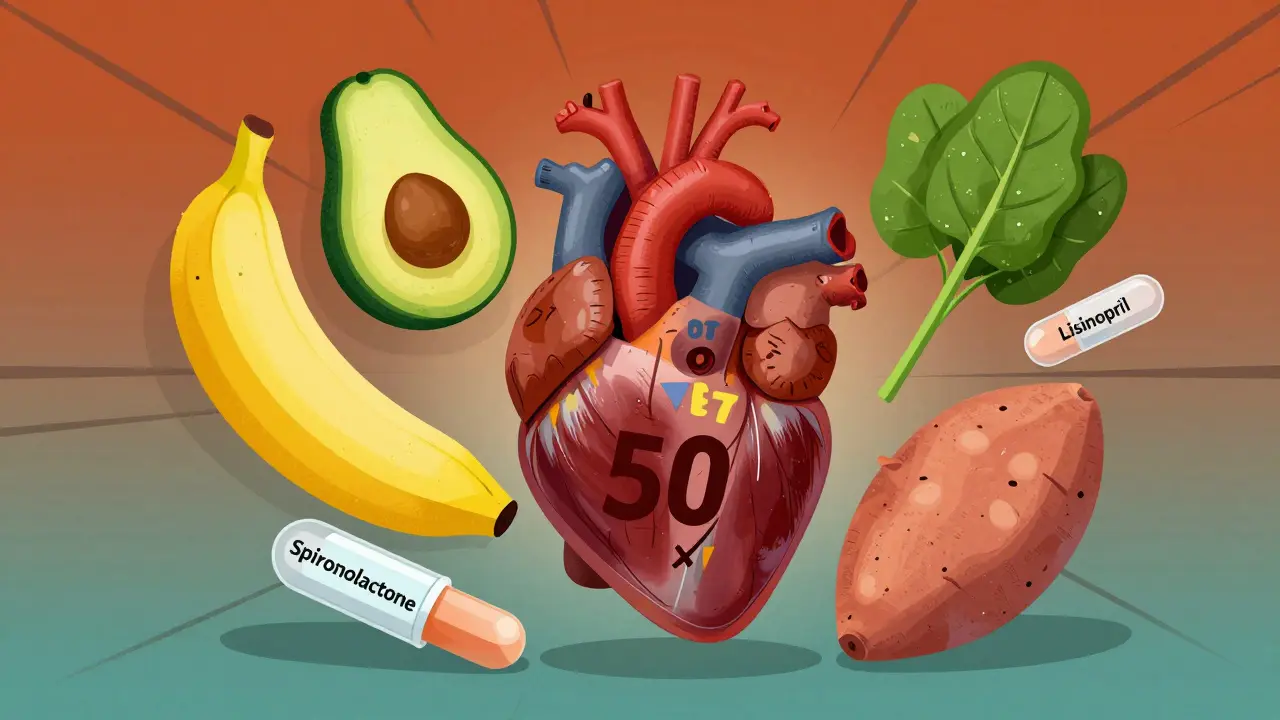
When you’re taking blood pressure medication, what you eat can be just as important as the pill you swallow. Many people don’t realize that common foods like bananas, spinach, and sweet potatoes can interact with their meds in ways that are either helpful-or dangerous. If you’re on an ACE inhibitor, ARB, or potassium-sparing diuretic, your body’s potassium balance is already being carefully managed. Adding too much potassium from food can push you into a risky zone called hyperkalemia, where potassium levels in your blood climb too high. But cutting it out entirely? That can undo the very benefits your medication is trying to deliver.
How Potassium Works With Your Blood Pressure Meds
Potassium isn’t just a mineral you get from fruit. It’s a key player in how your blood vessels relax and how your kidneys flush out sodium. High sodium intake is a major driver of high blood pressure, and potassium helps counter it by telling your kidneys to pee out more salt. Studies show that getting enough potassium can lower systolic blood pressure by over 5 mm Hg-similar to some medications. That’s why the American Heart Association recommends 3,500 to 5,000 mg daily.But here’s the catch: some blood pressure drugs make your body hold onto potassium. ACE inhibitors like lisinopril and ARBs like losartan block a hormone that normally tells your kidneys to dump potassium. Potassium-sparing diuretics like spironolactone do the same thing-except they don’t make you pee out sodium, just water. So if you’re on one of these, your potassium levels are already on the rise. Add a few extra servings of avocado or coconut water, and you might cross the line.
Which Medications Interact With Potassium?
Not all blood pressure meds play nice with potassium. Here’s the breakdown:- ACE inhibitors (lisinopril, enalapril, ramipril): Increase potassium by blocking aldosterone
- ARBs (losartan, valsartan, irbesartan): Same mechanism as ACE inhibitors
- Potassium-sparing diuretics (spironolactone, eplerenone, triamterene): Directly reduce potassium excretion
- NSAIDs (ibuprofen, naproxen): Can reduce kidney function, indirectly raising potassium
- Trimethoprim (antibiotic): Mimics potassium-sparing effects
These are the meds you need to watch. If you’re on any of them, your doctor should be checking your potassium levels regularly-usually every 3 to 6 months. But even with monitoring, people still get into trouble. A 2023 study found that nearly 1 in 5 patients on these drugs who increased their potassium intake without medical advice saw their levels climb above 5.0 mmol/L-the danger zone.
High-Potassium Foods: What to Eat (and What to Limit)
You don’t need to give up potassium-rich foods entirely. But you do need to know what’s in them-and how much you’re eating.| Food | Potassium (mg per serving) | Typical Serving Size |
|---|---|---|
| Sweet potato | 542 | 1 medium |
| Spinach (cooked) | 839 | 1 cup |
| Avocado | 975 | 1 whole |
| Banana | 422 | 1 medium |
| Salmon | 534 | 3 oz cooked |
| Coconut water | 600 | 1 cup |
| White beans | 829 | 1 cup cooked |
| Dried apricots | 1,101 | 1/2 cup |
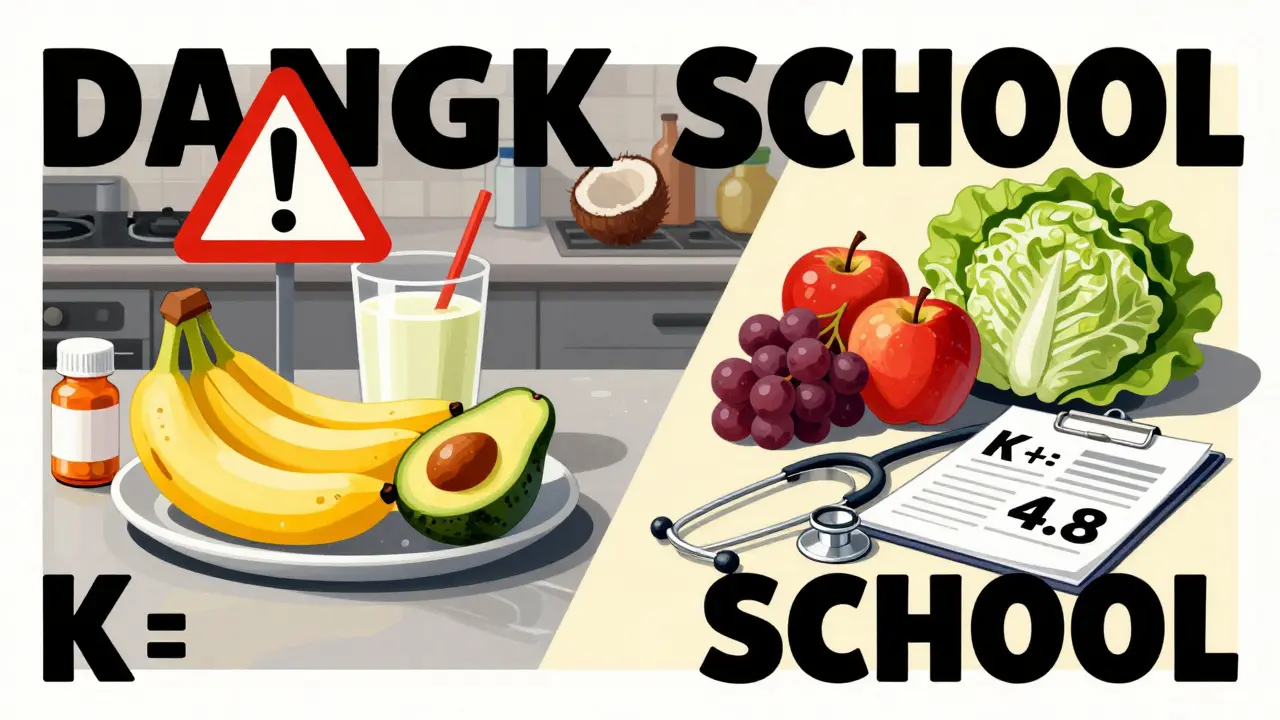
These foods aren’t bad. In fact, they’re nutrient-dense and heart-healthy. But if you’re on a potassium-retaining medication, eating two avocados a week might be fine. Eating one every day? That’s a problem. One patient I spoke with was eating three bananas daily because he’d heard they were “good for blood pressure.” His potassium hit 5.4 mmol/L-well above the safe limit. He ended up in the ER with muscle weakness and irregular heartbeat.
When High Potassium Turns Dangerous
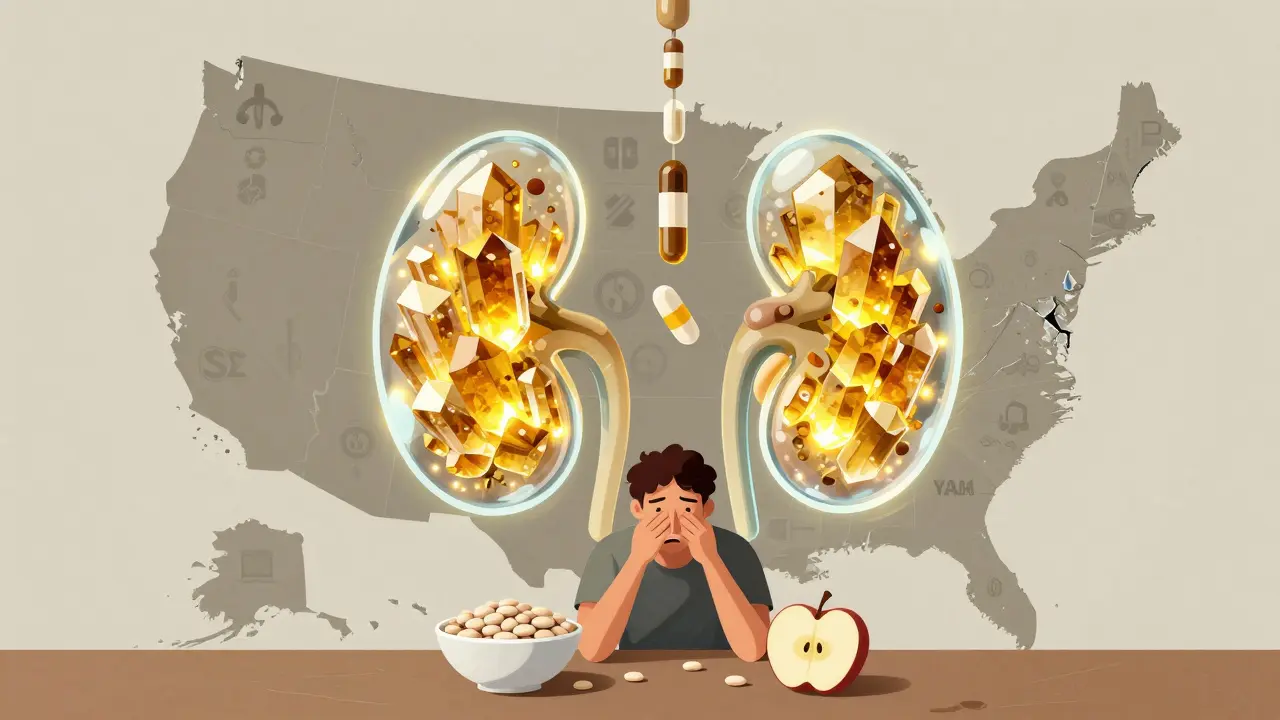
Hyperkalemia doesn’t always show symptoms-until it’s too late. Mild cases might just feel like fatigue or a funny tingling in your fingers. But when potassium climbs above 6.0 mmol/L, your heart’s electrical system starts to misfire. That can lead to dangerous arrhythmias, cardiac arrest, or sudden death.People with kidney problems are at highest risk. If your eGFR is below 60 mL/min/1.73m², your kidneys can’t clear potassium efficiently. Even a normal diet can push levels too high. A 2019 study found that 28% of patients with moderate kidney disease developed hyperkalemia while on ACE inhibitors, even without eating extra potassium.
And here’s the scary part: many people don’t know they have kidney issues. It’s silent. That’s why checking your potassium isn’t just about your meds-it’s about your overall health. If you’ve never had a kidney function test, ask your doctor.
What About Potassium Supplements and Salt Substitutes?
Don’t take potassium pills unless your doctor tells you to. Over-the-counter supplements are limited to 99 mg per tablet in the U.S.-not enough to help, but enough to cause trouble if you’re already on a potassium-retaining drug.Salt substitutes are even trickier. Many contain potassium chloride instead of sodium chloride. A quarter-teaspoon can pack 250-700 mg of potassium. If you’re using one of these while on losartan or spironolactone, you’re essentially doubling down on potassium intake. A 2020 meta-analysis showed that salt substitutes raised serum potassium by 0.3-0.5 mmol/L on average in people on RAAS inhibitors. That might not sound like much-but in someone with borderline kidney function, it’s enough to cross the line.
Real Stories: What Patients Are Doing
On patient forums, the stories are mixed. Some people have successfully lowered their blood pressure by eating more potassium-rich foods-under medical supervision. One man on Reddit switched from bananas to blueberries and strawberries while on spironolactone. His potassium dropped from 5.4 to 4.8 mmol/L. His blood pressure improved, and he felt better.Others weren’t so lucky. A survey of 872 hypertension patients found that 19% had symptoms like muscle cramps, palpitations, or dizziness after increasing potassium intake. Seven percent ended up in the ER. One woman took a potassium supplement because she read it was “natural.” She was on lisinopril. Her potassium hit 6.2. She needed emergency treatment.
The difference? Medical guidance. The ones who succeeded worked with their doctor. They got blood tests. They tracked their food. They didn’t guess.
What You Should Do
If you’re on blood pressure medication, here’s your action plan:- Know your meds. Are you on an ACE inhibitor, ARB, or potassium-sparing diuretic? If yes, potassium needs attention.
- Get tested. Ask for a serum potassium test and an eGFR (kidney function) test. Do this before making any big dietary changes.
- Track your intake. Use an app like Cronometer or the National Kidney Foundation’s Potassium Counts app. Log your meals for a week. You’ll be surprised how fast potassium adds up.
- Don’t swap foods blindly. If you’re eating a lot of bananas, try switching to lower-potassium fruits like apples, grapes, or berries. Swap spinach for iceberg lettuce. Choose white rice over brown.
- Ask about salt substitutes. If you’re using one, talk to your doctor. It might be doing more harm than good.
- Don’t take supplements. Not unless your doctor says so. And even then, only under close monitoring.
Timing matters too. Taking your ACE inhibitor with a high-potassium meal can spike absorption. Some doctors recommend taking these meds at least 2 hours before or after a big potassium-rich meal.
What Your Doctor Should Be Doing
Most patients don’t get enough education on this. A 2023 survey of 1,200 primary care doctors found that while 72% gave general dietary advice, only 38% specifically warned about potassium-medication interactions. That’s a gap.Doctors should be:
- Checking potassium levels at baseline, then again at 2 and 4 weeks after starting or changing a potassium-retaining med
- Providing a simple list of high- and low-potassium foods
- Asking about salt substitutes and supplements
- Monitoring kidney function regularly
There are new tools helping. The FDA now requires potassium warnings on ACE inhibitor and ARB packaging. In 2023, the FDA approved a new drug called patiromer (Veltassa) that binds potassium in the gut, letting patients eat more potassium-rich foods without risking high levels. It’s not for everyone-but it’s a game-changer for those who need both the medication and the diet.
Final Thoughts
Potassium isn’t the enemy. It’s a lifeline-for your heart, your blood pressure, your kidneys. But like any powerful tool, it needs to be used wisely. If you’re on blood pressure medication, especially ACE inhibitors or ARBs, don’t assume more potassium is always better. Work with your doctor. Get tested. Track your food. Make smart swaps. The goal isn’t to avoid potassium-it’s to find your sweet spot.Most people eat too little. But if you’re on the right meds, eating too much can be just as dangerous as eating too little. Balance isn’t just a buzzword. It’s your safety net.
Can I still eat bananas if I’m on blood pressure medication?
Yes-but in moderation. One banana a day is usually fine if you’re healthy and have normal kidney function. But if you’re on an ACE inhibitor, ARB, or potassium-sparing diuretic, eating more than one a day could push your potassium too high. Talk to your doctor, get your levels checked, and consider swapping some bananas for lower-potassium fruits like apples, grapes, or blueberries.
What are the signs of too much potassium?
Early signs include muscle weakness, tingling or numbness in hands and feet, nausea, and irregular heartbeat. More severe symptoms-like chest pain, difficulty breathing, or fainting-mean you’re in danger. If you feel any of these and are on potassium-retaining meds, seek medical help immediately. Don’t wait.
Is potassium from food different from potassium supplements?
Yes. Potassium from whole foods is absorbed slowly and comes with fiber, water, and other nutrients that help your body manage it. Supplements, even in small doses, deliver a concentrated burst that can overwhelm your kidneys-especially if you’re on medication that holds onto potassium. That’s why doctors never recommend supplements unless you have a diagnosed deficiency and are under close supervision.
Should I stop eating spinach and sweet potatoes?
No. These are nutritious foods. But if you’re on a potassium-retaining medication, portion and frequency matter. Instead of having spinach every day, try it 2-3 times a week. Swap sweet potatoes for regular potatoes (which have less potassium) occasionally. The key isn’t elimination-it’s balance and awareness.
How often should I get my potassium checked?
If you’re starting or changing a potassium-retaining blood pressure med, get tested at baseline, then again at 2 and 4 weeks. After that, every 3-6 months is standard. If you have kidney disease or are older, your doctor may want checks every 2-3 months. Don’t wait for symptoms-by then, it might be too late.
Can I use salt substitutes if I’m on blood pressure meds?
Be very careful. Most salt substitutes contain potassium chloride. One-quarter teaspoon can add 250-700 mg of potassium. If you’re on an ACE inhibitor or ARB, this can raise your blood potassium levels significantly. Talk to your doctor before using them. In many cases, reducing sodium without adding potassium is safer.
What’s the safest way to increase potassium safely?
The safest way is through whole foods, but only after confirming your kidney function and current potassium levels are normal. Focus on moderate portions of a variety of fruits and vegetables-like apples, cabbage, green beans, and berries. Avoid loading up on just one high-potassium food. And always work with your doctor to adjust your diet alongside your medication.



8 Comments
doug b-29 January 2026
Been on lisinopril for 5 years. Ate two avocados a day like a champ. Got a weird tingling in my fingers one morning. Went to the ER. Potassium was 5.8. They gave me insulin and IV fluids. Now I eat one banana a week and call it a day. Don’t be that guy.
SRI GUNTORO-30 January 2026
It’s disgusting how people treat their bodies like vending machines. You pop a pill and then think you can eat whatever you want. Potassium isn’t a snack. It’s a biological balance. If you don’t respect your own physiology, you deserve what happens. Stop blaming the system. Start taking responsibility.
Rhiannon Bosse-31 January 2026
So let me get this straight - the FDA makes drug companies put warnings on the bottle, but your doctor still forgets to tell you? 😂 And now we’re supposed to trust the same system that gave us OxyContin and 2008? I’m just saying… if you’re on spironolactone and eating coconut water, you’re basically playing Russian roulette with your heart. And no, I’m not paranoid. I read the studies. The studies are terrifying.
Timothy Davis- 1 February 2026
Everyone’s acting like potassium is some kind of poison, but the real issue is the lack of baseline testing. If you don’t check eGFR before starting an ACE inhibitor, you’re not managing risk - you’re gambling. And the fact that only 38% of docs even mention potassium? That’s malpractice by negligence. Also, white rice over brown? Please. The glycemic index difference is negligible. Focus on fiber, not arbitrary food swaps.
Brittany Fiddes- 2 February 2026
Let’s be honest - this is why America’s healthcare is a joke. You get a pill, a pamphlet, and a shrug. Meanwhile, in the UK, we get proper dietitian consultations when we’re prescribed these meds. You think you’re saving money by skipping the test? You’re just funding the ER down the line. And yes, I’m British. I know what proper care looks like.
Ambrose Curtis- 2 February 2026
Yo I was on losartan and started eating like 3 bananas a day cause my buddy said it ‘lowers BP’. One day I couldn’t lift my arm. Felt like my whole body was asleep. Went to urgent care. K+ was 5.6. They told me to cut back and get a blood test every 3 months. Now I use Cronometer - it’s wild how fast potassium adds up. Spinach smoothie? 800mg. Add a sweet potato? 500 more. Boom - you’re at 1300 before lunch. Don’t guess. Track it.
Linda O'neil- 3 February 2026
Don’t panic. Don’t quit your spinach. Just be smart. I’m a nurse and I see this all the time. People think ‘natural’ means ‘safe’ - but potassium from food is slow, and your body can handle it if your kidneys are working. The problem is combo plays: salt substitute + avocado + banana + meds = trouble. Do a 7-day food log. Talk to your doc. You got this. Small changes, big results.
Robert Cardoso- 4 February 2026
The entire narrative here is built on a false premise: that potassium is the variable. It’s not. It’s the kidney function. If your eGFR is below 60, no amount of dietary restraint will save you from hyperkalemia if you’re on a RAAS inhibitor. The real solution isn’t food logs - it’s replacing these drugs with SGLT2 inhibitors or ARNI therapy. Potassium is just the symptom. The disease is outdated hypertension protocols.