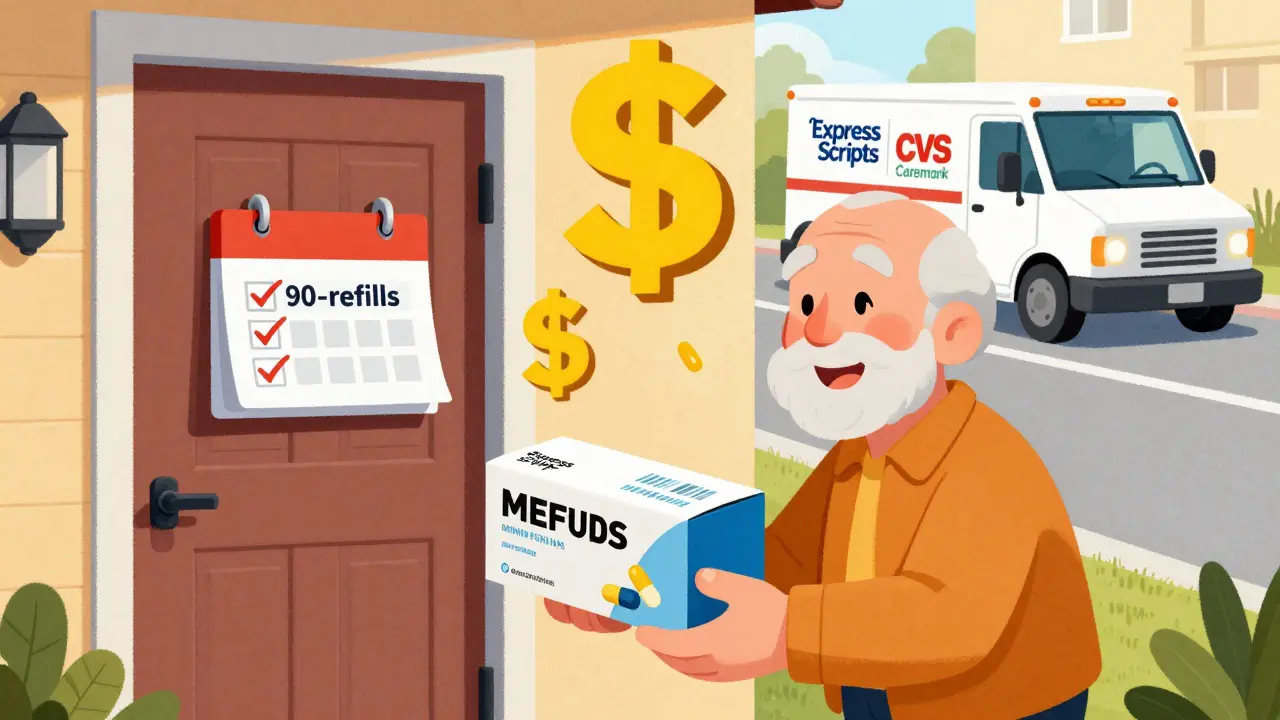
Buying your monthly pills through the mail isn’t just a convenience-it can save you hundreds a year. But is it right for everyone? If you’re on long-term meds for high blood pressure, diabetes, or cholesterol, you’ve probably seen the option: mail-order pharmacy. It sounds simple: order your 90-day supply, wait a few days, and your pills show up at your door. No driving, no waiting, no extra copay for a third month. But there’s more to it than that.
How Much Can You Actually Save?
Most health plans offer mail-order pharmacies as part of your prescription benefits. The math is straightforward: you pay for two months, get three months of medication. If your 30-day supply costs $15 at your local pharmacy, a 90-day mail-order refill typically costs $30-not $45. That’s $15 saved every three months, or $60 a year per drug. Multiply that by three or four maintenance meds, and you’re looking at $200-$300 saved annually. For people on expensive brand-name drugs, the savings can hit $500 or more. Big pharmacy benefit managers (PBMs) like Express Scripts, CVS Caremark, and OptumRx handle most of these orders. They negotiate directly with drugmakers and use automated systems to cut costs. These systems also help them fill prescriptions with generic versions when possible, which drives savings even further. According to industry reports, mail-order pharmacies deliver brand-name drug discounts that are 4-7 percentage points better than retail pharmacies. That’s not just a small edge-it’s a real financial advantage.Why People Stick With It: Adherence and Accuracy
It’s not just about saving money. People who use mail-order pharmacies take their meds more consistently. Studies show a 5-15% improvement in adherence for chronic conditions like heart disease and diabetes. Why? Because you don’t have to remember to refill every 30 days. Automatic refills kick in. Your prescriptions sync up so you get everything at once. No more running out on a weekend. Accuracy matters too. Retail pharmacies make errors-wrong dosage, wrong pill, mislabeled bottle. Mail-order pharmacies use robotic dispensing systems with error rates of just 0.016%, compared to 0.04% at local pharmacies. That’s a 60% drop in mistakes. For someone on five or more medications, that’s a big deal. Fewer errors mean fewer hospital visits, fewer complications, and lower long-term health costs.The Hidden Downsides: Delivery Risks and Delays
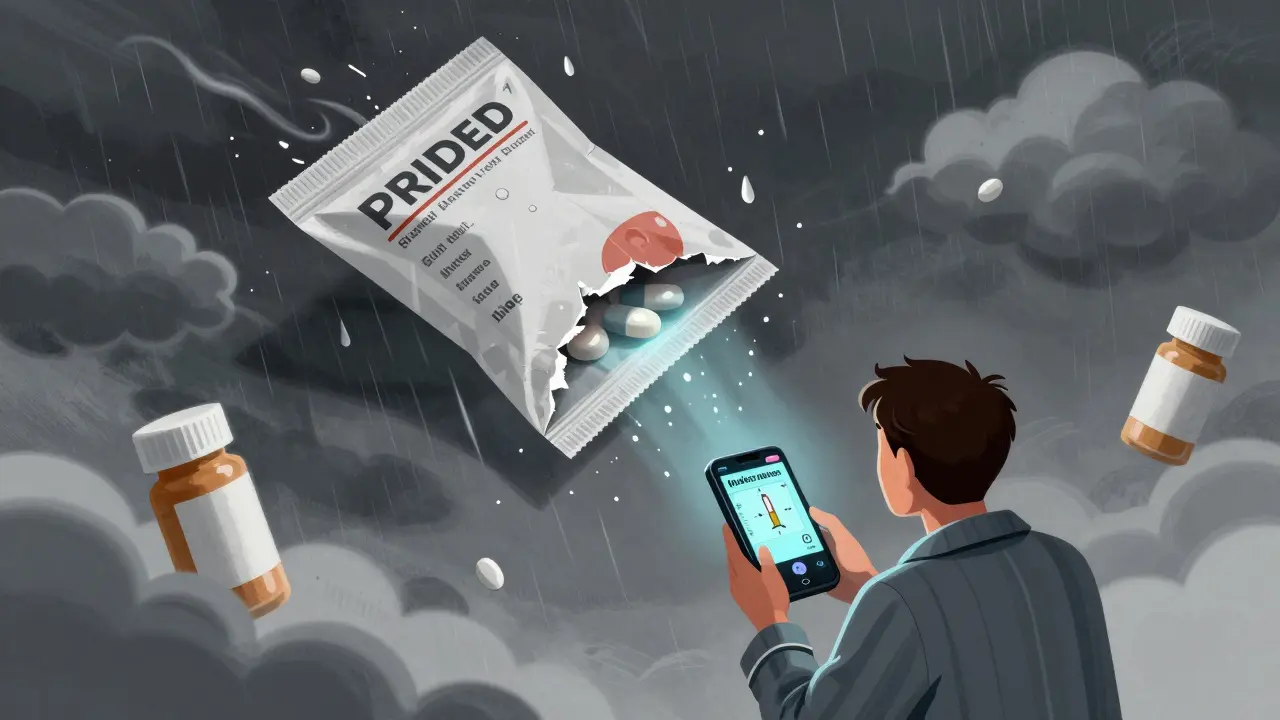
It’s not all smooth sailing. Mail-order isn’t built for emergencies. If you need an antibiotic right now, or your pain meds ran out and you’re stuck in bed, waiting five to seven days isn’t an option. You’ll end up paying full retail price at a pharmacy anyway-and you’ll still be in pain. Delivery issues happen. About 0.5% of shipments get lost, damaged, or delayed. One user on Reddit shared how their blood pressure meds vanished in transit. They had to pay $80 out-of-pocket for an emergency refill. That kind of stress can undo the savings. Even if your plan covers the replacement, the delay can break your routine. And if you’re traveling, or your mailbox gets flooded, or you’re away for the holidays, your meds might not arrive when you need them.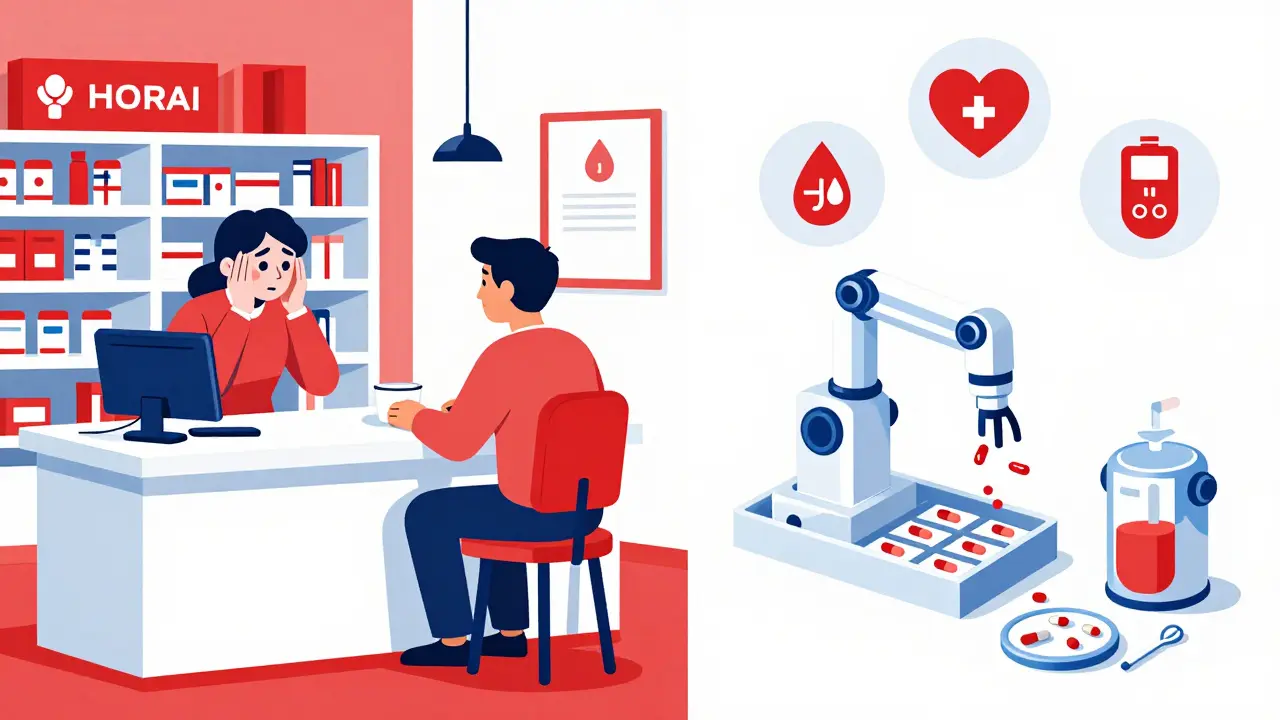
Who Benefits the Most?
Mail-order pharmacy works best for people who:- Take three or more maintenance medications regularly
- Live in rural areas with limited pharmacy access
- Have mobility issues or can’t drive easily
- Prefer fewer trips to the pharmacy
- Want to avoid the hassle of refilling every month
How to Get Started (And Avoid Common Mistakes)
Switching is easy, but people mess it up in small ways:- Check your plan first. Not all mail-order services are the same. Some require you to use a specific pharmacy. Others let you choose.
- Transfer your prescriptions. Most PBMs have a portal or phone line to transfer from your current pharmacy. Don’t wait until you’re out of meds to start.
- Set up auto-refills. This is the #1 way to avoid running out. You’ll get a notification when your order ships.
- Know your copay. Some plans charge the same for mail-order and retail. Others charge more. Make sure you’re not paying extra.
- Use tracking. Express Scripts and OptumRx now offer real-time GPS tracking. Know when your package is coming.
What’s Changing in 2025?
The industry is evolving fast. In early 2024, Express Scripts rolled out GPS tracking for every shipment. CVS Caremark announced in March 2025 that they’ll offer same-week delivery to 85% of U.S. addresses. That’s a big shift. It’s no longer just about saving money-it’s about speed and reliability. Cold-chain delivery for biologics (like insulin or rheumatoid arthritis drugs) is also improving. These meds need refrigeration. Now, mail-order pharmacies are using insulated packaging and temperature sensors to make sure they arrive safe. But there’s a cloud on the horizon. The 2023 Lower Drug Costs Now Act proposed limiting how much mail-order pharmacies can charge different copays. If passed, it could cut patient savings by up to 40%. That’s why some experts warn: don’t assume these savings will last forever.Final Verdict: Worth It?
If you’re on long-term meds, mail-order pharmacy is one of the easiest ways to cut costs without changing your treatment. The savings are real. The adherence boost is proven. The error rates are lower. But it’s not perfect. It’s not for emergencies. It’s not for everyone. If you’re someone who needs quick answers, hates waiting, or lives in a place where delivery is unreliable, stick with your local pharmacy. The smart move? Try it for one or two of your regular prescriptions. See how it feels. Set up auto-refills. Track your package. If it works, expand. If not, switch back. No penalty. No pressure. You’re in control.Millions of Americans use mail-order pharmacy every year. The system isn’t flawless, but for those who use it right, it’s one of the quietest wins in healthcare.

12 Comments
Aliza Efraimov-28 December 2025
This is the kind of post that makes me want to hug a pharmacist. I’ve been on mail-order for my diabetes meds for three years now-saved over $800 last year alone. No more rushing to the pharmacy at 7 PM because I forgot to refill. The auto-refill saved my life when I was stuck in the hospital last winter. Don’t let the naysayers scare you-this isn’t a luxury, it’s a lifeline.
David Chase-30 December 2025
STOP. RIGHT. NOW. 🚨 This isn’t ‘saving money’-it’s corporate greed disguised as convenience. PBMs are gouging you with ‘generic’ switches you didn’t ask for. My cousin got the wrong blood thinner because ‘it was cheaper.’ Now he’s in dialysis. And you’re celebrating? 😤
Manan Pandya-31 December 2025
While the cost savings are compelling, one must also consider the structural dependency on third-party logistics. The error rate differential, though statistically significant, masks the human cost of delayed access in rural or underserved regions. Furthermore, the reliance on automated systems may inadvertently erode patient-provider rapport, which remains an essential component of therapeutic adherence. A nuanced evaluation is warranted.
Kevin Lopez- 1 January 2026
Mail-order = 90-day supply. Retail = 30-day. Math is simple. PBMs negotiate bulk. Generics > brands. Adherence up. Errors down. Done.
Tamar Dunlop- 2 January 2026
As a Canadian resident who has navigated both public and private pharmaceutical systems, I find this model profoundly aligned with principles of equitable access. The reduction in transportation burden for elderly and disabled populations is not merely economic-it is a matter of dignity. That said, the absence of regulatory safeguards in U.S. PBM structures remains a troubling anomaly.
Duncan Careless- 3 January 2026
Used this for my BP meds last year. Got a box with the pills missing. Called them. Took 11 days to get a replacement. Ended up paying $90 at CVS. Still worth it? Maybe. But don’t act like it’s flawless. I’ve had better service from my local pharmacy in India than this US system.
Samar Khan- 4 January 2026
OMG I HATE THIS SO MUCH 😭 I got my insulin delivered 3 days late and I almost died. Now I cry every time the mailman comes. Why does this even exist?? 💔
Russell Thomas- 5 January 2026
Oh wow, so you’re telling me the same system that charges $1,200 for insulin but calls it ‘mail-order savings’ is somehow a win? 😏 Let me guess-you also think Amazon Prime is a social service. Maybe try living on a fixed income before you write a manifesto on convenience.
Nisha Marwaha- 6 January 2026
From a pharmacoeconomic standpoint, the marginal cost reduction achieved through economies of scale in PBM-managed mail-order channels demonstrably improves the cost-per-QALY metric for chronic disease management. The integration of robotic dispensing and real-time inventory analytics reduces systemic waste by an estimated 18–22%, per APhA 2024 benchmarks. Furthermore, adherence metrics correlate strongly with reduced hospitalization burden-particularly in Medicaid populations where non-adherence costs exceed $300B annually. That said, the fragmentation of formulary controls remains a critical vulnerability.
Joe Kwon- 8 January 2026
I switched my dad to mail-order for his statins and blood thinners. He’s 76, lives alone, hates driving. First month, he missed the tracking email and panicked. But after we set up SMS alerts? He hasn’t missed a dose in 14 months. I’m not saying it’s perfect-but when you help someone stay healthy, you don’t throw the baby out with the bathwater. 🙌
Nicole K.- 8 January 2026
If you’re too lazy to go to the pharmacy, you probably shouldn’t be taking pills at all. This is just another way people are giving up responsibility. I’ve been on the same meds for 20 years and I walk to the pharmacy every month. It’s called discipline.
Paige Shipe- 8 January 2026
you guys are so naive. i work for a pBM. we dont care if you live or die. we care about the 30% margin on generics. your 'savings' are our profit. your 'convenience' is our logistics loophole. your 'adherence' is our compliance metric. dont thank us. dont trust us. and for god's sake, dont let your meds be shipped in a box that says 'medications' on it. we've had 37 incidents of theft this year alone. and yes, we still use the same packaging. 😘