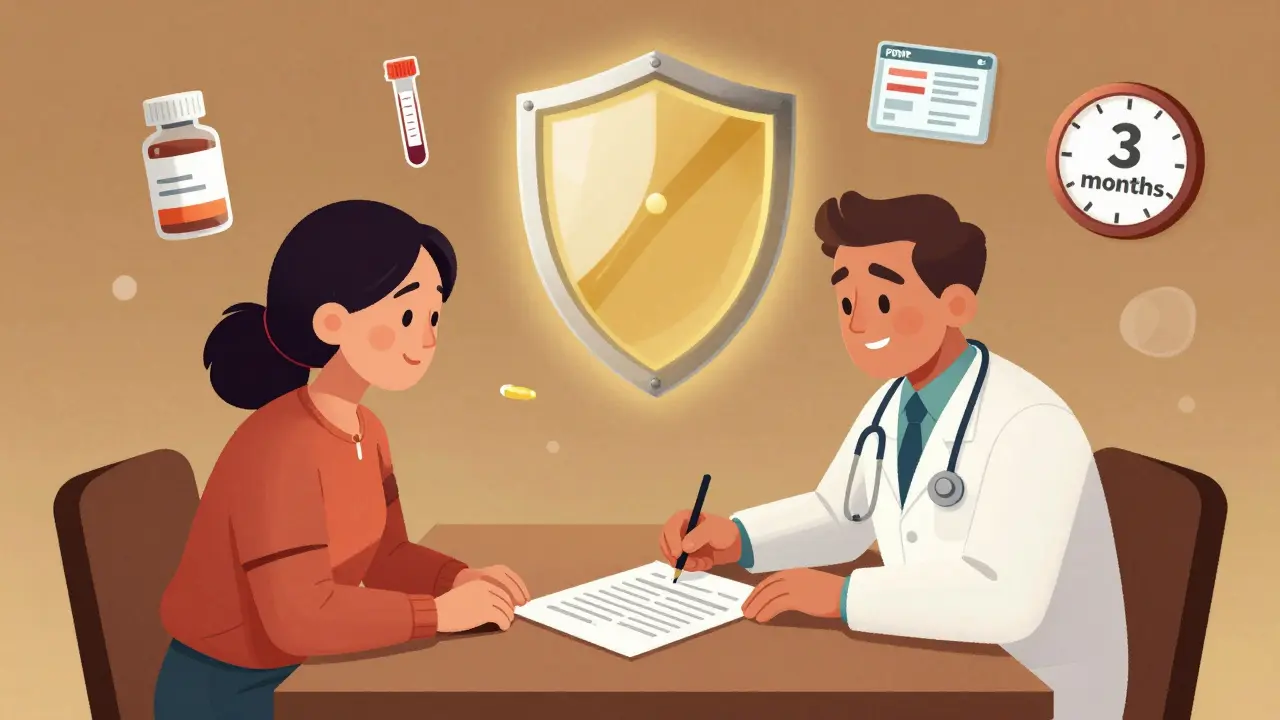
When doctors prescribe opioids for chronic pain, they’re not just handing out pills. They’re managing a high-risk treatment that can save lives-or end them. That’s why opioid agreements are now a standard part of care. These aren’t legal contracts you sign at a lawyer’s office. They’re clinical tools, signed by patient and provider, that lay out clear expectations for how opioids will be used, monitored, and reviewed. They’re one piece of a bigger system built to prevent misuse, overdose, and diversion.
What Exactly Is an Opioid Agreement?
An opioid agreement, sometimes called a pain management agreement or opioid treatment agreement, is a written document that both the patient and provider sign before starting long-term opioid therapy. It’s not a punishment or a trust issue. It’s a safety plan. The agreement outlines things like:- Only getting prescriptions from one provider and filling them at one pharmacy
- Not using alcohol or other sedatives while on opioids
- Accepting random urine drug tests to confirm what’s in your system
- Not sharing, selling, or losing medications
- Attending regular follow-ups to assess pain, function, and side effects
These rules aren’t arbitrary. They’re based on years of data showing that patients who follow structured treatment plans have lower rates of misuse and better pain control. A 2020 study in Health Affairs found that when opioid agreements were used alongside monitoring, doctor shopping dropped by 12.3%. That means fewer people were seeing multiple doctors to get multiple prescriptions-something that often leads to overdose.
How PDMPs Work With Agreements
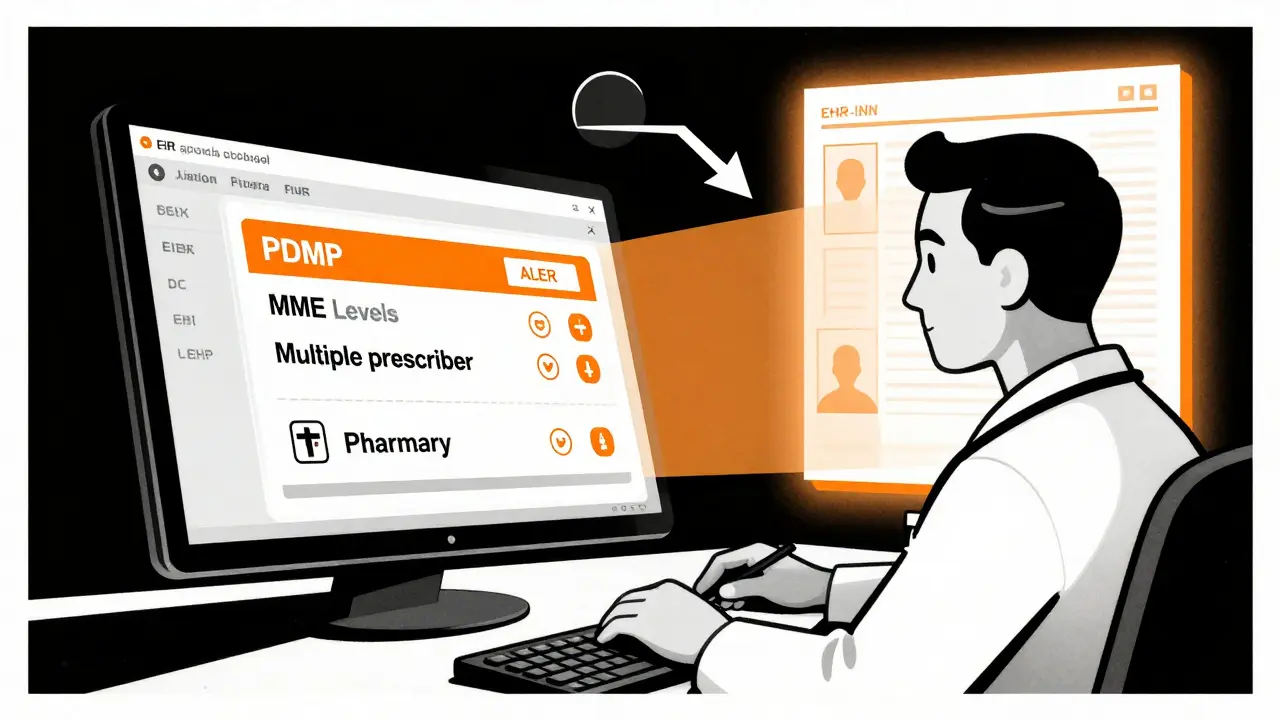
Opioid agreements don’t work alone. They’re tied to something called a Prescription Drug Monitoring Program, or PDMP. Every U.S. state runs one. It’s an electronic database that tracks every controlled substance prescription filled at pharmacies. Think of it as a real-time log of who’s getting what, when, and from whom.Before prescribing opioids, doctors are now expected to check the PDMP. The CDC recommends this before every prescription, not just the first one. Why? Because people can slip through the cracks. A patient might be getting 100 milligrams of morphine from one doctor and another 80 from a different provider-neither doctor knows about the other. The PDMP catches that.
Since 2020, 26 states have made PDMP checks mandatory before every opioid prescription. Others leave it up to the provider. But the best practice? Check it every time. And it’s not just about looking up names. Modern PDMPs show you:
- Total daily morphine milligram equivalents (MME)
- Number of prescribers and pharmacies used in the last 12 months
- Recent high-dose prescriptions (over 90 MME/day)
- Overlapping prescriptions from multiple providers
When a patient signs an opioid agreement, they’re agreeing to let their provider use this data to guide care. It’s transparency. It’s safety. It’s accountability-for both sides.
The Rise of EHR Integration
In the past, checking the PDMP meant logging into a separate website, searching by name, and downloading a report. It took 5 to 7 minutes per patient. In a 15-minute visit? That’s not realistic. Many providers skipped it.That changed when PDMPs started integrating directly into Electronic Health Records (EHRs) like Epic, Cerner, and Allscripts. Now, when a doctor opens a patient’s chart, a PDMP alert pops up automatically. No extra login. No extra steps. Just a quick glance at the data before clicking “approve.”
A 2023 AHRQ study found that EHR integration increased PDMP usage from 12% to 78% among clinicians. That’s a six-fold jump. And it’s not just about convenience. Integrated systems reduced query time from 5 minutes to under a minute. That means more patients get checked, more risks get caught, and fewer people slip through.
What the Data Shows
The numbers speak clearly. Here’s what’s happened since PDMPs became widespread:- High-dose opioid prescriptions dropped by 7.9% in states with real-time data, mandatory use, and EHR integration (National Academies, 2022)
- 82% of providers who used PDMPs regularly said they felt more confident in their prescribing decisions
- 44% of providers who rarely used PDMPs worried about legal liability
- States with mandatory PDMP checks saw a 15% drop in opioid overdose deaths over three years (CDC, 2023)
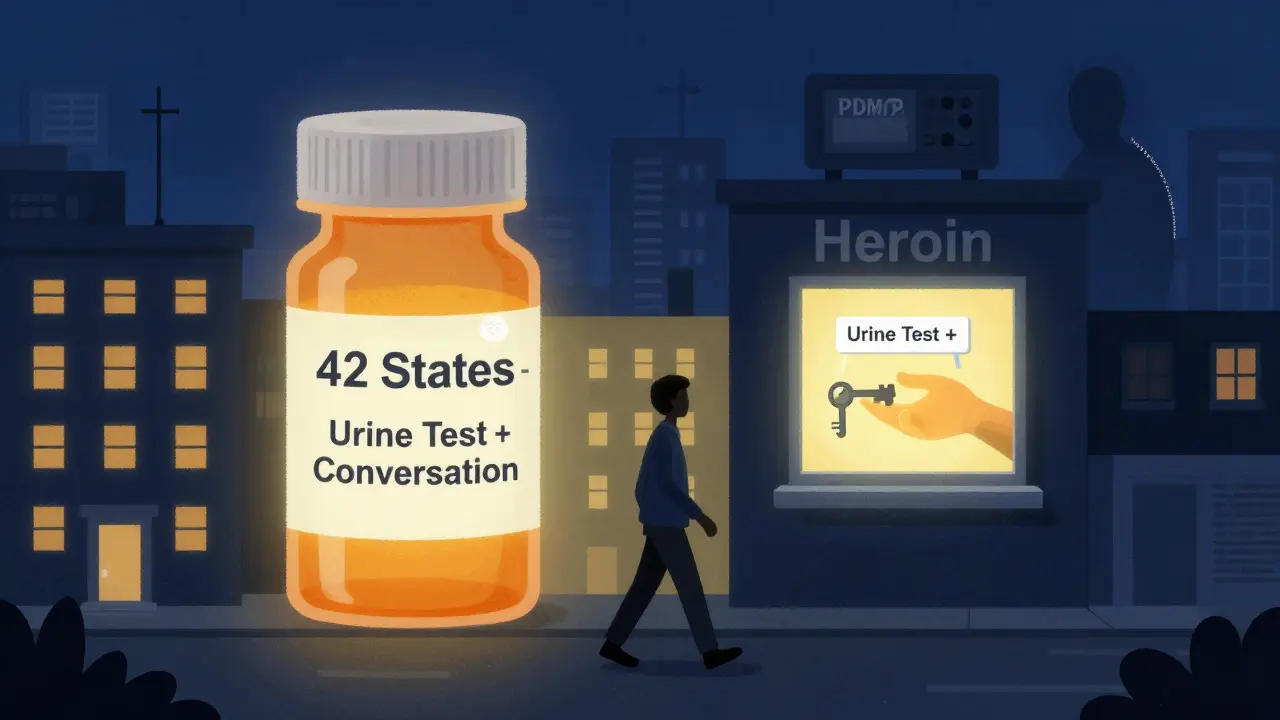
But PDMPs aren’t perfect. They don’t track illicit drugs like heroin or fentanyl. They don’t know if someone is buying pills off the street. That’s why urine drug testing is still part of the agreement. If a patient says they’re only taking oxycodone, but the test shows benzodiazepines or cocaine, that’s a red flag. The agreement says: we’ll talk about it. We won’t cut you off. But we need to understand what’s going on.
Real-World Challenges
Not every system works the same. In states like New Hampshire or Maine, where people live near borders, doctors often have to check multiple state PDMPs. Before 2023, that meant logging into five different systems-each with its own interface, rules, and delays. Some states took 3-4 days to update prescriptions. That’s useless if you’re trying to decide whether to refill a script today.That’s why 42 states now participate in the Prescription Monitoring Information Exchange (PMIX). It lets providers query multiple states at once. Query time dropped by 63%. For border-area clinics, that’s a game-changer.
Another issue? Data gaps. PDMPs track pharmacy fills-but not hospital inpatient doses. A patient might get 100 mg of hydromorphone in the ER, then go home and get another 80 mg from their primary care doctor. The PDMP won’t show the ER dose. That’s why some clinics now use hospital data feeds, or require patients to report all recent hospital visits.
What Patients Need to Know
If you’re on long-term opioids, signing an agreement doesn’t mean you’re being treated like a suspect. It means your provider is taking your safety seriously. You’ll still get your pain relief. But you’ll also be protected from accidental overdose, addiction, or legal trouble if your meds are stolen or sold.Some patients worry about privacy. But PDMPs are protected under HIPAA. Your data isn’t shared with law enforcement unless there’s a court order or evidence of criminal activity. The goal isn’t to catch you. It’s to keep you alive.
What Providers Need to Do
For doctors and nurse practitioners, this isn’t optional anymore. The CDC, AMA, and National Academies all say: check the PDMP before every opioid prescription. And document it. If you don’t, and something goes wrong, you could face legal consequences.Here’s what to do:
- Use an EHR with integrated PDMP access
- Check the PDMP before prescribing opioids for acute, subacute, or chronic pain
- Review it every 3 months for ongoing therapy
- Use urine drug testing as part of the agreement
- Discuss the agreement with the patient-don’t just hand it to them to sign
- Update the agreement if the treatment plan changes
Training matters too. A 2021 study found only 38% of primary care providers felt confident interpreting PDMP data. That’s why continuing education on opioid safety is now required in many states.
The Future of Monitoring
By 2025, 45 states plan to improve PDMP-EHR integration using opioid settlement funds. Real-time data-within 2 hours of a pharmacy fill-is being piloted in 12 states. Machine learning tools are starting to flag high-risk prescribing patterns automatically. One system in California now alerts doctors if a patient’s MME crosses 120/day and they’ve seen three different prescribers in 90 days.But technology alone won’t fix this. The most effective systems combine three things:
- Real-time data
- Mandatory use
- EHR integration
And the opioid agreement? It’s still the human piece that ties it all together. It’s the conversation that says: I’m here to help you manage pain-not just give you a pill.
Are opioid agreements legally binding?
No, opioid agreements are not legally binding contracts like those in court. They’re clinical tools designed to promote safe prescribing and patient accountability. While they don’t hold up in civil or criminal court, they do serve as documentation that the provider followed standard care guidelines. If a patient misuses opioids and there’s no agreement on file, the provider could face scrutiny from medical boards or insurers. The agreement protects both parties by showing clear communication and shared expectations.
Do I need an opioid agreement for short-term pain?
For acute pain-like after surgery or a broken bone-opioid agreements are usually not required. The CDC recommends using them for chronic pain lasting longer than 90 days, or when opioids are prescribed at high doses (over 90 MME/day). However, some clinics use them for all opioid prescriptions, even short-term ones, as a consistent safety practice. It’s becoming more common, especially in states with strict prescribing laws.
Can my doctor refuse to prescribe opioids if I won’t sign an agreement?
Yes. In many states, refusing to sign a pain management agreement is grounds for a provider to decline opioid prescribing. This isn’t punitive-it’s a safety standard. Providers are legally and ethically responsible for avoiding harm. If a patient refuses monitoring, the provider can’t be sure the medication is being used safely. In those cases, they may offer alternative treatments, refer to a pain specialist, or discontinue opioids entirely.
How often should PDMPs be checked?
The CDC recommends checking the PDMP before starting any opioid therapy and then at least every three months during ongoing treatment. For patients at higher risk-those with a history of substance use, high MME doses, or multiple prescribers-checking before every prescription is ideal. In states with mandatory PDMP laws, providers must check before each new opioid prescription, regardless of duration.
What happens if I fail a urine drug test?
Failing a urine test doesn’t automatically mean you lose your prescription. The goal is to understand what’s happening, not to punish. A positive test for illicit drugs, or the absence of prescribed medication, signals a need for deeper discussion. It might mean you’re using other substances, not taking your meds as directed, or struggling with addiction. Your provider may adjust your treatment plan, refer you to counseling, or suggest tapering off opioids. It’s a health issue, not a moral failing.

15 Comments
Bryan Woody-22 March 2026
So we're just turning doctors into drug cops now? Great. Next they'll be fingerprinting us before we get a refill. I've been on opioids for 12 years. Never abused them. Never sold them. Never lied. But now I gotta sign a paper that treats me like a junkie? Thanks for the trust, doc.
And don't get me started on PDMPs. I live in Ohio. My doctor checks a system that updates every 72 hours. That's not monitoring. That's a slideshow.
Timothy Olcott-22 March 2026
YESSSS!!! 🚀 Finally someone gets it! These agreements are NOT about punishment they're about SURVIVAL. I lost my cousin to fentanyl because some doc didn't check the PDMP. Now I'm all about the system. Check the database. Do the test. Sign the paper. No drama. No excuses. America needs this. 💪🇺🇸
Johny Prayogi-23 March 2026
I'm a nurse practitioner and I can tell you this stuff works. We had a patient who was getting prescriptions from 3 different doctors. PDMP caught it. Urine test showed benzos she didn't disclose. We didn't cut her off. We got her into counseling. Now she's working part-time and off opioids. That's the goal. Not punishment. Recovery.
Also, EHR integration? Game changer. I used to spend 8 minutes per patient on PDMP. Now it's 45 seconds. More checks. Fewer overdoses.
Allison Priole-24 March 2026
I used to hate these agreements. Felt like being watched. But then I realized... my doctor actually cared. He didn't just hand me pills. He asked how I slept. How my knee felt. If I was still taking the meds or if I was just collecting them. I started trusting him. And honestly? That's more than I got from most docs.
Also, the urine test? Kinda weird at first. But then I realized it's not about catching me. It's about making sure I'm not mixing stuff I shouldn't. Like that time I took a Xanax for anxiety and forgot to tell him. He didn't yell. He just said 'oh okay, let's talk about that.' And we did. It was... human.
Casey Tenney-26 March 2026
This is why America is dying. You think signing a paper stops addiction? It doesn't. It just makes people lie. And now doctors are scared to prescribe anything. So the pain just gets worse. And the addicts? They go to the streets. And we wonder why fentanyl is everywhere. It's not the pills. It's the fear.
matthew runcie-27 March 2026
I've been on chronic pain meds for 8 years. Signed the agreement. Got the tests. Checked the PDMP. All of it. And you know what? It made me feel safer. Not because I'm a criminal. But because my doctor actually cared enough to do his job. Most docs just write the script and run. This system forces them to pay attention. That's not bad. That's responsible.
Natali Shevchenko-28 March 2026
There's a deeper layer here that nobody talks about. These agreements aren't just about drugs. They're about power. Who gets to decide what pain is real? Who gets to be trusted? The system says: if you're poor, if you're Black, if you're old, if you're disabled - you're not trusted. But if you're white, middle-class, and articulate? You get the benefit of the doubt.
The PDMP doesn't fix that. It just automates the bias. And the agreement? It's a performance. We're all just acting out roles. Doctor. Patient. Good. Bad. Clean. Dirty.
But what if the real problem isn't the pills? What if it's the loneliness? The lack of care? The fact that no one ever asked me what I was in pain about? Just how much?
Chris Dwyer-30 March 2026
You ever been in pain so bad you cried in the shower? I have. And I'm not ashamed. But I also don't want to die from my own meds. So yeah, I signed the agreement. I got tested. I let my doctor check my history. Because I want to live. And if that means a little extra paperwork? Fine.
Also - PDMP integration? Yes. EHR? YES. Why are we still doing this the hard way? We have tech. Use it. Stop making doctors do 5 logins. It's 2025. We can do better.
Desiree LaPointe-31 March 2026
Oh honey. You think this is about safety? This is about liability. Doctors are terrified of lawsuits. So they hide behind paperwork. The real issue? We have a broken healthcare system that treats pain like a crime. And now we're slapping on Band-Aids called 'agreements' while ignoring the rot underneath.
Also - mandatory urine tests? That's not healthcare. That's a prison. And PDMPs? They don't track street drugs. So they're useless for half the problem. It's theater. Performance art. With forms.
Thomas Jensen- 1 April 2026
They're tracking us. I know it. I feel it. PDMPs? They're linked to the feds. I saw a guy get arrested because his doctor reported him. He was just trying to get his pain meds. Now he's in jail. And you think this is about safety? No. It's about control. They don't want you to feel better. They want you to be obedient.
And the EHR integration? That's how they're building your digital profile. You think your data stays private? HA. It's all in a database. Waiting. For the next phase.
shannon kozee- 1 April 2026
I'm a pharmacist. I've seen it all. People who take their meds. People who sell them. People who mix them with alcohol and wonder why they passed out.
The agreement? It's not perfect. But it gives us a starting point. If someone refuses, I tell them: 'I can't fill this.' Not because I'm mean. Because I don't want to be the reason you die. Simple as that.
trudale hampton- 3 April 2026
I had a friend who got hooked after a back surgery. He was a good guy. Hard worker. Never messed with drugs before. But one prescription turned into two. Then three. Then he started buying online.
He didn't need more pills. He needed someone to talk to. The agreement didn't help him. The counselor did. Maybe we should be investing in therapy instead of paperwork.
Shaun Wakashige- 4 April 2026
lol why even bother. they're all gonna get high anyway. just give em the pills and let em die. 🤷♂️
Paul Cuccurullo- 6 April 2026
It is imperative to acknowledge that the implementation of structured opioid management protocols represents a paradigm shift in clinical ethics. The integration of regulatory frameworks with evidence-based practice not only mitigates risk but upholds the professional obligation to prevent iatrogenic harm. One must not conflate procedural diligence with punitive intent - rather, it is an expression of fiduciary responsibility.
Solomon Kindie- 7 April 2026
The whole system is a performance. We're not fixing addiction. We're just making it harder to get the pills. So people get desperate. Then they turn to fentanyl. Then they die. And we say 'see? The system worked.' No. The system just moved the problem. From clinics to alleyways. From doctors to dealers. And we call that progress?
Also - PDMPs don't track hospital doses. So if you get 100mg in the ER and 80 at home? You're golden. The system is broken. It's not about trust. It's about ignorance.