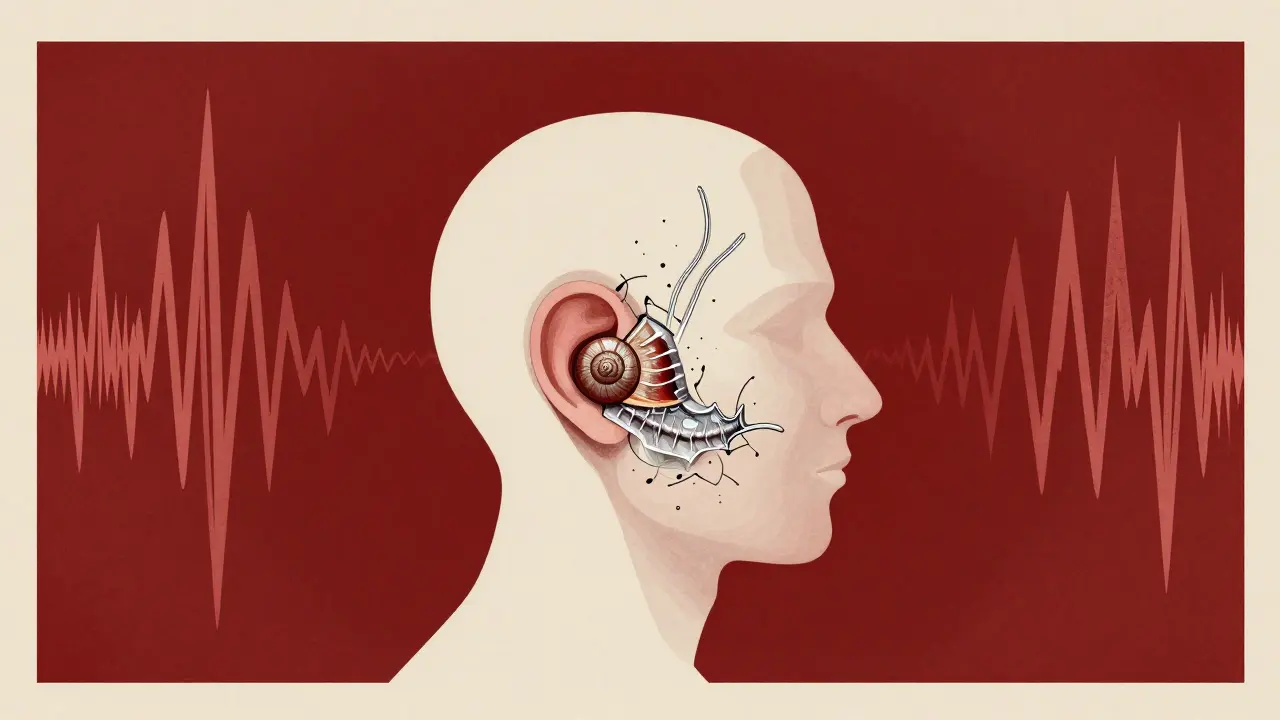
Imagine waking up and realizing the world has gone quiet, or noticing that you can hear people talking, but their words sound like a garbled mess. For millions of people, this isn't just a temporary glitch-it's the reality of Sensorineural Hearing Loss is a permanent form of hearing impairment resulting from damage to the inner ear structures or the auditory nerve pathway to the brain. Unlike a clogged ear from a swim or a temporary wax buildup, this type of loss happens deep inside the head where the magic of sound conversion takes place. Because it involves the death or damage of specialized cells, it's generally permanent, but that doesn't mean you're stuck in silence.
What Exactly Happens Inside the Ear?
To understand why this happens, we have to look at the Cochlea, the snail-shaped organ in your inner ear. Inside the cochlea are thousands of microscopic Hair Cells. Despite the name, these aren't actual hairs; they are sensory receptors that turn sound vibrations into electrical signals for your brain. When these cells are healthy, they act like a finely tuned piano, with different cells picking up different frequencies.
In sensorineural hearing loss, these cells get damaged or die. There are two main types: inner hair cells, which handle the actual signal transmission, and outer hair cells, which act as an amplifier. Most noise-induced or age-related damage starts with the outer cells. Once they're gone, they don't grow back. This is why 90% of hearing loss cases requiring amplification are sensorineural-the physical "hardware" of the ear has broken down.
Common Culprits: Why Does This Happen?
It's rarely just one thing, but the most frequent cause is Presbycusis, which is just a medical term for age-related hearing loss. It's incredibly common; about half of people over 75 experience it. But you don't have to be elderly to suffer from inner ear damage. Noise exposure is a massive factor. If you've spent years at loud concerts or worked in a factory without ear protection, you've likely pushed your hair cells past their limit. Generally, continuous exposure to sounds over 85 decibels for eight hours a day is enough to cause permanent injury.
Other causes can be more sudden or systemic:
- Sudden Sensorineural Hearing Loss (SSHL): This is a medical emergency where hearing vanishes in one or both ears over a few days. It can be caused by viral infections or vascular issues.
- Ototoxic Medications: Some powerful antibiotics or chemotherapy drugs can actually poison the hair cells in the cochlea.
- Genetics and Trauma: Physical head injuries or inherited conditions can damage the auditory nerve or the cochlear structure.
Spotting the Signs: More Than Just "Quiet"
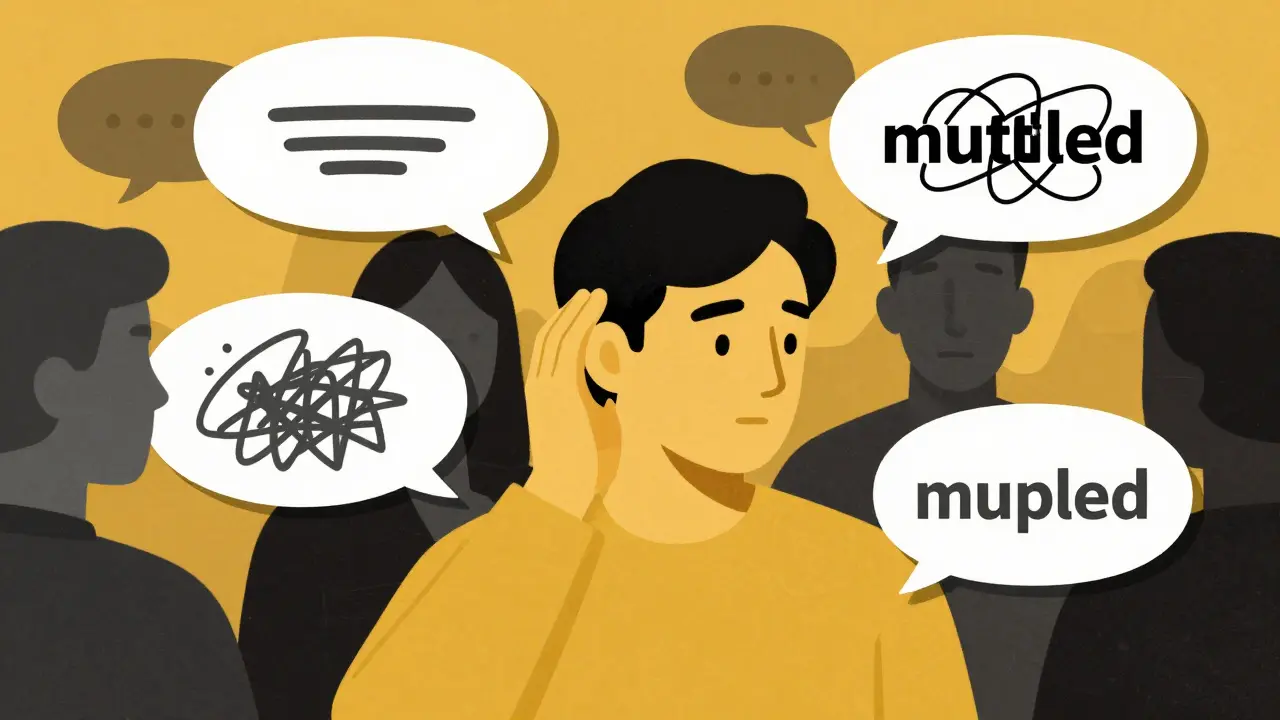
People often think hearing loss means everything sounds quieter, but that's a misconception. For many, the volume is fine, but the clarity is gone. This is why 87% of patients report that they struggle most in noisy environments, like a crowded restaurant. You can hear that people are speaking, but the speech sounds muffled, and the background noise blends in with the voices.
Another hallmark is Tinnitus-that phantom ringing, buzzing, or hissing in the ears. About 80% of people with this condition deal with tinnitus because the brain tries to "fill in the gaps" for the sounds it's no longer receiving from the damaged cochlea. You might also notice "recruitment," where a sound that was previously too quiet to hear suddenly becomes painfully loud once it hits a certain threshold.
| Feature | Sensorineural Hearing Loss | Conductive Hearing Loss |
|---|---|---|
| Location of Damage | Inner ear (Cochlea) or Auditory Nerve | Outer or Middle ear |
| Permanence | Generally permanent | Often treatable or reversible |
| Common Causes | Aging, loud noise, genetics | Earwax, fluid, perforated eardrum |
| Primary Treatment | Hearing aids or implants | Medication or surgery |
| Speech Clarity | Sounds muffled/distorted | Sounds quiet but clear |
The Road to Recovery: Can It Be Fixed?
If you've been told your hearing loss is sensorineural, the word "permanent" can feel devastating. However, the goal shifts from curing the damage to compensating for it. The approach depends entirely on the severity and timing of the loss.
If you experience Sudden Sensorineural Hearing Loss, timing is everything. If you get to a doctor within 48 to 72 hours, they might prescribe high-dose corticosteroids. These steroids reduce inflammation in the inner ear and can lead to recovery in 32% to 65% of cases. But once you hit the two-week mark, the chances of recovery drop significantly. This is why any sudden drop in hearing is treated as a crisis.
For chronic or age-related loss, we look at technology:
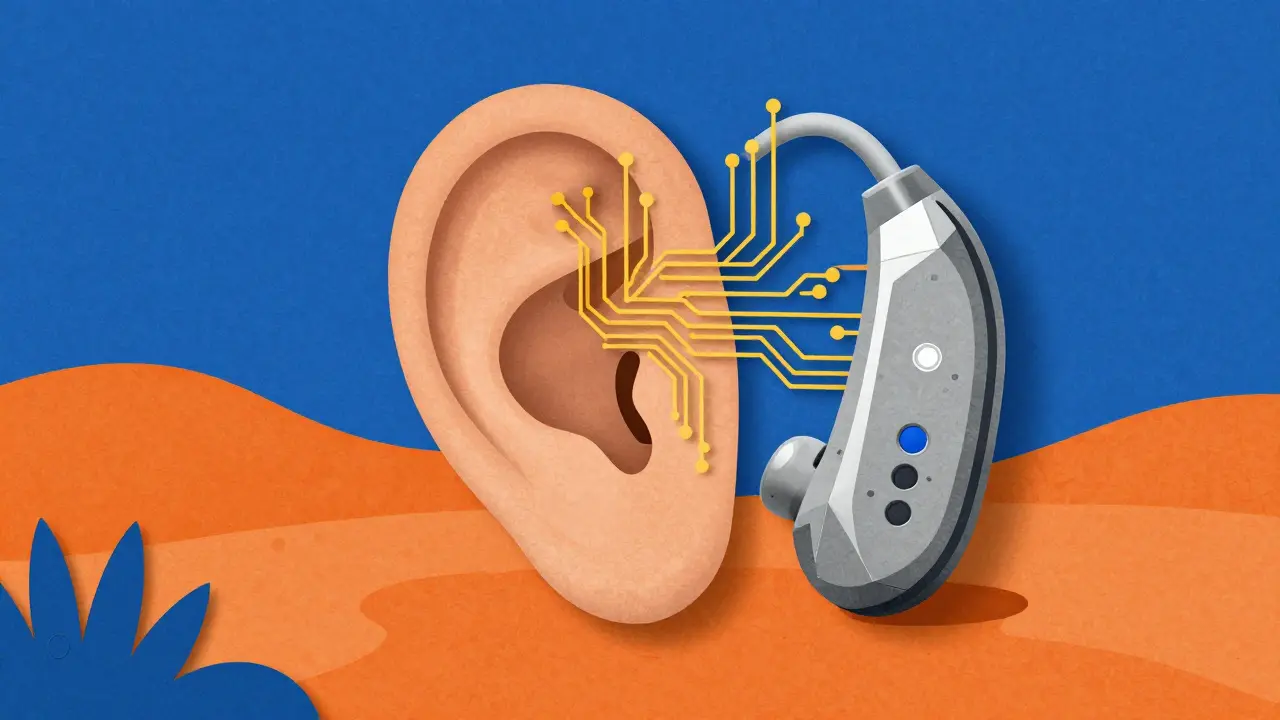
Digital Hearing Aids: These aren't just amplifiers. Modern devices like the Widex Moment or Phonak Paradise use AI to analyze your environment. They can boost specific frequencies-like the 2000-8000 Hz range where many people lose hearing first-while suppressing background noise. While they don't restore "natural" hearing, they make daily conversations possible again. Just be prepared: it takes about 4 to 8 weeks for your brain to adapt to the new sounds.
Cochlear Implants: When hearing aids aren't enough (usually for severe-to-profound loss), a Cochlear Implant is the next step. Instead of making sound louder, these devices bypass the damaged hair cells entirely and stimulate the auditory nerve directly. It's a surgical process that requires months of auditory rehabilitation, but it's a game-changer for those who would otherwise be completely deaf.
Living With Permanent Hearing Loss
Adapting to a permanent loss involves more than just wearing a device. There's a psychological adjustment period. New users often report the "occlusion effect," where their own voice sounds booming or strange inside their head. There's also the struggle with background noise; even the best hearing aids only improve speech recognition in noise by 30-50%. This means you'll still need to use strategies like facing the speaker or asking for a quieter table at a restaurant.
Community support is a huge part of the journey. Organizations like the Hearing Loss Association of America (HLAA) provide workshops and peer groups. Knowing that you aren't the only one struggling to hear your grandkids at a loud family dinner makes the process much less isolating.
What's Next for Hearing Science?
While we currently rely on electronics, the future is looking toward biology. Researchers at Stanford Medicine are exploring stem cell therapies to actually regrow those missing hair cells. While this sounds like science fiction, early trials are focusing on regenerating the sensory surface of the cochlea. Dr. Alan Cheng and other experts warn that we are likely 5 to 10 years away from this being a standard clinic treatment, but the possibility of a biological cure is finally on the horizon.
Can sensorineural hearing loss ever be reversed?
In the vast majority of cases, no. Because it involves the death of hair cells in the cochlea, it is permanent. The only common exception is Sudden Sensorineural Hearing Loss (SSHL), which can sometimes be reversed if treated with steroids within a few days of the onset.
How do I know if my hearing loss is sensorineural or conductive?
You need an audiometric test performed by a professional. An audiologist will compare air conduction (sound through headphones) and bone conduction (sound vibrating the skull). If the bone conduction is significantly better than the air conduction, it's likely conductive. If both are poor, it's sensorineural.
Do hearing aids cause more hearing loss over time?
No, this is a myth. Hearing aids do not damage your ears. In fact, they can prevent "auditory deprivation," where the brain loses the ability to process sounds because it isn't receiving enough stimulation from the ears.
Are cochlear implants better than hearing aids?
Neither is "better"-they serve different needs. Hearing aids amplify sound and are for mild-to-severe loss. Cochlear implants replace the function of the inner ear and are for severe-to-profound loss. You cannot put an implant in someone who still has enough functional hair cells to benefit from a hearing aid.
What is the best way to prevent sensorineural hearing loss?
Protect your ears from loud noises. Use earplugs at concerts or when using power tools. Limit the volume of your headphones and take breaks during loud activities. Once those inner ear hair cells are gone, they cannot be replaced by any current over-the-counter medication.
Next Steps for Better Hearing
If you suspect you have hearing loss, the first step is a comprehensive hearing evaluation. Don't rely on a free online screener; get a full audiogram that tests various frequencies. If you're experiencing a sudden drop in hearing, treat it as an emergency and see an ENT specialist immediately.
For those already using devices, don't be afraid to go back to your audiologist for "fine-tuning" appointments. Your brain changes how it perceives sound over time, and your device settings should be adjusted to match that evolution. Whether you're exploring OTC options for mild loss or considering an implant for profound loss, the goal is to stay connected to the people and sounds you love.


Write a comment