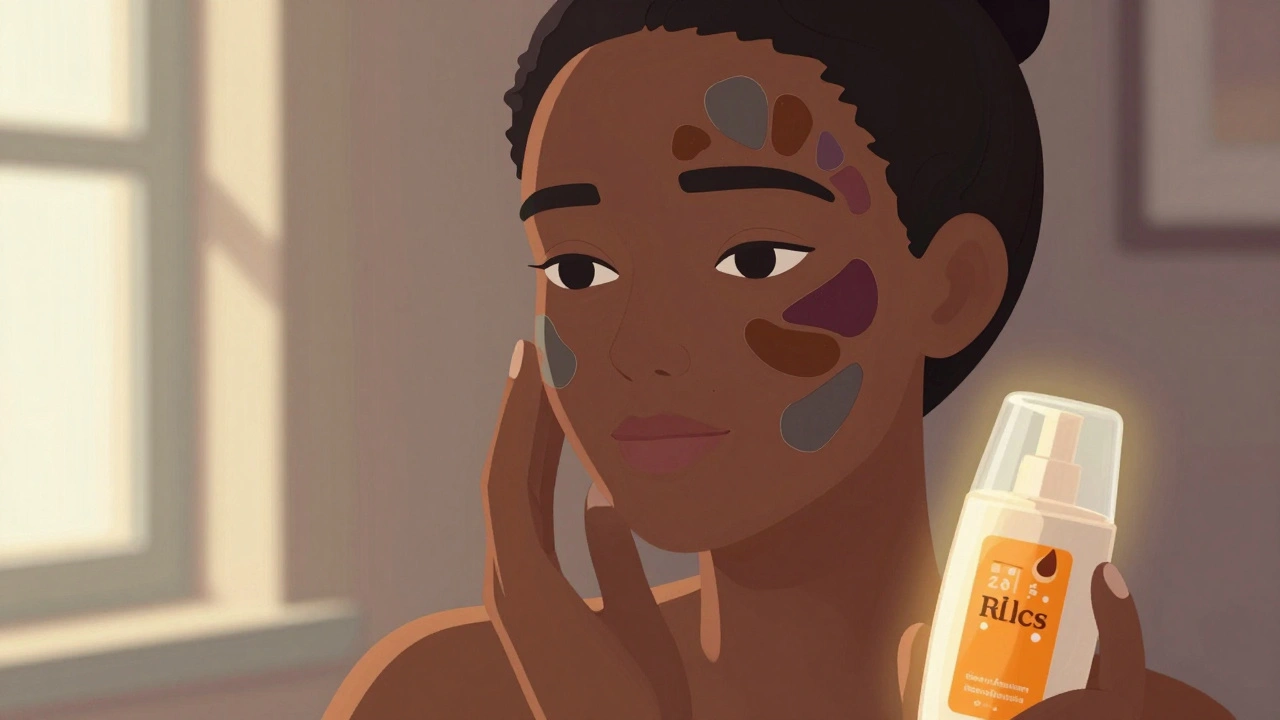
When you have darker skin, a simple pimple, cut, or even a scratch can leave behind a dark spot that lasts for months-or years. This isn’t just a cosmetic issue. For many people with skin of color, these dark patches, known as hyperpigmentation, can affect confidence, social interactions, and even mental health. And it’s not just hyperpigmentation. Raised, thick scars called keloids can form after injuries, surgeries, or even ear piercings, growing far beyond the original wound. Both conditions are more common, more severe, and harder to treat in people with darker skin tones. Yet, most skincare advice out there is written for lighter skin. That’s a problem.
Why Hyperpigmentation Hits Harder in Skin of Color
Melanin, the pigment that gives skin its color, is a double-edged sword. In darker skin, melanocytes (the cells that make melanin) are more active and more easily triggered. When the skin gets inflamed-from acne, eczema, razor bumps, or even harsh scrubs-those cells go into overdrive and dump out extra melanin. The result? Brown, gray, or even purplish patches that stick around long after the original irritation has healed. This is called post-inflammatory hyperpigmentation, or PIH. It’s not an allergy. It’s not an infection. It’s your skin’s natural response to trauma, turned up too high. Studies show that people with Fitzpatrick skin types IV to VI (darker skin tones) are up to five times more likely to develop PIH than those with lighter skin. And unlike acne scars, which are indented, PIH is flat. It doesn’t change the texture of your skin-just the color. Melasma is another form of hyperpigmentation that’s almost exclusively seen in women. It shows up as symmetrical brown or gray patches on the cheeks, forehead, or upper lip. Hormones play a big role here. Pregnancy, birth control pills, and hormone replacement therapy can all trigger it. In fact, melasma is so common during pregnancy that it’s nicknamed the “mask of pregnancy.” But unlike PIH, melasma isn’t caused by injury. It’s triggered by sunlight and hormones working together.Sun Exposure Makes It Worse-Even on Cloudy Days
Here’s something most people don’t realize: UV rays aren’t the only light that darkens skin. Blue light from phones, laptops, and LED screens can also stimulate melanin production in darker skin. That’s why sunscreen isn’t optional-it’s non-negotiable. The right sunscreen for skin of color isn’t the same as for lighter skin. White, chalky zinc oxide formulas leave an ashy cast. Instead, look for tinted sunscreens with iron oxides. These block not just UVA and UVB rays, but also blue light. They blend into deeper skin tones and don’t leave a ghostly residue. Dermatologists recommend SPF 30 or higher, applied every morning, even if you’re indoors. Reapply every two hours if you’re outside, and don’t forget your neck, ears, and hands. Wearing a wide-brimmed hat and avoiding direct sun between 10 a.m. and 4 p.m. helps too. But sunscreen alone won’t fix existing dark spots. You need a targeted skincare routine.What Actually Works for Hyperpigmentation
Treatment starts with stopping the trigger. If you have acne, treat it. If you’re using a harsh scrub or waxing, switch to gentler methods. If you’re on a medication that causes pigmentation (like some antibiotics or antimalarials), talk to your doctor. Topical treatments are the first line of defense. The most effective include:- Hydroquinone (2-4%): The gold standard for fading dark spots. It blocks the enzyme that makes melanin. Used for short cycles (3-6 months) to avoid side effects.
- Tretinoin (retinoid): Speeds up skin cell turnover. Helps fade spots and prevents new ones. Can cause dryness or irritation at first.
- Azelaic acid (15-20%): Reduces inflammation and melanin. Safe for sensitive skin and during pregnancy. Works well for both PIH and melasma.
- Vitamin C: An antioxidant that brightens skin and protects against free radicals. Best used in the morning under sunscreen.
- Kojic acid and tranexamic acid: Newer options with fewer side effects than hydroquinone. Tranexamic acid, in particular, has shown strong results for melasma.
- 5% cysteamine cream: A newer agent that’s been shown in clinical trials to lighten pigmentation without irritation.

What Doesn’t Work-and What Can Make It Worse
Many people try home remedies: lemon juice, apple cider vinegar, baking soda. These are acidic and strip the skin’s barrier. In darker skin, that can trigger more inflammation-and more pigmentation. You’re not lightening your skin. You’re damaging it. Professional treatments like chemical peels, laser therapy, and intense pulsed light (IPL) can help-but they’re risky. If done by someone inexperienced, they can cause burns, scarring, or even darker patches. This is called post-inflammatory hypopigmentation, and it’s harder to fix than hyperpigmentation. Only seek these procedures from dermatologists who specialize in skin of color. Ask to see before-and-after photos of patients with similar skin tones. Don’t let anyone tell you “it works on everyone.” It doesn’t.Keloids: When Scars Grow Out of Control
While hyperpigmentation leaves flat spots, keloids create raised, rubbery scars that spread beyond the original wound. They’re more common in people of African, Asian, and Hispanic descent. If you’ve ever had a piercing that turned into a hard, itchy lump, or a cut that turned into a thick, pink ridge, you’ve seen a keloid. Keloids don’t fade on their own. They can grow for months or even years after the injury heals. They’re not cancerous, but they can be painful, itchy, and restrictive-especially if they form on the chest, shoulders, or earlobes. Unlike PIH, keloids are caused by an overactive healing response. Your body makes too much collagen, and it doesn’t stop. Genetics play a big role. If your parent or sibling has keloids, you’re more likely to get them too.Treating Keloids: It’s Not Just About Removing Them
You can’t just cut out a keloid. That often makes it worse. The best approach is a combination of treatments:- Silicone gel sheets or patches: Worn daily for months, they flatten and soften keloids. Proven effective in multiple studies.
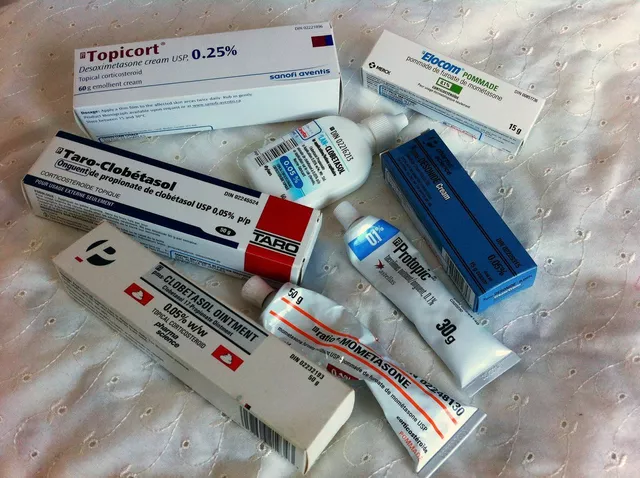
- Corticosteroid injections: Injected directly into the keloid every 4-6 weeks. Reduces size and itching. Often the first-line treatment.
- Cryotherapy: Freezing the keloid with liquid nitrogen. Works best for small ones. May cause lighter skin in the area.
- Laser therapy: Pulsed dye lasers reduce redness and flatten keloids. Often used with steroid injections.
- Surgery + radiation: Only considered for large, stubborn keloids. Radiation after removal reduces recurrence risk from 50-100% down to 10-20%.

Living With Skin of Color: Beyond Treatments
It’s not just about creams and lasers. It’s about understanding your skin’s needs. Many people with darker skin have been told their skin is “too sensitive” or “too hard to treat.” That’s outdated thinking. Skin of color is not a problem to fix-it’s a unique biology to understand. Find a dermatologist who has experience treating skin of color. Ask them: “How many patients with my skin tone do you treat each month?” If they don’t know, keep looking. Keep a journal. Note what triggers your dark spots-was it a new cleanser? A bad breakout? Sun exposure after a hike? Tracking helps you avoid repeats. And be patient. Healing takes time. Progress isn’t linear. Some days your skin looks better. Other days, stress or hormones make things worse. That’s normal.When to See a Dermatologist
You don’t need to wait until your dark spots are unbearable. See a dermatologist if:- Your hyperpigmentation hasn’t improved after 3 months of consistent skincare.
- You’re developing new dark patches after starting a new medication.
- A scar is growing, hardening, or becoming painful.
- You’re avoiding social situations because of your skin.
What’s Next for Skin of Color Dermatology
Research is catching up. New treatments like cysteamine cream and tranexamic acid are now standard in clinics that specialize in pigmentation. Clinical trials are finally including more diverse participants. And dermatology training programs are starting to teach skin of color as a core subject-not an afterthought. But progress is slow. Most skincare brands still design products for lighter skin. Most textbooks still use images of white patients. That’s changing-but not fast enough. If you have skin of color, you’re not alone. And you deserve care that sees you, understands you, and treats you right.Can hyperpigmentation go away on its own?
Sometimes, yes-but it can take months to years. Post-inflammatory hyperpigmentation often fades slowly if the trigger (like acne or irritation) is removed. But without treatment, it may never fully disappear, especially in darker skin tones. Sun exposure can make it worse or keep it from fading. Treatment speeds up the process significantly.
Is hydroquinone safe for long-term use?
Hydroquinone is effective but not meant for continuous use. Most dermatologists recommend using it for 3-6 months, then taking a break. Long-term use can lead to ochronosis-a rare condition where the skin turns blue-black. Always use it under a dermatologist’s supervision, and never buy high-strength versions online without a prescription.
Why do keloids form more often in darker skin?
People with darker skin have a genetic tendency for their fibroblasts (skin repair cells) to overproduce collagen after injury. This leads to thick, raised scars called keloids. The exact reason isn’t fully understood, but it’s linked to how the immune system and healing pathways function in melanin-rich skin. Keloids run in families, so if someone in your family has them, you’re more likely to develop them too.
Can I use retinoids if I have sensitive skin?
Yes, but start slow. Use a low-strength retinoid (like 0.025% tretinoin) every other night, and always apply a moisturizer before and after. Wait 20 minutes after washing your face before applying. If your skin becomes red, peeling, or burning, cut back to once a week. Retinoids help fade dark spots and prevent acne, but they can irritate sensitive skin if used too aggressively.
Are laser treatments safe for dark skin?
Some lasers are safe, but many are not. Lasers that target pigment (like IPL or Q-switched lasers) can burn darker skin if not used correctly. Only seek treatment from dermatologists who specialize in skin of color and have experience with devices like the Nd:YAG laser, which is safer for deeper skin tones. Always ask to see their before-and-after photos of patients with similar skin types.
Can diet or supplements help with hyperpigmentation?
There’s no strong evidence that eating certain foods or taking supplements like vitamin C or glutathione will significantly fade hyperpigmentation. While antioxidants support overall skin health, they don’t replace topical treatments or sun protection. Don’t waste money on unproven supplements-focus on proven skincare and sunscreen instead.

12 Comments
Desmond Khoo- 7 December 2025
This post literally saved my skin 🙏 I had PIH from acne for 3 years and started using azelaic acid + tinted SPF 50 - now it’s 80% gone. No more hiding behind foundation. Skin of color deserves better.
Ryan Sullivan- 9 December 2025
Let’s be real - most dermatologists still treat melanin-rich skin like a clinical anomaly. This article is one of the few that doesn’t reduce us to a footnote in a textbook written for white skin. Finally, someone said it: it’s not ‘hard to treat’ - it’s just been neglected.
Kyle Oksten-10 December 2025
There’s a deeper cultural issue here. We’ve been conditioned to believe that lighter skin is the default standard of beauty - so we chase solutions that erase our natural biology instead of honoring it. Hyperpigmentation isn’t a flaw to fix. It’s a biological signature. The real problem isn’t the skin - it’s the industry that profits from making us feel broken.
Sam Mathew Cheriyan-12 December 2025
wait… so blue light from phones causes dark spots? lmao next they’ll say wifi gives you melasma. i got my pih from my ex and bad tacos, not my iphone 🤡
Nancy Carlsen-13 December 2025
To anyone reading this and thinking ‘I’ll just wait and see’ - please don’t. I waited 5 years. My melasma got worse. Then I found a derm who actually looked at my skin tone. It changed everything. You’re not being dramatic - your skin matters. 💛
Ted Rosenwasser-14 December 2025
Hydroquinone is the gold standard? That’s cute. In Europe, it’s banned over-the-counter for good reason - it’s a carcinogen disguised as a solution. You’re trading one problem for another. Real skincare is about balance, not chemical domination.
David Brooks-15 December 2025
I used to cry in the mirror. Now I look in the mirror and say, ‘Damn, my skin’s got history.’ Keloids? Yeah, I got ‘em. But I don’t hide them anymore. I wear them like armor. This isn’t about fixing skin - it’s about reclaiming pride.
Kyle Flores-17 December 2025
For real - if you're thinking of getting a piercing and you have a family history of keloids? Just don't. I didn't listen. Now I have a 2-inch ridge on my ear that itches when it rains. Silicone sheets helped, but it's still there. Prevention > treatment. Always.
Olivia Hand-17 December 2025
Why does every ‘skin of color’ guide still use the same three photos? One woman with medium brown skin, one with dark brown, one with light brown. Where’s the spectrum? Where’s the African, the Polynesian, the Indigenous? Representation isn’t just about skin tone - it’s about diversity within it.
Louis Llaine-17 December 2025
So let me get this straight - I can’t use lemon juice because it’s ‘too acidic’… but I can use hydroquinone, which is basically bleach? 🤔
Jane Quitain-17 December 2025
just started using cysteamine cream and my spots are already lighter?? i’m not even trying 😭 this is the first thing that didn’t make my skin feel like sandpaper. thank you thank you thank you
Wesley Phillips-18 December 2025
Look, I get it - you’re trying to be helpful. But you didn’t mention that most of these treatments are unaffordable for the average person. Hydroquinone? $150/month. Tinted SPF with iron oxide? $45. And don’t get me started on laser sessions. This isn’t skincare advice - it’s a luxury guide for people who can afford to care. Real change means access, not just information.