Statins During Pregnancy Risk Calculator
Personalized Pregnancy Risk Assessment
This tool helps you understand your specific risk profile based on medical history and pregnancy status. Results are based on the latest medical evidence published in major studies.
Your Risk Assessment
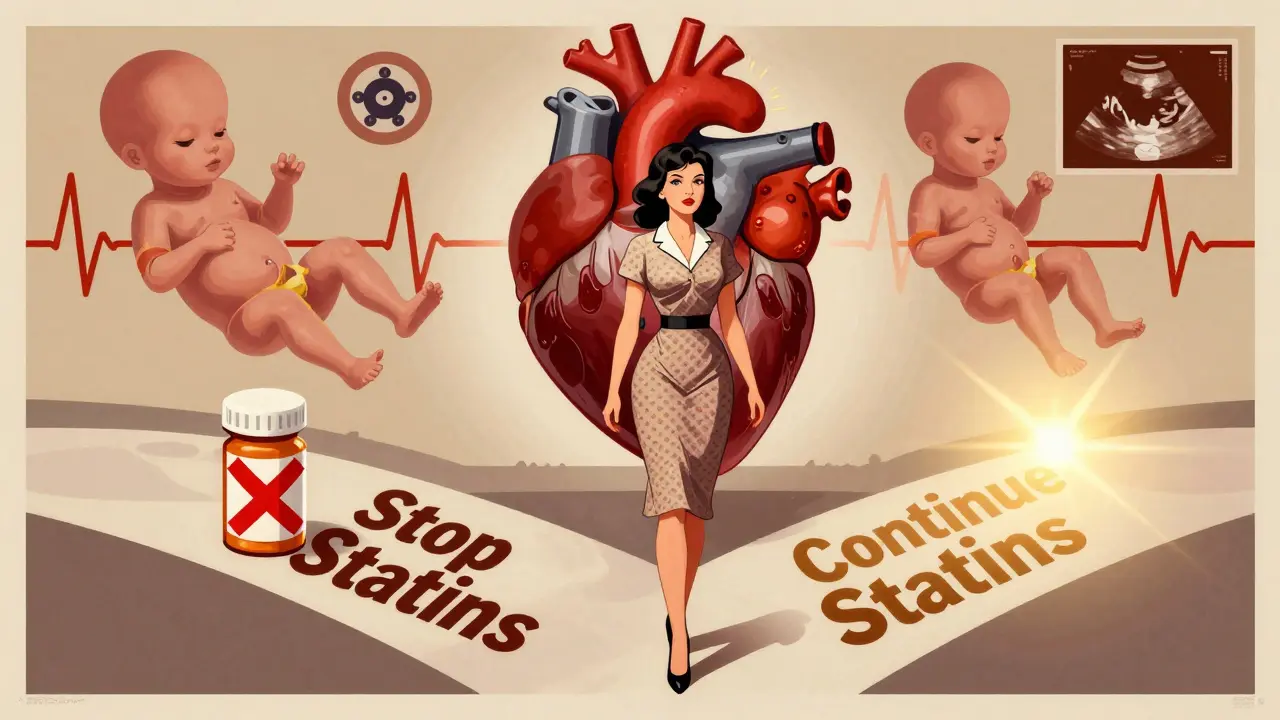
For women taking statins and thinking about getting pregnant, the question isn’t just statins during pregnancy-it’s should I stop, and when? For years, the answer was simple: stop immediately. But that’s no longer the whole story. In 2021, the FDA changed its stance after reviewing data from over a million pregnancies. The message now isn’t black and white. It’s nuanced. And for some women, staying on statins might be safer than stopping.
Why Were Statins Banned in Pregnancy?
Statins work by blocking HMG-CoA reductase, an enzyme your body uses to make cholesterol. Since cholesterol is critical for building cell membranes-and especially for fetal development-doctors worried that lowering it during pregnancy might cause birth defects. Animal studies at high doses showed problems, so the FDA labeled statins as Pregnancy Category X: drugs with clear risks that outweigh any benefits. That label stuck for decades. Most women were told to stop statins as soon as they found out they were pregnant. But here’s the thing: animals aren’t humans. And the doses used in those early studies were far higher than what people take.The Data That Changed Everything
The real turning point came from large human studies. One of the biggest, published in 2015 and analyzed by the FDA, looked at 1,152 women who took statins during early pregnancy and compared them to nearly 900,000 who didn’t. After adjusting for age, diabetes, obesity, smoking, and other factors, the risk of birth defects was almost identical: 1.07 times higher-but not statistically significant. That means the slight increase could’ve been due to chance. A 2021 study in JAMA Network Open followed up with 1.4 million pregnancies, including 469 statin-exposed cases. Again, no increase in major birth defects. Another 2025 study from Norway, tracking over 800,000 pregnancies, found the same: no link between statins and congenital malformations, even when taken in the first trimester. These aren’t small studies. They’re the kind of real-world evidence regulators rely on. And they show that the old fear-that statins cause major birth defects-isn’t supported by data.What About Other Risks?
It’s not all clear sailing. Some studies did find a slightly higher chance of preterm birth (before 37 weeks) and low birth weight in women taking statins. One study showed 16% of statin-exposed women had preterm births, compared to 8.5% in the control group. That’s a real difference, though the reason isn’t fully understood. Is it the statin? Or is it because women who need statins often have other health issues-high blood pressure, diabetes, obesity-that also raise preterm risk? Still, the risk of preterm birth is small. And for women with severe familial hypercholesterolemia (FH) or existing heart disease, the risk of a heart attack or stroke during pregnancy can be much higher. In those cases, staying on statins might actually reduce overall danger.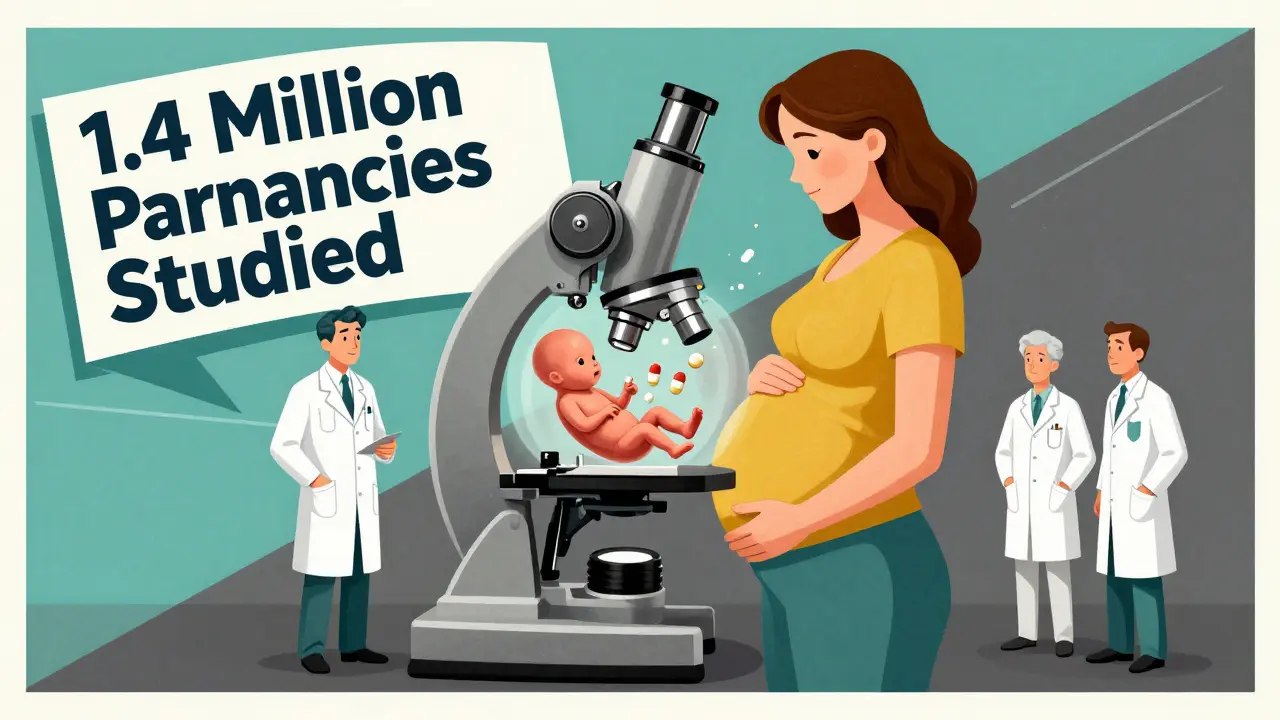
Who Should Consider Staying on Statins?
This isn’t for everyone. If you’re taking statins for high cholesterol and nothing else, you should stop. Cholesterol naturally rises during pregnancy, and it’s normal. Most women don’t need medication. But if you have:- Familial hypercholesterolemia (FH)-LDL over 190 mg/dL since childhood
- Already had a heart attack, stroke, or stent placement
- Diabetes plus very high LDL (over 160 mg/dL)
When and How to Stop (or Keep) Statins
If you’re planning pregnancy, talk to your doctor before you conceive. Ideally, start the conversation three months ahead. That gives time to switch to safer alternatives if needed, like dietary changes or bile acid sequestrants (cholestyramine, colesevelam), which don’t cross the placenta. If you’re already pregnant and didn’t know you were taking statins:- Don’t panic. Most women who took statins accidentally in early pregnancy have healthy babies.
- Stop the statin as soon as possible-usually by week 6.
- Get a detailed anatomy scan at 18-22 weeks. That’s the best way to check for structural issues.
- Use the lowest effective dose-usually 10-20 mg of atorvastatin or pravastatin.
- Monitor liver enzymes monthly.
- Track fetal growth with ultrasounds every 4 weeks after 20 weeks.
What Do Doctors Really Think?
There’s still disagreement. The FDA says statins can be continued in “exceptional circumstances.” The European Society of Cardiology says stop unless it’s a true emergency. In the U.S., 68% of obstetricians now say occasional first-trimester exposure isn’t likely to cause birth defects-up from 32% just four years ago. But most still recommend stopping. Why? Because the data isn’t perfect. We don’t have long-term follow-up on children exposed to statins in utero. We don’t know if there’s a subtle effect on brain development. And we still lack randomized trials-because it’s unethical to randomly assign pregnant women to take or not take statins. Still, the trend is clear: the fear of statins is fading. More doctors are willing to have a conversation instead of giving a blanket “no.”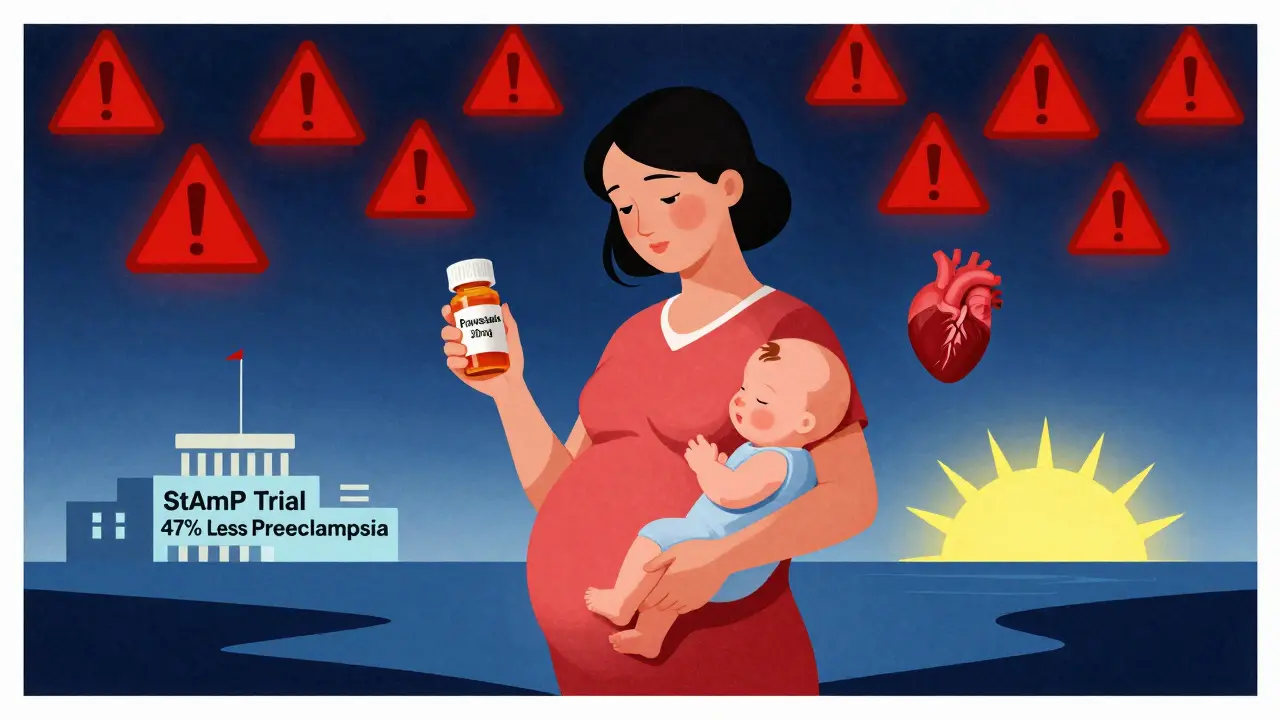
What About New Uses? Statins for Preeclampsia?
Here’s where things get even more interesting. A clinical trial called StAmP is testing whether pravastatin, taken from 12 to 16 weeks, can prevent preeclampsia in high-risk women. Early results showed a 47% drop in preeclampsia rates. That’s huge. Preeclampsia kills 76,000 mothers and 500,000 babies worldwide every year. If this works, statins won’t just be tolerated in pregnancy-they’ll be prescribed on purpose. The NIH is already planning a 5,000-woman registry (PRESTO) to track outcomes. By 2030, the American College of Cardiology predicts 15-20% of women with severe heart disease will continue statins during pregnancy. That’s up from less than 5% today.What Should You Do?
If you’re on statins and thinking about pregnancy:- Don’t stop without talking to your doctor.
- Get your cholesterol levels checked-know your baseline.
- Ask if you have familial hypercholesterolemia or heart disease.
- Bring your cardiologist and OB-GYN into the conversation.
- Ask about alternatives if you’re not high-risk.
- Stop taking them now.
- Don’t blame yourself.
- Schedule a detailed anatomy scan.
- Consider calling MotherToBaby (1-866-626-6847) for free, expert advice.
Final Thought
The old rule-“never take statins in pregnancy”-was easy. But it wasn’t always right. Medicine is moving away from blanket bans and toward personalized risk assessment. For most women, stopping statins is still the best choice. But for those with severe heart disease or FH, the risks of stopping might be greater than the risks of continuing. The goal isn’t to scare you. It’s to give you the facts so you can make the right call-for you, and your baby.Are statins safe during pregnancy?
Statins are not considered major teratogens based on current human data. Large studies of over a million pregnancies show no significant increase in birth defects, even with first-trimester exposure. However, they are still not routinely recommended because of potential links to preterm birth and low birth weight. For most women, stopping statins during pregnancy is advised. For women with severe heart disease or familial hypercholesterolemia, continuing statins may be safer than stopping, after careful discussion with a specialist.
When should I stop statins if I’m planning a pregnancy?
Ideally, stop statins at least 3 months before trying to conceive. This gives your body time to clear the medication and allows you to switch to safer alternatives like dietary changes or bile acid sequestrants if needed. If you’re already pregnant and taking statins, stop as soon as you confirm the pregnancy-usually by week 4 to 6. The first trimester is when organ development happens, so minimizing exposure during this time is best.
Can statins cause birth defects?
Current evidence shows no clear link between statin use and major birth defects. A 2015 study of over 1,100 women found a relative risk of 1.07 for birth defects, which was not statistically significant. A 2021 study of nearly 1.5 million pregnancies confirmed no increase in congenital anomalies. The theoretical risk comes from animal studies using very high doses-doses that don’t reflect human use. While no medication is 100% risk-free, statins are not considered a major cause of birth defects.
What if I took statins before I knew I was pregnant?
If you took statins before realizing you were pregnant, the risk to your baby is likely very low. Most women in this situation go on to have healthy babies. Stop taking the statin immediately and schedule a detailed anatomy ultrasound between 18 and 22 weeks. This scan checks for structural abnormalities. Talk to your doctor or call MotherToBaby (1-866-626-6847) for free, personalized advice. You’re not alone-thousands of women have been in this position.
Are there safer alternatives to statins during pregnancy?
Yes. For most women, lifestyle changes-like a heart-healthy diet, regular exercise, and weight management-are enough. If medication is needed, bile acid sequestrants like cholestyramine or colesevelam are considered safe because they don’t enter the bloodstream. Fibrates and niacin have less safety data and are not preferred. Ezetimibe has limited data but may be used in rare cases under specialist supervision. Always consult your doctor before switching.
Can statins be used to prevent preeclampsia?
Yes, this is being actively studied. A clinical trial called StAmP found that pravastatin taken from 12 to 16 weeks reduced preeclampsia risk by 47% in high-risk women. While not yet standard practice, this could change how statins are used in pregnancy in the future. The NIH is launching a large registry (PRESTO) to track outcomes. For now, statins are not approved for preeclampsia prevention, but research is promising.
Which statins are safest in pregnancy?
Pravastatin and atorvastatin have the most data in pregnancy. Pravastatin is less likely to cross the placenta and has been used in research trials. Atorvastatin is also commonly used when statins are continued. Rosuvastatin and simvastatin have less data. If statins are continued, the lowest effective dose is recommended-usually 10-20 mg of atorvastatin or 20-40 mg of pravastatin. Avoid lovastatin and fluvastatin due to limited safety data.
Should I get genetic testing if I have high cholesterol and want to get pregnant?
If your LDL cholesterol is over 190 mg/dL since childhood, or if you have a family history of early heart disease, you should be tested for familial hypercholesterolemia (FH). FH affects 1 in 250 people and significantly increases cardiovascular risk during pregnancy. If you have FH, continuing statins during pregnancy may be safer than stopping. Genetic testing can confirm the diagnosis and help guide your care plan with your cardiologist and OB-GYN.

13 Comments
Sangeeta Isaac-21 January 2026
so like... i took statins for 2 months before i knew i was pregnant and now my kid is 3 and still talks to plants. not joking. also, the doctor said 'eh, probably fine' and charged me $200 for that insight. 🤷♀️
Philip Williams-22 January 2026
The data presented here represents a significant shift in clinical understanding. Large-scale epidemiological studies, particularly those controlling for confounding variables such as maternal BMI, diabetes, and smoking status, demonstrate that the previously assumed teratogenic risk of statins is not substantiated by human evidence. The continued recommendation to discontinue statins in pregnancy may reflect institutional inertia rather than evidence-based practice.
Alex Carletti Gouvea-24 January 2026
This is why America’s healthcare is broken. You let some PhD with a spreadsheet tell a woman she can keep taking a drug that was banned for 30 years because it might hurt the baby? Next they’ll say vaping is fine if you’re 'high risk'. Wake up.
Uju Megafu-25 January 2026
I KNEW IT. Big Pharma is pushing this. They want you to keep taking statins so you’ll need more meds for the 'preterm birth' they CAUSED. And now they’re saying it prevents preeclampsia? LOL. They’re just trying to sell more pills. You think they care about your baby? They care about your insurance card.
Ashok Sakra-26 January 2026
why you take statin when you pregnant? you want baby sick? you want baby no brain? you want baby die? you stupid. stop. now. no excuses. god will judge you.
Roisin Kelly-27 January 2026
So let me get this straight. The same people who told us to avoid caffeine, sushi, and cats are now saying it’s okay to keep taking a cholesterol drug that was labeled X for decades? And we’re supposed to trust this because of 'real-world data'? What’s next? 'Oh, the lead paint is fine, the kids are fine, trust us.'
Malvina Tomja-28 January 2026
The author’s tone is dangerously misleading. There is no such thing as 'nuanced risk' when it comes to fetal development. The absence of statistical significance does not equal safety. This is the kind of lazy, data-worshipping thinking that got us into the opioid crisis. We don’t have long-term neurodevelopmental outcomes. We don’t have epigenetic data. We don’t have enough. Period.
Yuri Hyuga-29 January 2026
This is medicine evolving 🌱 - not betraying its principles. The shift from blanket bans to individualized risk assessment is beautiful. For women with FH or prior cardiac events, continuing statins isn't reckless - it’s courageous. And if pravastatin can cut preeclampsia by nearly half? That’s not just science. That’s hope. Keep the conversation going. 🙏❤️
MARILYN ONEILL-29 January 2026
I read the FDA’s full 2021 guidance and I’m here to tell you - they didn’t say it was safe. They said 'exceptional circumstances.' Which means: if you’re rich, white, and have a cardiologist who does private consultations, maybe. The rest of us? Still stop. And don’t act like you’re a pioneer because you Googled 'statins pregnancy' on WebMD.
Steve Hesketh-31 January 2026
To every woman reading this who took statins before knowing - you’re not a bad mom. You’re a person trying to stay alive. Your baby is not broken because you were trying to be strong. I’ve been there. I cried. I blamed myself. But my daughter is 5 now, loves dinosaurs, and has zero birth defects. You’re doing better than you think.
shubham rathee-31 January 2026
i think people are overreacting to statins. cholesterol is natural. pregnancy makes it go up. why take pills at all? just eat less butter. also i read on a forum that statins cause autism. maybe its true. i dont know. but i think its better to be safe than sorry
Kevin Narvaes- 1 February 2026
what if the real problem isn't statins... but the fact that we live in a world where your body is just a machine to be fixed with chemicals? we don't need pills. we need to stop eating processed food. we need to walk. we need to breathe. statins are just another bandaid on a society that's rotting from the inside
Jerry Rodrigues- 3 February 2026
I appreciate the nuance here. For some, stopping is the right call. For others, continuing might save their life. The key is not fear - it’s conversation. With your doctor. With your partner. With yourself. No one-size-fits-all. Just care.