CYP3A4 Inhibition: How It Affects Your Medications and What You Need to Know
When you take a medication, your body doesn’t just absorb it and call it a day. It processes it—mainly in the liver—using enzymes like CYP3A4, a key enzyme in the liver that breaks down over half of all prescription drugs. Also known as cytochrome P450 3A4, it’s one of the most important players in how your body handles meds. If something blocks or slows down CYP3A4, your drugs don’t get broken down the way they should. That means they can build up in your system, turning a normal dose into a dangerous one.
This isn’t just theory. It’s why some people end up in the hospital after taking a common painkiller with grapefruit juice. Or why someone on a blood thinner might start bleeding after adding a new antibiotic. Drug interactions, happen when one substance changes how another is processed, and CYP3A4 inhibition is one of the most common causes. It’s not always obvious, either. You might not realize your morning grapefruit smoothie, your favorite herbal supplement, or even your antifungal cream is interfering with your heart medication. Liver enzymes, like CYP3A4, act as the body’s main drug filter. When they’re inhibited, that filter gets clogged.
Some drugs are known to be strong inhibitors—like clarithromycin, ketoconazole, and even some HIV meds. Others, like grapefruit, are sneaky. They don’t even need to be taken at the same time; eating grapefruit in the morning can still affect a pill you take at night. And it’s not just about getting too much of a drug. Sometimes, inhibition stops your body from turning a drug into its active form, making it useless. That’s why people on certain antidepressants or cholesterol drugs might feel like their meds stopped working, even though they’re taking them exactly as prescribed.
The good news? You don’t need to be a scientist to protect yourself. Just knowing that some meds and foods can interfere with others is half the battle. Talk to your pharmacist before adding anything new—even over-the-counter stuff or vitamins. Ask: "Could this change how my other pills work?" That simple question has prevented countless overdoses and treatment failures. Your pharmacist has access to databases that flag these interactions before you even take the first pill.
What you’ll find below are real-world examples of how CYP3A4 inhibition shows up in everyday care. From statins and blood thinners to pain meds and diabetes drugs, we break down which combinations are risky, which are safe, and what to watch for. No jargon. No fluff. Just clear, practical info that helps you take your meds without surprise side effects.
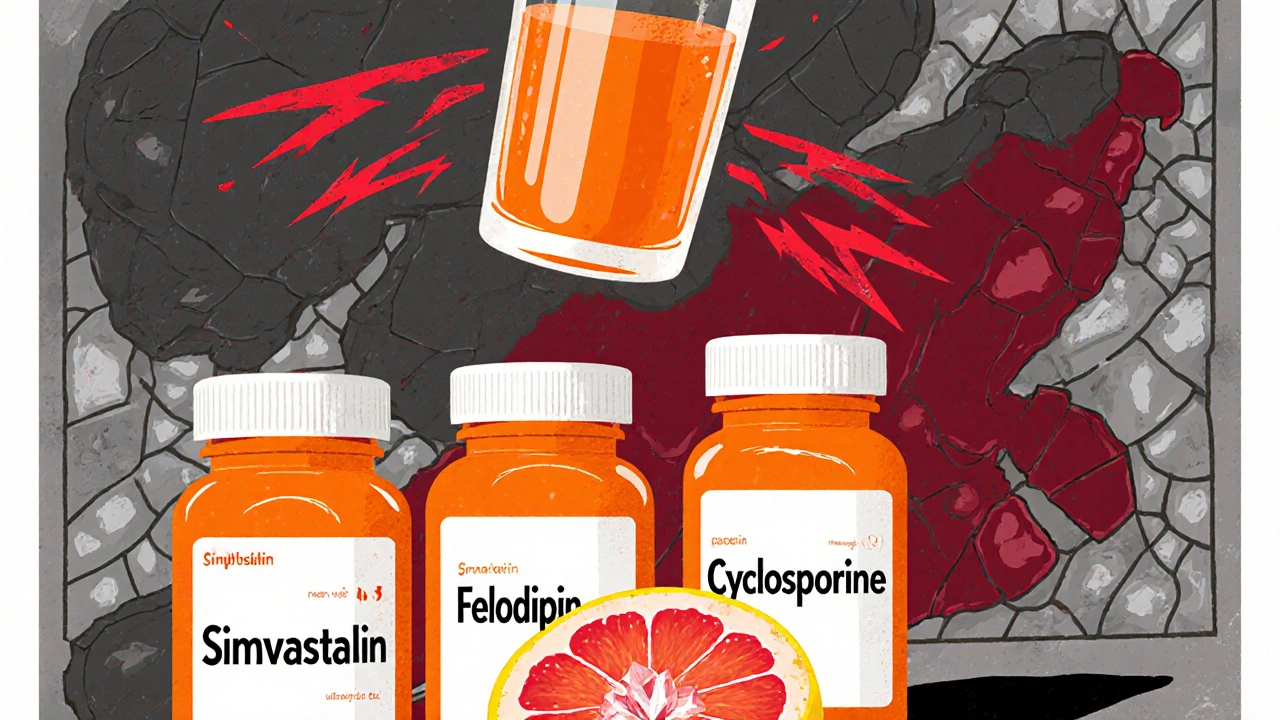
Grapefruit Juice and Medications: Why This Common Drink Can Be Dangerous
Grapefruit juice can dangerously increase levels of over 85 medications, including statins and blood pressure drugs. Learn which drugs are affected, why even small amounts matter, and how to stay safe.