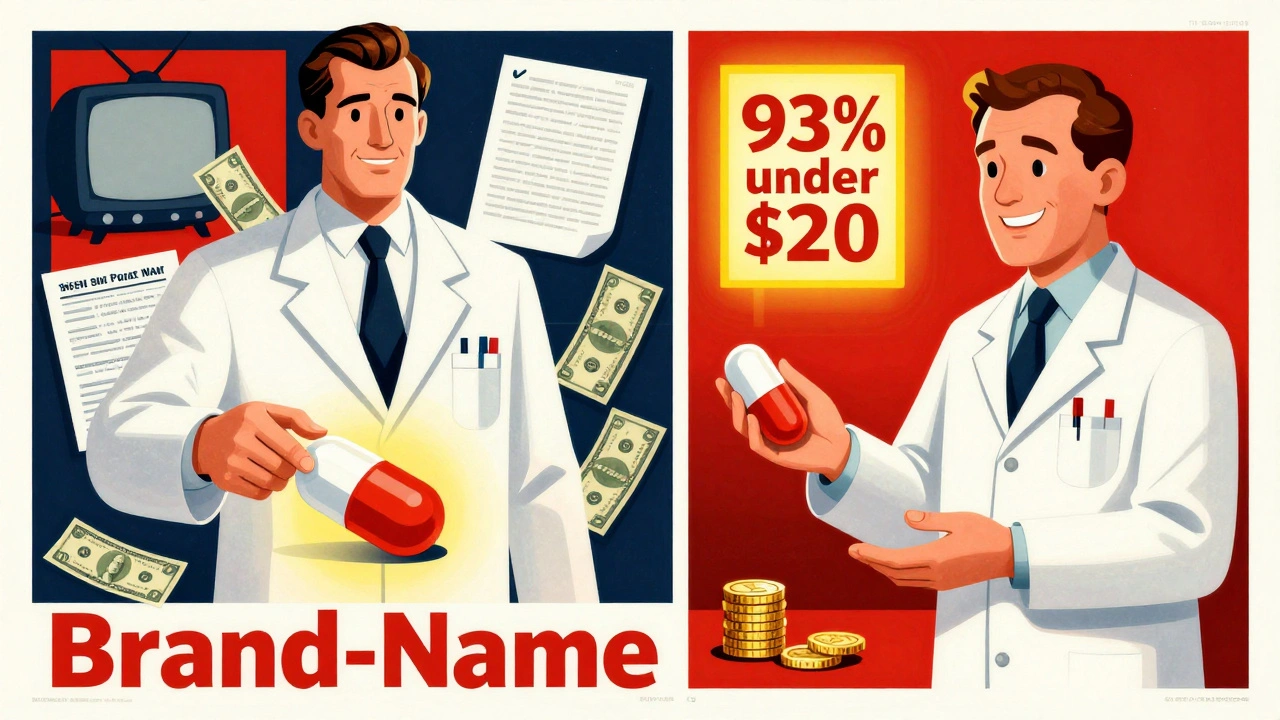
When you pick up a prescription, you might see two options on the receipt: the brand-name drug you asked for, or a cheaper generic version. You might wonder-why is one so much cheaper? And if they’re both supposed to be the same, why does the price difference matter so much? The answer isn’t complicated, but the system around it is. Generic medications cost less because they don’t carry the same financial baggage as brand-name drugs. They don’t need to pay back billions in research costs, they don’t spend millions on TV ads, and they don’t need to turn a profit for shareholders who funded a 10-year drug development process. All they need to do is prove they work the same way-and that’s it.
Same Medicine, Lower Price
The FDA requires generic drugs to contain the exact same active ingredient, strength, dosage form, and route of administration as the brand-name version. That means if you’re taking lisinopril for high blood pressure, the generic version has the same chemical structure, works the same way in your body, and delivers the same results. The FDA doesn’t allow a generic to hit shelves unless it’s bioequivalent-meaning it gets into your bloodstream at the same rate and amount as the brand. No shortcuts. No compromises. Just a cheaper version of the same thing.
And it’s not just a theory. In 2022, generic and biosimilar drugs saved the U.S. healthcare system $408 billion. That’s more than the entire annual budget of the Department of Education. For patients, that translates to an average copay of $6.16 for generics versus $56.12 for brand-name drugs-nearly nine times more. Nine times. And 93% of generic prescriptions cost under $20. For brand-name drugs? Only 59% do.
Why the Price Difference Exists
The big reason generics are cheaper? They skip the most expensive parts of drug development. Brand-name companies spend an average of $2.6 billion and over a decade to bring a new drug to market. That includes clinical trials, regulatory filings, marketing, and patent protection. Once the patent expires, other companies can make the same drug without repeating those costs. They don’t need to run new safety trials. They don’t need to prove the drug works. They just need to show their version behaves the same in the body.
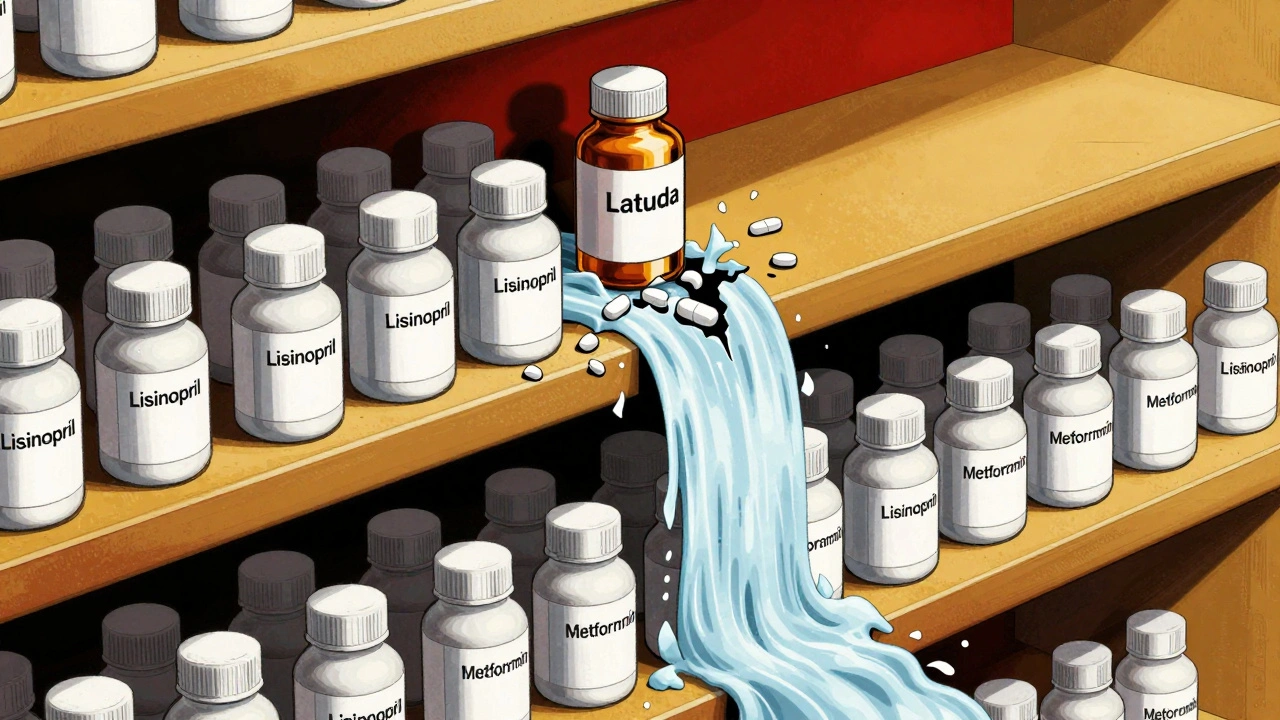
That’s called the Abbreviated New Drug Application (ANDA) process. It cuts years off the approval timeline and saves hundreds of millions per drug. The FDA estimates that once a generic enters the market, prices drop to 15-20% of the brand-name price within the first year. With more manufacturers joining, prices keep falling. For example, when generic versions of lurasidone (brand: Latuda) hit the market, the average 30-day prescription price dropped from $1,400 to under $60. That’s a 96% drop. For pemetrexed (Alimta), the cost fell from $3,800 to $500 per month. These aren’t outliers-they’re standard.
Competition Drives Prices Down
The more companies making a generic drug, the lower the price goes. It’s basic economics. When only one company makes a generic, they can charge more. But once three or more enter the market, prices often drop by another 20-30%. Some drugs have 20 or more generic manufacturers. That’s why you can buy generic metformin for $4 a month at Walmart. Or generic atorvastatin (Lipitor) for under $10. These drugs were once priced at hundreds of dollars a month. Now they’re cheaper than your morning coffee.
But here’s the catch-not all generics are created equal. Some generic drugs are still expensive. A 2022 study in JAMA Network Open found that certain generic drugs were priced 15 times higher than other, equally effective alternatives. Why? Because pharmacy benefit managers (PBMs) sometimes push higher-priced generics onto formularies. They make money from the difference between what they pay pharmacies and what insurers pay them-a practice called “spread pricing.” So even if you’re on a generic, you might not be getting the best deal.
How Patients Are Saving Money
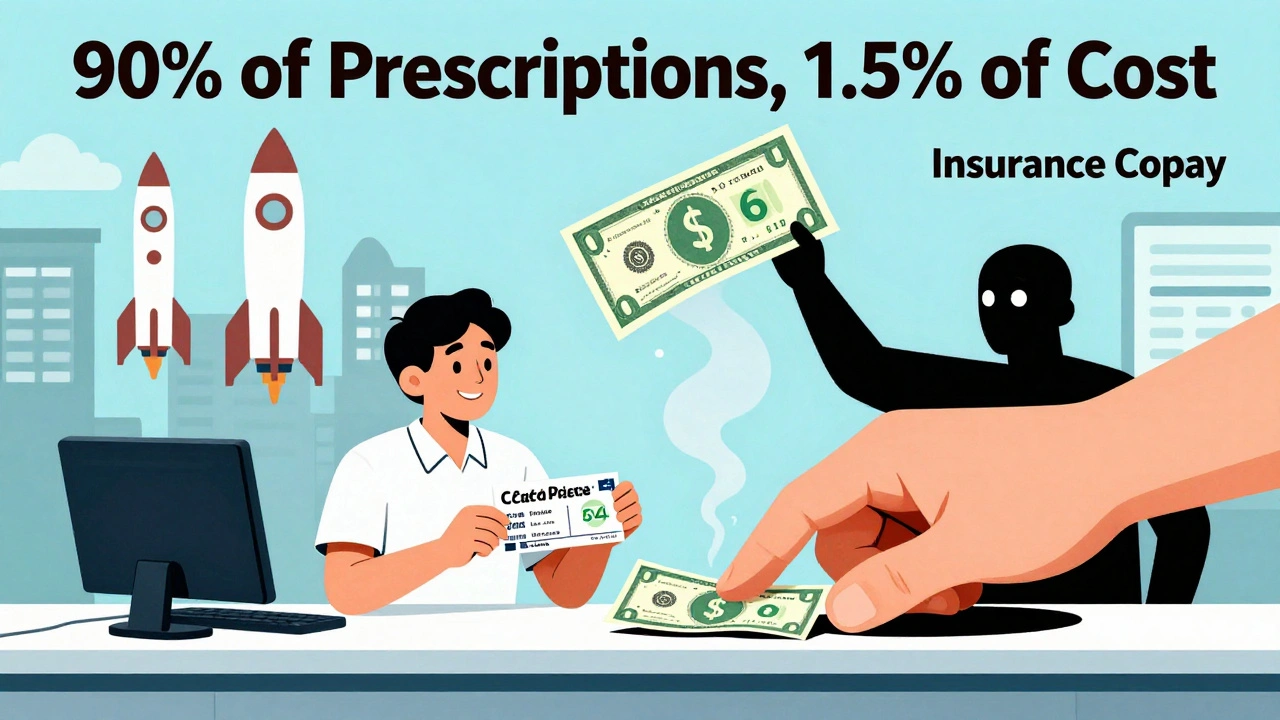
Most people don’t realize they can pay less than their insurance copay. A 2023 study found that for 11.8% of generic prescriptions, patients paid less by buying cash through the Mark Cuban Cost Plus Drug Company than they did using insurance. Uninsured patients saved the most-$6.08 per prescription on average. Tools like GoodRx, SingleCare, and Blink Health let you compare prices across pharmacies. For depression meds, users save 67% on average. For hypertension drugs, it’s 58%. For erectile dysfunction meds, you can find generics for as low as $18 a month.
But here’s the reality: insurance doesn’t always win. People with high-deductible plans often pay more out-of-pocket for brand-name drugs than they would if they paid cash for the generic. One Reddit thread with over 1,400 comments showed that 78% of users found cash prices cheaper than their insurance copay for generics. The trick? Always ask your pharmacist: “What’s the cash price?”
What You Can Do Right Now
Getting the lowest price on your meds doesn’t require a PhD. Here’s what works:
- Ask your doctor to write “dispense as written” on your prescription. That gives your pharmacist the legal right to swap in a generic if one’s available.
- Use GoodRx or SingleCare. Enter your drug name, your zip code, and see the lowest cash price nearby. Sometimes it’s half the insurance copay.
- Consider mail-order pharmacies for maintenance meds. They often have bulk pricing and can cut your monthly cost by 30-50%.
- Check if your pharmacy offers a $4 list. Walmart, Target, and Kroger all have generic drug programs with prices as low as $4 for a 30-day supply.
- If you’re on Medicare, look into Part D plans with low generic copays. Some plans charge $0 for Tier 1 generics.
A 2021 study in JAMA Internal Medicine found that patients who actively compared prices saved an average of $287 a year. That’s not a small amount. That’s a vacation. That’s groceries. That’s paying for a co-pay on a specialist visit.
The Bigger Picture
Generics aren’t just good for your wallet-they’re good for the whole system. In the U.S., generics make up 90% of all prescriptions but only 1.5% of total drug spending. That’s the power of competition. Without them, healthcare costs would be unmanageable. The Congressional Budget Office estimates that generics will save $250-350 billion per year through 2030 as more brand-name drugs lose patent protection.
But there are still problems. Some generic drugs are in short supply. The FDA lists over 200 “at-risk” generics that could disappear if manufacturing issues arise. And some brand-name companies still use legal tricks-like “evergreening” patents or paying generics to delay entry-to keep prices high. The Department of Justice is investigating these “pay-for-delay” deals, and the FTC is looking into PBM practices. Change is coming, but it’s slow.
For now, the best tool you have is awareness. You don’t need to be a pharmacist to save money. You just need to ask questions. You need to compare prices. You need to know that the little white pill next to the brand-name one isn’t a downgrade-it’s a win.
What About Biosimilars?
Biosimilars are the next wave. These are generic versions of complex biologic drugs-like those used for cancer, rheumatoid arthritis, and diabetes. They’re harder to copy than simple chemical pills, so they’re more expensive. But they’re still cheaper than the brand. IQVIA predicts biosimilars will save $150 billion between 2023 and 2027. That’s billions in savings for patients who need life-changing drugs. And it’s coming fast. More biosimilars are being approved every year.
Don’t assume your expensive biologic is your only option. Ask your doctor: “Is there a biosimilar available?” If your insurance says no, ask why. Sometimes it’s just a formulary restriction-not a medical one.
Final Thought
Generic drugs aren’t a compromise. They’re a correction. They fix a broken system where one company holds a monopoly on a life-saving medicine for decades. They bring fairness. They bring choice. And they bring savings-real, measurable, life-changing savings-for patients, insurers, and taxpayers alike.
Next time you see a generic option, don’t think of it as second-best. Think of it as the smart choice. And if you’re still paying full price for a drug that has a generic version? You’re leaving money on the table.

10 Comments
Jennifer Taylor-12 December 2025
Okay but have you ever seen the factory where generics are made? 🤔 I swear I saw a documentary where they reused the same vats for 17 different drugs and just washed them with tap water. I’m not saying they’re dangerous… but I’m also not taking my blood pressure med from a place that looks like a college dorm kitchen. 🚫💊
Shelby Ume-12 December 2025
It’s important to recognize that the accessibility of generic medications is one of the most significant public health victories of the last 50 years. The FDA’s rigorous bioequivalence standards ensure that patients receive the same therapeutic outcomes-regardless of price. For many, choosing a generic isn’t about cutting corners; it’s about survival.
nithin Kuntumadugu-12 December 2025
generic? more like generic* lol. u think the fda checks every pill? nahhh. they just look at the paper. the real stuff? made in china. my aunt took generic metformin and started hallucinating. she thought her cat was the president. 🤯
Harriet Wollaston-14 December 2025
I used to be scared of generics too-until I switched to generic insulin and my bills went from $400 to $12. I cried in the pharmacy aisle. Not because I was sad… but because I realized I’d been overpaying for years. You’re not weak for choosing the cheaper option. You’re smart. And you deserve to breathe without debt.
Lauren Scrima-16 December 2025
So… you’re telling me that after spending $2.6 billion to create a drug, the company just… stops making money? 🤔 Like, I guess we’re just supposed to believe that capitalism suddenly became a charity? Sure. 😏
sharon soila-17 December 2025
Every person who takes a generic drug is making a quiet, powerful statement: I refuse to be exploited. This isn’t just about money. It’s about dignity. It’s about saying, ‘I am worthy of care, even if I can’t afford the brand name.’ And that matters more than any stock price.
nina nakamura-19 December 2025
Generics are fine if you don’t mind dying slowly. The inactive ingredients are different. That’s why they’re cheaper. That’s also why they cause more side effects. You think your body can’t tell the difference? It can. It just doesn’t scream until it’s too late.
Constantine Vigderman-19 December 2025
OMG YES!! I used GoodRx for my antidepressants and saved $180/month!! I was about to quit meds bc of cost… now I’m actually sleeping and not crying all day 🥹❤️ THANK YOU for this post!!
Jade Hovet-21 December 2025
Same!! I switched to generic Lipitor and now I can afford my dog’s monthly meds 😭💸 Thanks for reminding us that we don’t have to be broke to be healthy!
Bruno Janssen-21 December 2025
They’re not cheaper because they’re better. They’re cheaper because no one cares enough to make them expensive. And that’s the real tragedy.