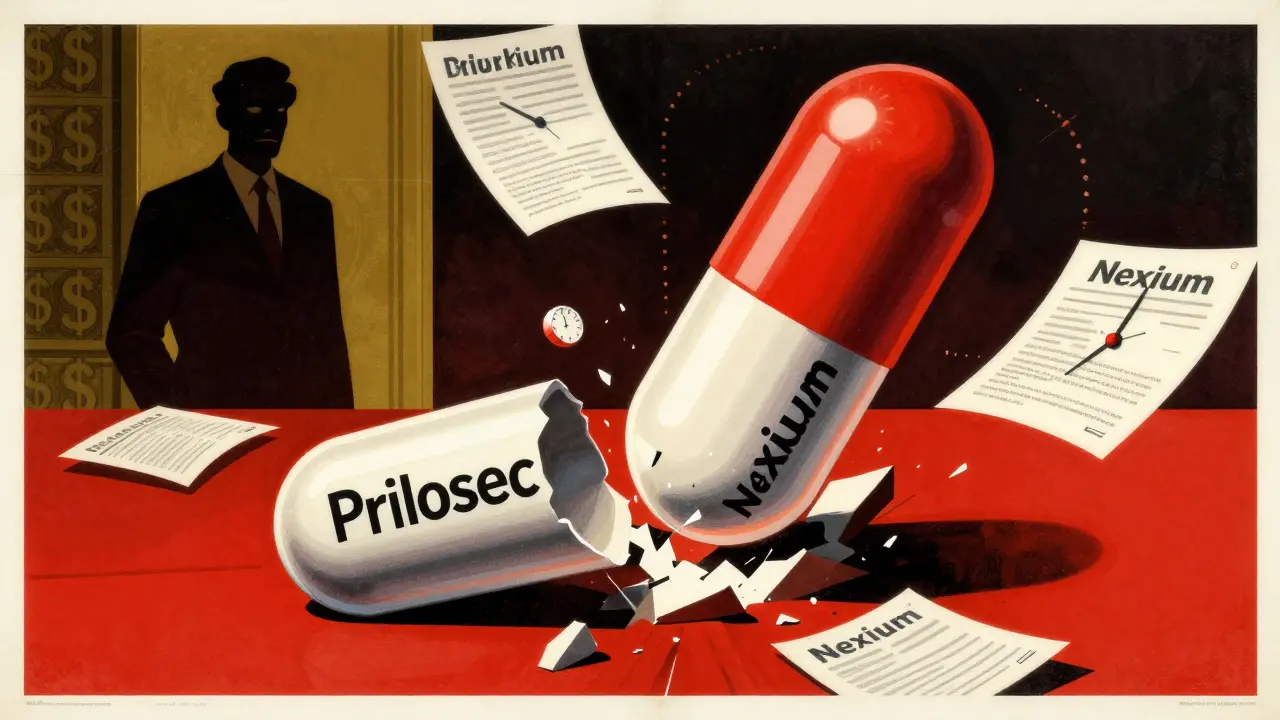
When a life-saving drug hits the market, its patent lasts 20 years. But by the time it’s approved, years have already passed in clinical trials. That leaves companies with maybe 10-12 years of real exclusivity before generics can enter. And that’s not enough for some drugmakers. So they play a game - not with science, but with patents. This is called evergreening.
Evergreening isn’t about inventing new medicines. It’s about tweaking old ones just enough to get new patents. A pill that used to be taken once a day becomes a capsule that releases slowly over 12 hours. A tablet turns into a liquid spray. A single-drug treatment becomes a combo with a side effect blocker. These aren’t breakthroughs. They’re minor changes. But under patent law, they’re enough to block generics for another 5, 7, even 16 years.
How Evergreening Works: The Patent Loophole
The U.S. Hatch-Waxman Act of 1984 was meant to balance innovation and access. It gave brand-name drugmakers 5 years of exclusivity for new drugs and 3 years for new formulations. It also created a fast track for generics. But it didn’t stop companies from filing dozens of patents on the same drug - each one based on a tiny tweak.
Take AstraZeneca’s Prilosec. It was a blockbuster for acid reflux. When its patent neared expiration, they launched Nexium - essentially the same molecule, just slightly modified. Nexium wasn’t more effective. But it came with a new patent, a new brand, and a new price tag. Patients were told Nexium was "better." It wasn’t. It just cost more. And because of that patent, generics couldn’t touch it for years.
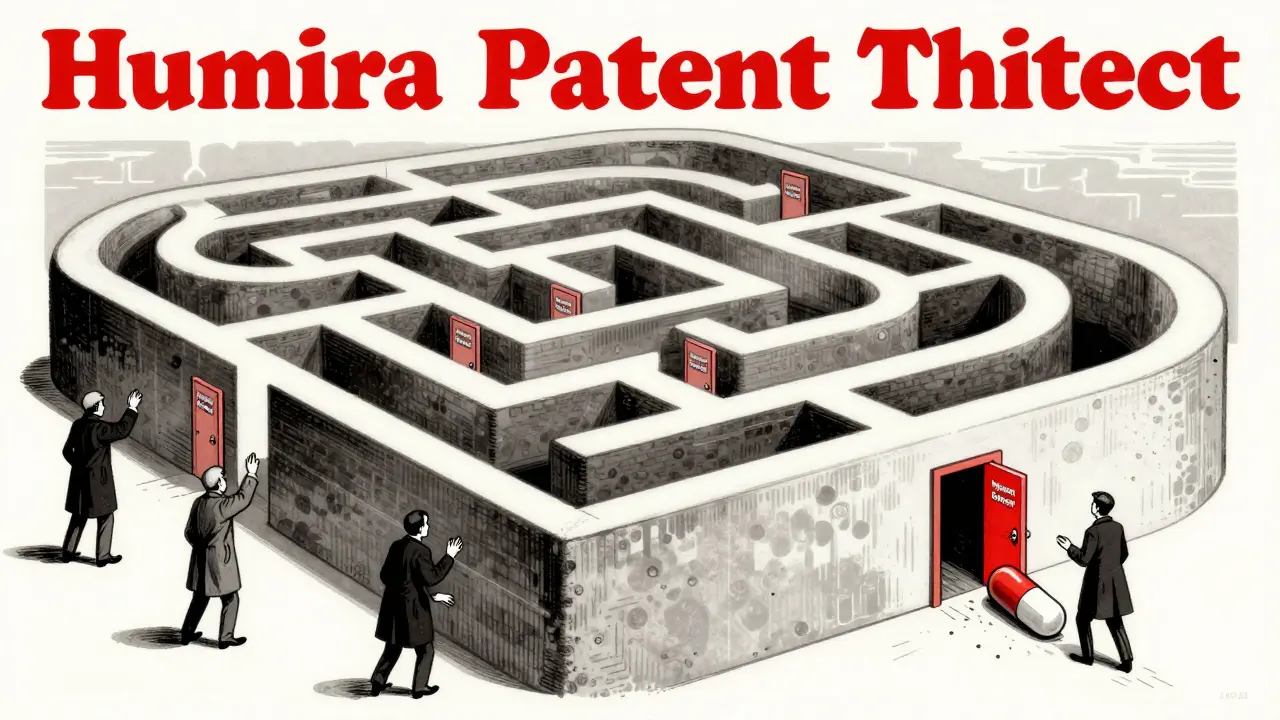
AbbVie’s Humira is even more extreme. Over 247 patents were filed around this one drug, used to treat rheumatoid arthritis, Crohn’s, and psoriasis. Each patent covered something different: a new injection device, a different dosage, a specific storage method. Together, they created a "patent thicket" - a legal maze so complex that generic companies couldn’t afford to challenge them all. As a result, Humira stayed monopoly-priced for over 20 years, earning roughly $40 million a day at its peak.
The Tools of the Trade
Pharma companies don’t guess at these tricks. They have teams of lawyers, chemists, and regulatory experts working years ahead of patent expiry. Here’s what they commonly do:
- New delivery systems: Switching from a pill to a patch, spray, or implant to get a fresh patent.
- Combination drugs: Adding a second, low-cost ingredient to an existing drug. Even if the second ingredient is generic, the combo gets new protection.
- Pediatric exclusivity: Running small, low-cost studies in children to earn an extra 6 months of protection.
- Orphan drug designation: Repurposing a common drug for a rare disease. This grants 7 years of exclusivity, even if the drug was already on the market.
- Product hopping: Pulling the original drug off shelves and pushing patients onto the new, patent-protected version. No generics can replace it if the old version isn’t available.
- Authorized generics: Letting your own subsidiary sell a generic version - just to scare off real competitors. They can’t enter until your "generic" is gone.
These aren’t loopholes. They’re deliberate strategies built into the system. And they work. According to Harvard researchers, 78% of new patents filed for prescription drugs are for existing medications - not new ones.
The Cost to Patients and Systems
Generics slash prices by 80-85% once they hit the market. That’s not theory. That’s fact. When a drug like Lipitor went generic, its price dropped from $3.50 per pill to 15 cents. Millions of people could finally afford it.
But when evergreening delays generics, patients pay more. For years. In the U.S., Humira cost over $70,000 a year before generics arrived. In countries that didn’t allow evergreening, the same drug was available as a generic for under $5,000. That’s not just a price difference - it’s a life-or-death gap.
And it’s not just about individual cost. Hospitals, insurers, and government programs like Medicare spend billions more because of these delays. A 2023 study estimated that evergreening added over $100 billion in unnecessary drug costs in the U.S. alone over the last decade.
Why It Keeps Working
Why hasn’t this been shut down? Because the system is designed to let it happen.
The U.S. Patent Office doesn’t require proof that a modification improves health outcomes. It only asks: "Is this new?" Not "Is it better?" So a company can patent a pill with a different color, a different shape, or a different coating - and the patent gets approved.
Generic manufacturers don’t have the resources to fight hundreds of patents. Even if they win one case, another patent pops up. The legal fees can run into tens of millions. Most simply give up.
Meanwhile, drugmakers spend millions on marketing to convince doctors and patients that the new version is superior. They fund studies. They sponsor patient groups. They pay for ads. The message is simple: "This is the real drug. The rest are knockoffs."
Where It’s Starting to Crack
Change is coming - slowly.
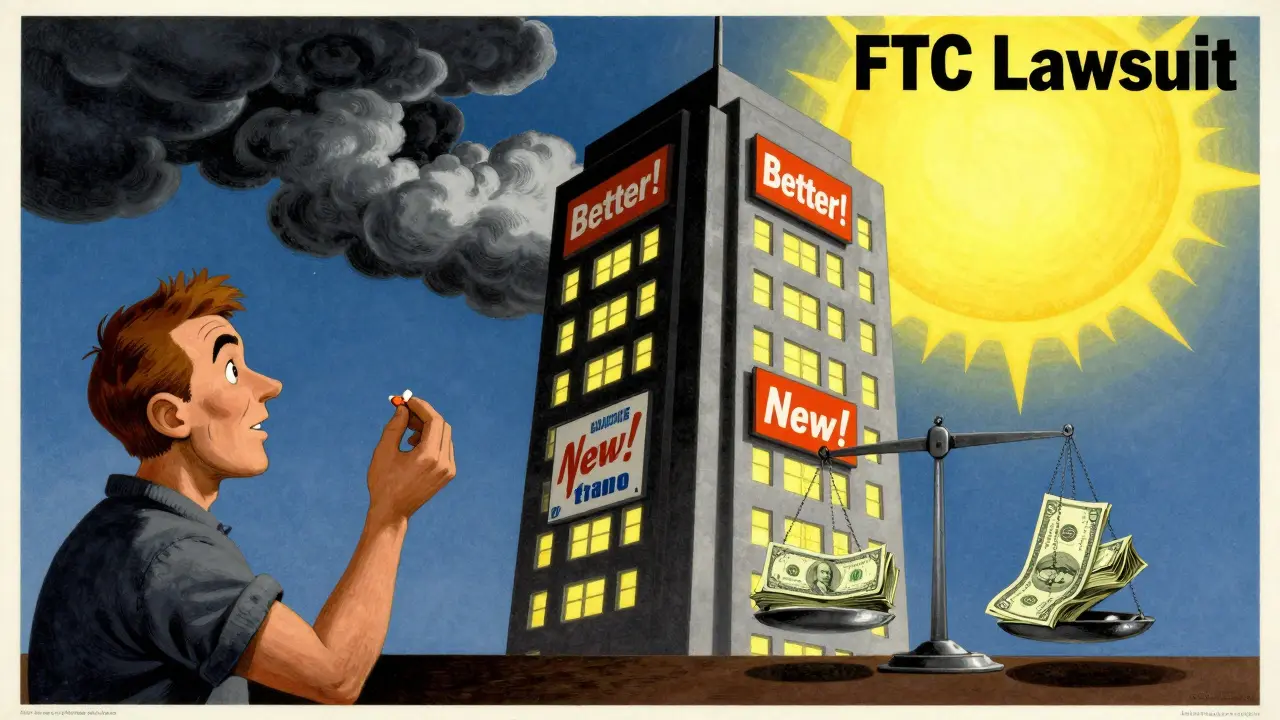
In 2022, the U.S. Federal Trade Commission sued AbbVie over Humira’s patent strategy, calling it "anti-competitive." The case is still ongoing, but it’s one of the first major government challenges to evergreening.
The Inflation Reduction Act of 2022 lets Medicare negotiate prices for a handful of high-cost drugs. That alone reduces the financial incentive to extend patents. If a drug’s price is capped, why spend $100 million on a patent thicket?
Europe is stricter. The European Medicines Agency now requires proof of "significant clinical benefit" before granting extra exclusivity. That’s a big deal. It means you can’t just tweak a drug - you have to show real improvement.
And in Australia, regulators are watching closely. While we don’t have as many patent thickets as the U.S., we’ve seen attempts to delay generics for drugs like Humira and Enbrel. The Therapeutic Goods Administration now reviews patent claims more critically, especially when they involve minor formulation changes.
What’s Next?
Pharma companies aren’t giving up. They’re moving to harder-to-copy drugs: biologics, gene therapies, and nanoparticle formulations. These aren’t pills. They’re complex biological products. Even if a patent expires, making a true generic is nearly impossible. That’s the next frontier - not evergreening, but "biogeneric blocking."
Meanwhile, patients and policymakers are pushing back. More lawsuits. More transparency. More pressure on regulators to stop approving patents that add nothing but cost.
Evergreening isn’t innovation. It’s financial engineering disguised as medicine. And while it’s legal, it’s not ethical. The question isn’t whether it works - it’s whether we’ll let it keep working.
Is evergreening legal?
Yes, in most countries, including the U.S. and Australia. As long as the modification meets the legal definition of being "novel" and "non-obvious," the patent is granted - even if the change is minor. Courts have consistently upheld these patents unless there’s clear evidence of fraud or abuse. But regulatory agencies are starting to challenge them more aggressively.
Does evergreening improve patient outcomes?
Rarely. Studies show that most evergreened drugs offer no meaningful clinical advantage over the original. A 2020 analysis of 150 such drugs found that 92% had no improvement in effectiveness, safety, or ease of use. The changes are often cosmetic - like switching from a tablet to a capsule - or designed to make generics harder to copy, not to help patients.
How do generics finally get approved despite evergreening?
It takes time, money, and legal wins. Generic companies challenge patents one by one in court. If they win, the patent is invalidated. If they can’t afford to fight, they wait. Sometimes, regulators step in and declare a patent "invalid" if it’s clearly a minor tweak. In 2023, the FDA cleared a generic version of Humira after a court ruled that AbbVie’s key patents were unenforceable.
Are there any drugs that can’t be evergreened?
Yes. Drugs with simple chemical structures - like aspirin, metformin, or lisinopril - are harder to tweak meaningfully. Their patents expired decades ago, and generics dominate. But blockbuster drugs with complex molecules - especially biologics - are prime targets because they’re harder to copy even after patents expire.
What’s being done to stop evergreening?
Several countries are tightening rules. The U.S. FTC is suing companies for anti-competitive behavior. The EU requires proof of clinical benefit. Canada and Australia are reviewing patent standards more closely. In 2025, the World Health Organization launched a global initiative to track and report evergreening practices, especially in low-income countries where drug costs are most damaging.
Evergreening isn’t going away. But it’s no longer invisible. Patients are asking questions. Regulators are looking closer. And the math is becoming harder to ignore: if a drug costs $70,000 a year because of a patent on a different-shaped pill - who really benefits?

14 Comments
Byron Boror-15 March 2026
Let me get this straight - we’re mad because Big Pharma makes money off their own inventions? Wake up. Without patents, no one would risk billions to develop drugs in the first place. You want cheap meds? Then stop whining and let the market work. Innovation doesn’t happen on a charity budget.
Lorna Brown-16 March 2026
What’s fascinating is how we’ve conflated profit with progress. If a company tweaks a drug’s coating to extend a patent, is that innovation - or just legal arbitrage? The real question isn’t whether it’s legal, but whether it serves human health or just shareholder value. We’ve outsourced ethics to lawyers and accountants.
And yet, we still celebrate these companies as heroes while ignoring how their strategies make medicine a luxury. Maybe we need to redefine what ‘value’ means in healthcare.
Rex Regum-17 March 2026
Oh wow, so the villains are… the companies that invented these life-saving drugs?! Are you kidding me?! You think a CEO sits around thinking, ‘How can I screw over sick people today?’ No - they’re thinking, ‘How do I keep funding the next breakthrough?’
Every single time you cry about ‘evergreening,’ you’re indirectly screaming for fewer new drugs. Because if companies can’t profit, they don’t invest. Simple math. You want generics? Fine. But don’t blame the innovators for trying to survive.
Also, Humira? That drug saved my cousin’s life. So don’t you dare call it ‘financial engineering.’
Kelsey Vonk-18 March 2026
It’s wild how we’ve normalized this. We cheer for ‘disruptors’ in tech… but when it’s pharma, suddenly it’s ‘greedy’? 🤔
What if the real problem isn’t the companies - but the system that lets them game patents without proving real benefit? Maybe we need to stop treating medicine like a product and start treating it like a public good. 💭
Also, I just cried reading the Humira cost comparison. 😢
Emma Nicolls-19 March 2026
i mean like why are we even surprised anymore this is just capitalism doing its thing honestly we knew this was coming the system is rigged and we keep pretending its not
Jimmy V-20 March 2026
Patents aren’t the problem. The lack of oversight is.
The FDA approves tweaks. The Patent Office grants them. Courts uphold them. No one checks if they’re meaningful. That’s not innovation - it’s fraud with paperwork.
Fix the system. Not the companies.
Richard Harris-20 March 2026
this is really concerning, i didn't realize how bad it was in the us. in the uk, we have nhs price controls, so even if they try to evergreen, it doesn't matter as much. still, it's scary how much power these companies have.
Kandace Bennett-22 March 2026
OMG, I’m so glad someone finally said this. 😍
Like, can we all just admit that Big Pharma is basically a casino where the house always wins? 💅
And don’t even get me started on how they market to doctors. It’s like a cult. 🤫
Also, I just donated to a patient advocacy group. You should too. 💖
Tim Schulz-24 March 2026
Oh wow. A 16-year patent extension on a pill that’s literally the same molecule? How poetic.
It’s like they took the word ‘innovation’ and fed it through a thesaurus until it came out as ‘legal loophole.’
Next up: patenting the color blue because it makes your pill feel more ‘calm.’ 🎨
Jinesh Jain-25 March 2026
in india, generics are everywhere. we get the same drugs for 1/10th the price. no one here cares about patent tricks. the real issue is access - not who owns the patent. we need global rules, not just american outrage.
douglas martinez-26 March 2026
While the ethical concerns are valid, we must also acknowledge the complexity of pharmaceutical development. The costs of clinical trials, regulatory compliance, and post-market surveillance are extraordinary. Without patent protection, the incentive to innovate would collapse.
However, the current system’s abuse - particularly through patent thickets and product hopping - demands reform. We must balance innovation with equitable access.
Sabrina Sanches-28 March 2026
this is insane... i mean... like... how is this even legal??!!?? the system is broken... we need to fix this... now... please...
Shruti Chaturvedi-30 March 2026
i grew up seeing my dad pay 2000 rs for a medicine that cost 20000 in usa. its not about the patent its about the greed. we need global solidarity not just outrage. patients everywhere deserve fair prices
Katherine Rodriguez-30 March 2026
why do we even care about big pharma? they’re just corporations. if you can’t afford your meds, you’re not trying hard enough. get a second job. move to a different country. stop whining.