Many people turn to green tea extract for its antioxidant reputation, weight loss claims, or heart health benefits. But what most don’t realize is that this popular supplement can quietly interfere with medications you’re already taking - sometimes with serious consequences. If you’re on any kind of prescription drug, especially for heart conditions, cancer, or blood thinning, green tea extract isn’t just harmless tea. It’s a pharmacological wildcard.
How Green Tea Extract Actually Interacts With Drugs
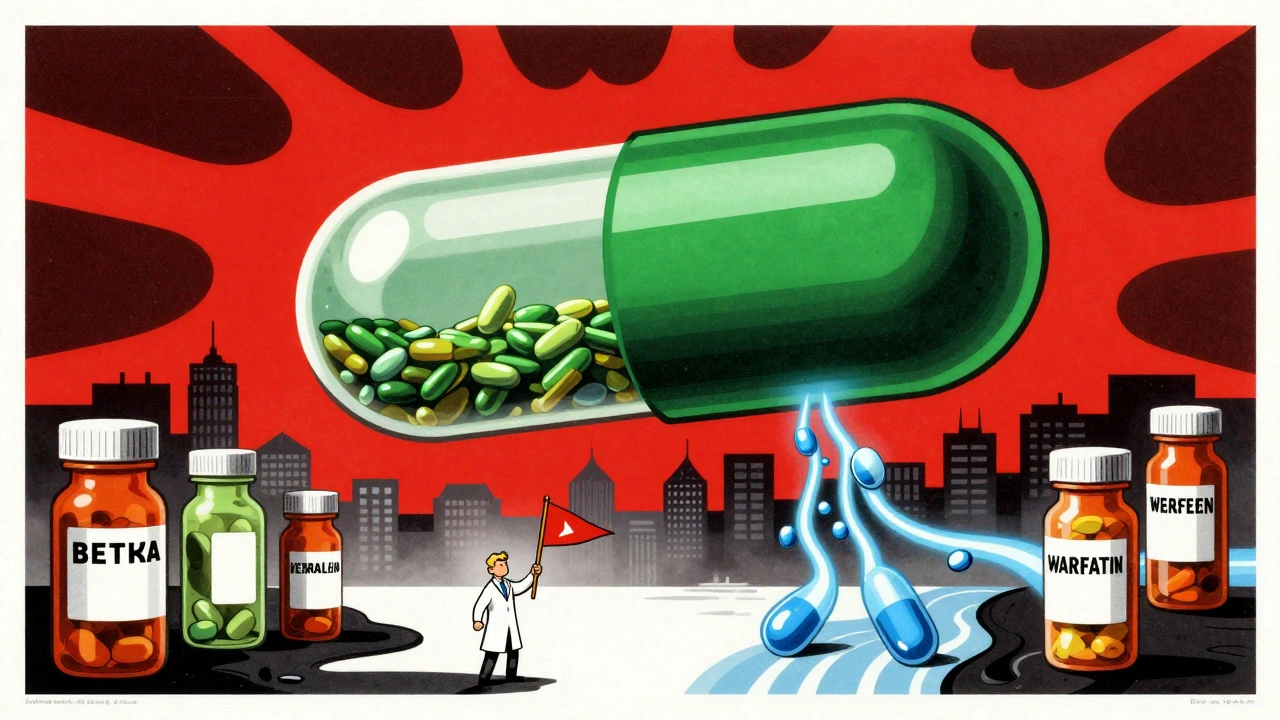
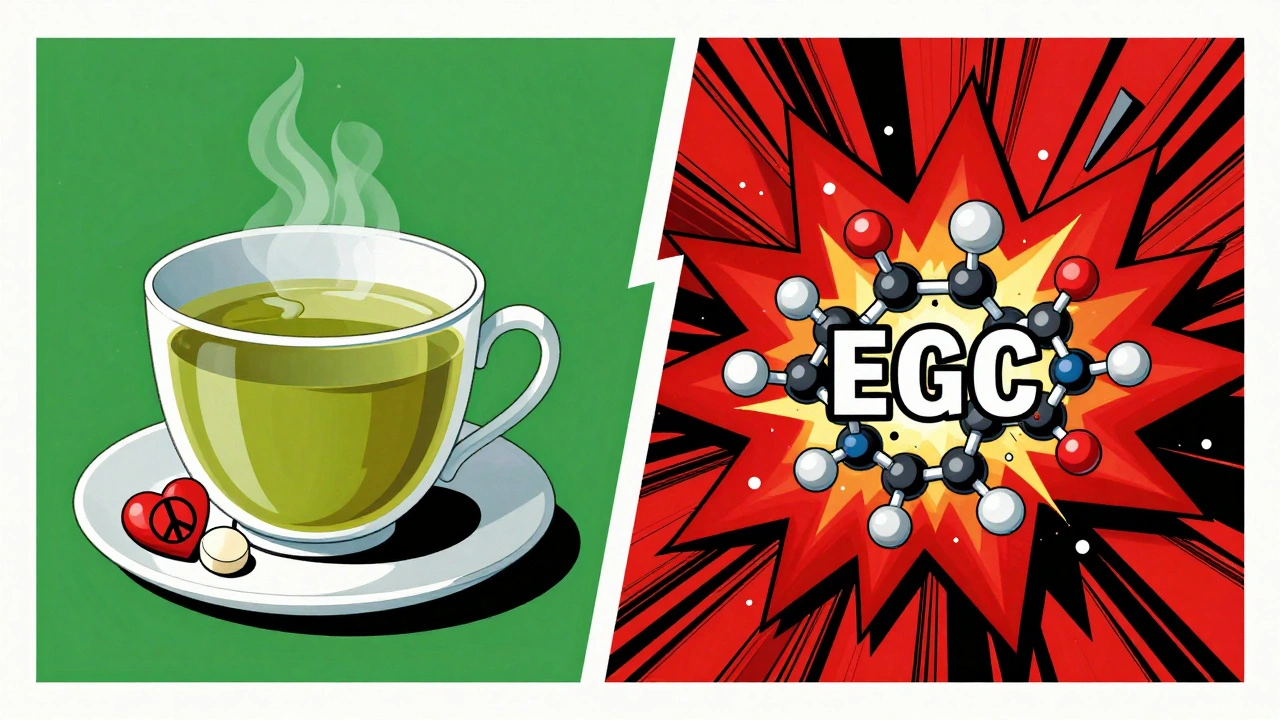
Green tea extract isn’t just caffeine and antioxidants. Its main active ingredient, epigallocatechin gallate (EGCG), directly blocks key transporters in your gut and liver that move drugs into your bloodstream. Think of it like a traffic jam at the entrance to your body’s drug delivery system. When EGCG clogs those pathways, your medication can’t get absorbed properly. On top of that, the caffeine in green tea extract can amplify the effects of stimulants or interfere with sedatives. This dual mechanism - transporter blocking plus caffeine stimulation - makes green tea extract far more dangerous than most herbal supplements.For example, if you take nadolol (a beta-blocker for high blood pressure), drinking green tea extract can slash its absorption by up to 83%. That means your blood pressure could spike even if you’re taking your pill exactly as prescribed. The same thing happens with atorvastatin (Lipitor), rosuvastatin (Crestor), and lisinopril - all common heart medications. Studies show their effectiveness drops by 25-40% when taken with concentrated green tea extract.
The Most Dangerous Interactions
Some drug interactions with green tea extract aren’t just inconvenient - they’re life-threatening. The most serious one involves bortezomib (Velcade), a chemotherapy drug used for multiple myeloma. EGCG in green tea extract binds directly to bortezomib, neutralizing up to half its cancer-killing power. Cancer centers like MD Anderson have seen treatment failure rates jump by 15% in patients who kept taking green tea supplements during therapy.Another high-risk combo is green tea extract with 5-fluorouracil, a chemotherapy drug for colon and breast cancer. When EGCG blocks the liver enzymes that break down this drug, its levels in the blood can rise by 35-40%. That doesn’t mean better results - it means severe toxicity: nausea, mouth sores, low blood counts, even organ damage.
If you’re on warfarin (Coumadin), green tea extract can cause unpredictable spikes or drops in your INR levels. One internal review from the Cleveland Clinic found that 18% of unexplained INR changes in warfarin patients were tied to green tea supplement use. That’s dangerous because too high an INR means bleeding risk; too low means clots. Neither is acceptable.
Even common asthma medications like albuterol can become risky. Green tea’s caffeine acts like a stimulant. When combined with albuterol - which already raises heart rate - your pulse can jump 20-30 beats per minute. That’s enough to trigger palpitations, dizziness, or worse in people with heart conditions.
Why Supplements Are Riskier Than Tea
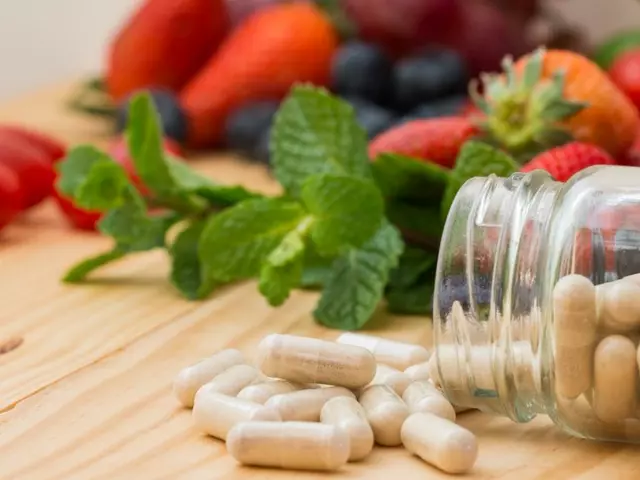
Drinking one or two cups of brewed green tea a day is generally safe for most people. But supplements? That’s a different story. A single capsule of green tea extract can contain 250-500 mg of EGCG. Brewed tea? About 50-100 mg per 8-ounce cup. That’s a five- to tenfold difference.And here’s the kicker: most supplement labels don’t warn you. A 2021 FDA survey found only 38% of green tea extract products mention drug interactions. The rest? Silent. You’re not just buying a supplement - you’re buying a gamble.
Reddit threads and patient forums are full of stories: people on Adderall getting heart palpitations after taking green tea extract. Others noticing their blood pressure meds suddenly stopped working. Many say they never thought about interactions because “it’s natural.” But natural doesn’t mean safe. In fact, herbal supplements are among the most under-regulated products on the market. The FDA doesn’t test them before they hit shelves.
Who’s at Highest Risk?
If you’re taking any of these, you need to pay attention:- Chemotherapy drugs (bortezomib, 5-fluorouracil)
- Beta-blockers (nadolol, propranolol)
- Statins (atorvastatin, rosuvastatin)
- Anticoagulants (warfarin, dabigatran)
- Antidepressants or ADHD meds (especially stimulants like Adderall)
- Imatinib (Gleevec) for leukemia
- Any medication with a narrow therapeutic index - meaning the difference between a helpful dose and a toxic one is tiny
Older adults are especially vulnerable. By 2030, nearly half of Americans over 65 will be taking five or more medications. That’s a perfect storm for interactions. Green tea extract is often seen as a “safe” addition to a regimen - but it’s one of the most likely culprits behind unexpected side effects.
What You Should Do
If you’re on any medication and take green tea extract, here’s what to do:- Stop taking the supplement immediately if you’re on bortezomib, chemotherapy, or warfarin. There’s no safe dose here.
- Wait at least 4 hours between taking your medication and consuming green tea extract if you’re on statins, blood pressure drugs, or asthma meds. This reduces interaction risk by about 60%.
- Limit brewed green tea to 1-2 cups per day if you’re on moderate-risk meds. That keeps caffeine under 100 mg and EGCG under 200 mg - far below the danger zone.
- Always tell your doctor and pharmacist you’re taking green tea extract. Don’t assume they’ll ask. Most don’t.
- Check your supplement label. If it doesn’t list EGCG content or warn about drug interactions, switch brands - or better yet, skip it.
There’s no magic number where green tea extract becomes “safe.” It’s not about quantity - it’s about what else you’re taking. The same dose that’s harmless to one person could be dangerous to another.
The Bigger Picture
The green tea extract market is booming - over $2 billion globally in 2022. But growth doesn’t equal safety. Regulatory oversight under the Dietary Supplement Health and Education Act (DSHEA) is minimal. Companies don’t need to prove their products are safe before selling them. The FDA only steps in after people get hurt.In 2022 alone, the FDA sent 17 warning letters to green tea supplement makers for failing to label interaction risks. Less than a third fixed it by early 2023. Meanwhile, research keeps piling up: 12 new drug interactions were added to the European Medicines Agency’s database in January 2023, including one with the blood thinner Pradaxa.
Experts agree: the risk isn’t from drinking tea. It’s from concentrated, unregulated extracts taken without medical knowledge. The real danger isn’t the green tea extract itself - it’s the assumption that “natural” means “no side effects.”
Can I still drink green tea if I’m on medication?
Yes - but only in moderation. One to two cups of brewed green tea per day is generally safe for most people. Avoid drinking it within 4 hours of taking medications like statins, blood pressure drugs, or beta-blockers. Skip supplements entirely if you’re on chemotherapy, warfarin, or bortezomib.
Does green tea extract interact with blood pressure meds?
Yes, and it’s a common problem. Green tea extract can reduce absorption of nadolol, lisinopril, and other blood pressure drugs by 25-83%. This can cause your blood pressure to rise unexpectedly. If you’re on these medications, avoid green tea extract supplements. Limit brewed tea to one cup daily and space it out from your pill by at least 4 hours.
Is green tea extract safe with statins like Lipitor?
No, not if you’re taking concentrated extract. Studies show green tea extract can reduce atorvastatin absorption by up to 40%, making it less effective at lowering cholesterol. Brewed tea in small amounts is less risky, but supplements are dangerous. If you’re on Lipitor or Crestor, avoid green tea extract capsules, tablets, or powders.
Can green tea extract affect chemotherapy?
Absolutely - and this is critical. Green tea extract can reduce the effectiveness of bortezomib by up to 50%, and increase toxicity of 5-fluorouracil. Cancer patients should stop all green tea supplements during treatment. The National Comprehensive Cancer Network explicitly advises against it. Even if you feel fine, the drug may not be working as it should.
Why don’t supplement labels warn about these interactions?
Because they don’t have to. Under U.S. law, dietary supplements don’t need FDA approval before being sold. Manufacturers aren’t required to test for drug interactions or list warnings unless the FDA forces them to. Only 12% of green tea extract products mention interaction risks, even though the FDA recommends it. You can’t rely on the label - you have to ask your doctor.
What should I take instead of green tea extract for antioxidants?
Focus on whole foods: berries, dark leafy greens, nuts, and colorful vegetables provide antioxidants without the risk. If you want a supplement, talk to your doctor about vitamin C or E - they don’t interfere with medications the way green tea extract does. Avoid any supplement that promises “miracle” health benefits - they’re often the most dangerous.

10 Comments
Frank Nouwens- 9 December 2025
While the pharmacological mechanisms described here are technically accurate, I must emphasize that the clinical relevance of EGCG-mediated transporter inhibition remains context-dependent. The 83% absorption reduction cited for nadolol was observed in vitro under supra-physiological concentrations; human pharmacokinetic studies demonstrate far more modest effects, typically under 20%, when supplements are taken with food and proper temporal separation. The real issue is not the extract itself, but the lack of standardized dosing and patient education.
Jack Appleby- 9 December 2025
Let’s be brutally honest: the entire supplement industry is a grotesque parody of science, masquerading as wellness. EGCG isn’t some mystical elixir-it’s a potent bioactive compound that interferes with cytochrome P450 enzymes, P-glycoprotein, and organic anion-transporting polypeptides. You don’t get to cherry-pick ‘natural’ as an exemption from pharmacokinetic laws. The FDA’s hands are tied by DSHEA, and consumers are being systematically misled by marketing departments with degrees in psychology, not pharmacology. This isn’t ‘natural health’-it’s corporate negligence dressed in hemp.
Sarah Clifford-10 December 2025
Okay but what if I just drink green tea and not the pills? Like… is that still dangerous? I’m not trying to be a biochemist I just want to chill with my tea.
Michelle Edwards-11 December 2025
Thank you for sharing this so clearly. I’ve been on warfarin for years and never thought twice about my daily green tea. I’m going to talk to my pharmacist tomorrow and cut out the supplements. You’re right-it’s not about being scared, it’s about being informed. Small changes can make a huge difference.
Neelam Kumari-13 December 2025
Of course it’s dangerous-why would anyone think a plant extract, harvested by peasants in the Himalayas and packed in a Chinese factory, could be safe with Western pharmaceuticals? You think your Lipitor was designed to coexist with ‘ancient wisdom’? Please. The only thing natural here is your ignorance.
Doris Lee-15 December 2025
One cup of tea in the morning, no supplements, and I’m good to go. I’ve got my meds, my tea, and my peace of mind. You don’t need a miracle pill to be healthy-you just need to listen to your body and your doctor. Simple, but it works.
Kaitlynn nail-16 December 2025
It’s not the tea. It’s the capitalism. We’ve turned healing into a product. You want antioxidants? Eat a blueberry. You want to live? Stop buying ‘solutions’ from people who don’t have a medical license.
Rebecca Dong-16 December 2025
Wait… so you’re telling me the government let this happen on purpose? That the FDA is letting these companies poison people because they’re ‘natural’? And the pharmaceutical companies are behind it? Because if statins were less effective, people would buy more pills? This is a controlled demolition of public health. I’ve been reading about this since 2018. Nobody listens. They just want their ‘detox’ tea.
Regan Mears-17 December 2025
I’ve seen patients come in with heart palpitations after taking green tea extract with Adderall-no one ever connects the dots. I’m a nurse, and I’ve started asking every patient: ‘Are you taking any supplements?’ If they say ‘just green tea,’ I ask, ‘Which one? The tea or the capsule?’ Most don’t know the difference. This post saved someone’s life. Thank you for speaking up.
Raj Rsvpraj-19 December 2025
Western medicine is obsessed with pills, pills, pills-while in India, we’ve used green tea for centuries without any of this nonsense. Your bodies are weak. You take ten medications for one problem, then blame the herb for your own overmedication. The real issue? Your system is broken-not the tea. I drink it with my blood pressure pills. I’m fine. You should try balance, not fear.