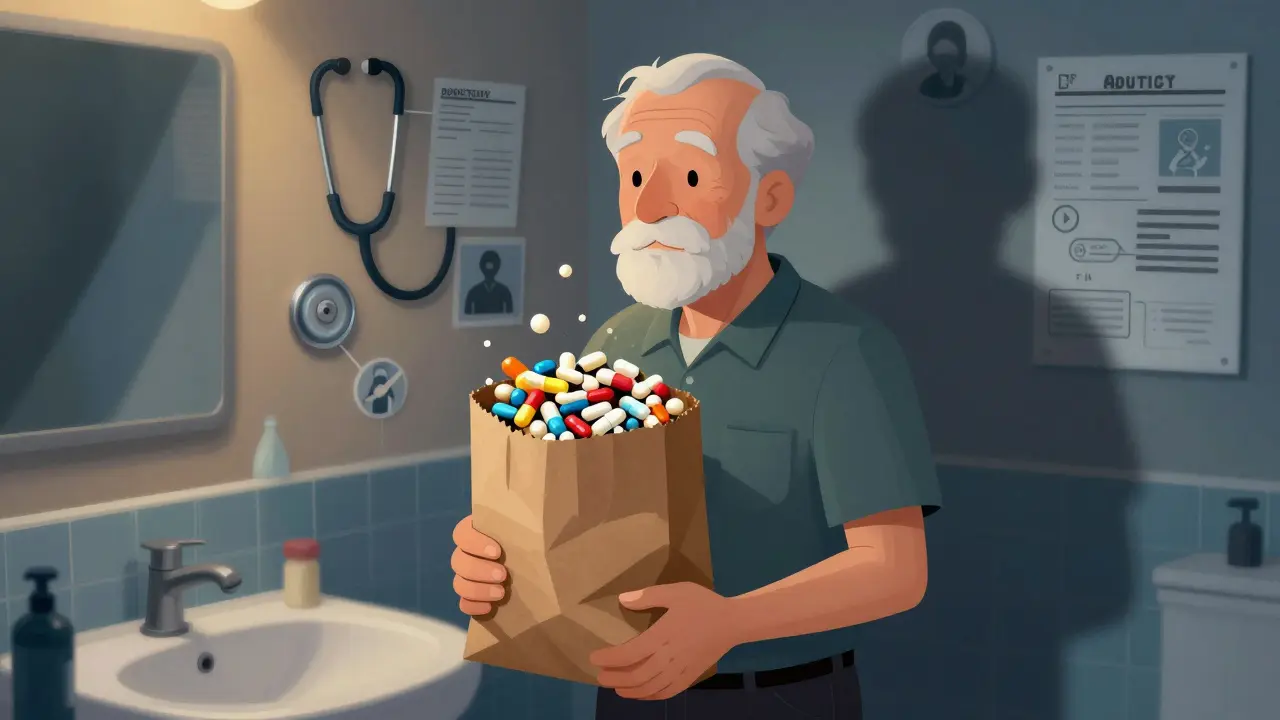
When someone turns 65, they often start taking more meds. Not because they’re sicker, but because their body changes, their doctors change, and their care gets fragmented. One pill for blood pressure. Another for arthritis. Then a statin, a diabetes drug, a sleep aid, and maybe a stomach protector. Before long, it’s five, six, even ten pills a day. This isn’t unusual - it’s common. And it’s dangerous.
What Polypharmacy Really Means
Polypharmacy isn’t just having a lot of medications. It’s taking five or more regularly - and not always for the right reasons. The term became widely used after the American Geriatrics Society released the Beers Criteria in 2004, which listed drugs that are risky for older adults. Since then, research has shown that about 40% of seniors worldwide are on too many meds. In nursing homes, it’s worse: up to 91% of residents take five or more daily.
It’s not just about the number. It’s about what’s in the bottle. Benzodiazepines for sleep? They double the risk of falls. NSAIDs for joint pain? They can cause internal bleeding. Anticholinergics for overactive bladder? They raise dementia risk by 50% over seven years. These aren’t rare side effects - they’re predictable outcomes of poor prescribing.
Why Seniors Are at Higher Risk
Your body doesn’t process drugs the same way at 70 as it did at 40. The liver slows down - by 30% to 50% in people over 80. Kidneys clear drugs more slowly, too. That means a standard dose can build up to toxic levels. A drug that was safe at 60 can become harmful at 75.
And it’s not just biology. Seniors often see multiple specialists - a cardiologist, a rheumatologist, a neurologist - each prescribing for their own condition. No one’s looking at the whole picture. A 2021 study found that 42% of seniors get prescriptions from three or more doctors. That’s a recipe for overlap, conflict, and confusion.
Many older adults don’t even know why they’re taking half their meds. Only 55% can correctly name the purpose of every pill in their cabinet. That’s not their fault. It’s the system’s failure.
The Hidden Costs - Beyond Money
Polypharmacy doesn’t just cost money - it costs mobility, independence, and life.
One in three emergency room visits by seniors is due to a bad drug reaction. Falls, confusion, dizziness, stomach bleeding - these aren’t just accidents. They’re medication-induced. In fact, 35% of ER trips among older adults are tied to drug problems. And hospital admissions? About 10% of all hospitalizations for people over 65 are caused by medications they were supposed to be taking.
Costs pile up, too. In the U.S. alone, polypharmacy-related hospitalizations cost over $30 billion a year. Seniors skip doses because they can’t afford the co-pays - 25% of them, according to AARP. Others forget schedules. Sixty-eight percent struggle with regimens that require taking pills at three or more different times a day.
And then there’s the emotional toll. Carrying a bag of pills. Worrying about interactions. Feeling like a burden. Many seniors don’t speak up because they don’t want to seem difficult. But silence kills.
Deprescribing: The Missing Piece
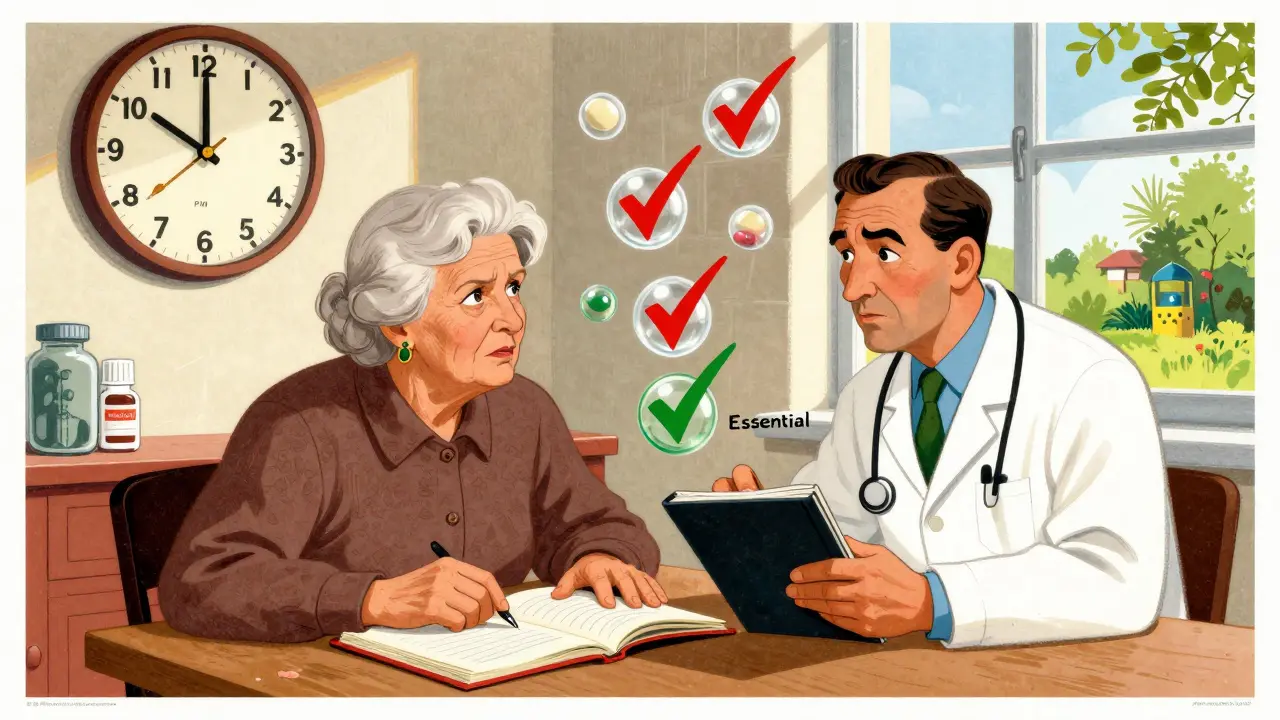
The solution isn’t adding more drugs. It’s removing the ones that shouldn’t be there. That’s called deprescribing - a deliberate, step-by-step process of stopping medications when the risks outweigh the benefits.
It’s not as simple as just quitting. You can’t stop a blood thinner or a heart medication cold turkey. But many drugs can be safely tapered. Studies show that when done right, deprescribing reduces adverse events by 22% and hospital admissions by 17%.
The American Geriatrics Society’s Beers Criteria (updated in 2023) now includes clear guidance on which drugs to cut first: benzodiazepines, antipsychotics in dementia patients, long-term proton pump inhibitors, and anticholinergics. For example, stopping antipsychotics in dementia patients reduces death risk by 19%. Cutting long-term PPIs lowers fracture risk by 26%.
One success story comes from UCI Health’s Health Assessment Program for Seniors (HAPS). They do full “brown bag” reviews - where patients bring every pill, supplement, and OTC med to their appointment. On average, they find 4.2 unnecessary or duplicate medications per patient. After deprescribing, quality of life improves by 37%.
How to Take Control
If you or a loved one is managing multiple medications, here’s what actually works:
- Do a brown bag review. Every six months, gather every pill, capsule, patch, and supplement - even the ones you don’t take anymore. Bring them to your primary care doctor. Don’t rely on memory. Don’t assume the pharmacist knows everything. You need a full picture.
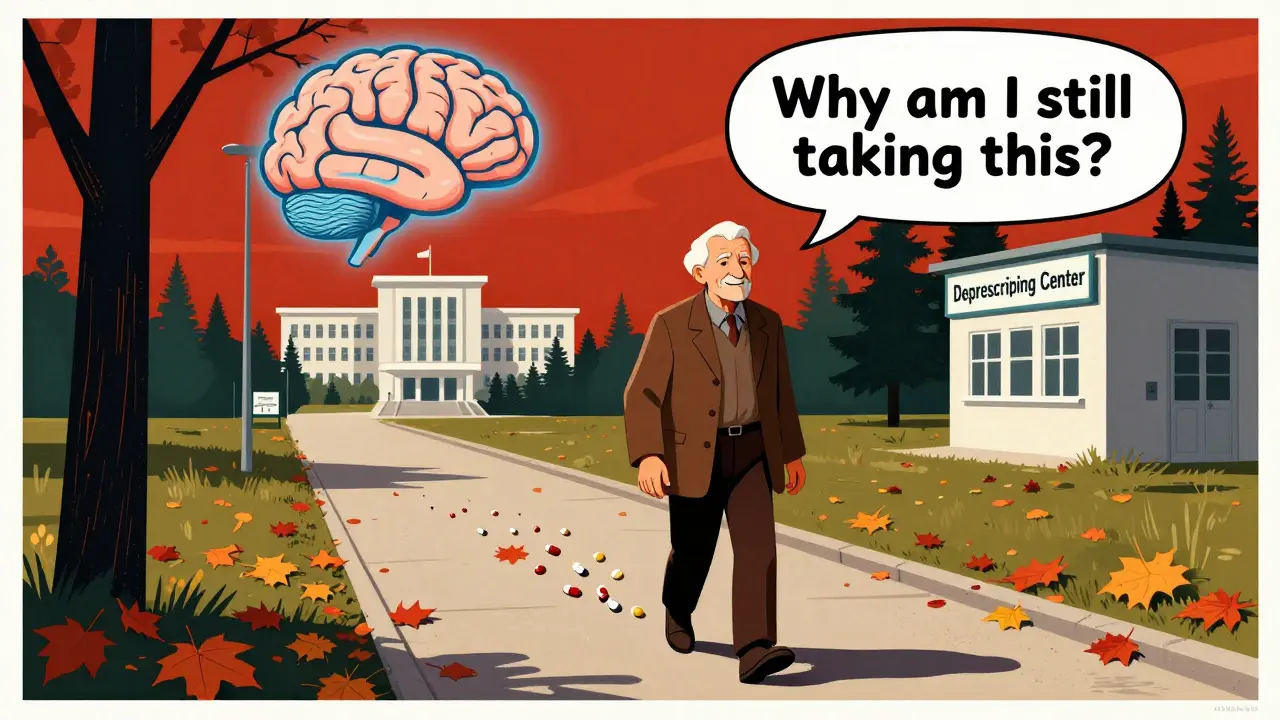
- Ask: “Why am I still taking this?” For each medication, ask your doctor: Is it still helping? Could it be causing more harm than good? What happens if I stop it? If they can’t answer, it’s time to reconsider.
- Use one pharmacy. Having all your prescriptions filled at one pharmacy means one pharmacist can flag dangerous interactions. Most drug interactions happen because prescriptions come from different sources.
- Request a medication therapy management (MTM) session. Medicare Part D beneficiaries are eligible for free MTM consultations with pharmacists. These sessions review your entire regimen, check for duplications, and suggest cost-saving alternatives. Only 15% of eligible seniors use this service - but it’s free and it works. A 2020 CMS study found it cuts hospital readmissions by 24%.
- Set clear goals. As you age, treatment goals should shift from “cure everything” to “stay safe and comfortable.” If a medication doesn’t help you walk, sleep, or enjoy time with family, it may not be worth the risk.
The Role of Technology - And Its Limits
Electronic health records are supposed to help. They flag drug interactions. But here’s the catch: 78% of those alerts are false alarms. Doctors get so many warnings they start ignoring them. That’s why human judgment still matters more than any algorithm.
New tools like MedWise - an FDA-approved platform that uses genetic data to predict how your body will react to drugs - show real promise. In a 2022 trial, users had 41% fewer adverse events. But these tools aren’t widely used yet. They’re still mostly in academic centers.
The real breakthrough isn’t tech. It’s teamwork. Studies show that when doctors, pharmacists, and nurses work together, they optimize medication regimens 32% better than any one provider alone. That’s why programs like HAPS succeed - they bring all the players to the table.
What’s Changing in 2026
The U.S. population over 65 will hit 73 million by 2030. That means polypharmacy won’t fade - it will explode. But change is coming.
In January 2023, CMS launched the “Deprescribing for Better Outcomes” initiative, funding 15 health systems to build standardized protocols. The National Institute on Aging is investing $42 million into 12 long-term studies to figure out which medications are truly necessary for people with multiple chronic conditions.
The future isn’t about fewer pills. It’s about smarter ones. Geropharmacogenomics - using genetic testing to tailor drug choices - could cut adverse events by 50% in the next decade. But until then, the best tool you have is a clear conversation with your doctor.
Final Thought
Polypharmacy isn’t inevitable. It’s not normal. It’s a symptom of a system that treats each disease in isolation, not the whole person. You don’t need to take ten pills to live well. You need to take the right ones - and let go of the rest.
Start today. Grab your meds. Bring them to your next appointment. Ask the questions. Say no to the ones that don’t serve you anymore. Your body, your safety, and your future self will thank you.
What is polypharmacy, and how many medications define it?
Polypharmacy is the regular use of five or more medications at the same time. It’s not just about the number - it’s about whether those medications are still necessary, safe, and working together. While some seniors need multiple drugs for chronic conditions, many are taking pills that no longer benefit them - or even harm them.
Which medications are most dangerous for older adults?
According to the 2023 American Geriatrics Society Beers Criteria, the highest-risk medications include benzodiazepines (like lorazepam), non-steroidal anti-inflammatory drugs (NSAIDs like ibuprofen), anticholinergics (like diphenhydramine), long-term proton pump inhibitors (PPIs like omeprazole), and antipsychotics used in dementia. These drugs increase risks of falls, confusion, stomach bleeding, dementia, and death. Many are prescribed for short-term issues but become long-term habits.
Can you safely stop taking some of your medications?
Yes - and often you should. This process is called deprescribing. It’s not about quitting cold turkey. It’s a planned, gradual reduction under medical supervision. Studies show that carefully removing high-risk drugs reduces hospital visits by 17% and adverse reactions by 22%. Always talk to your doctor before stopping anything - especially blood thinners, heart meds, or antidepressants.
Why do seniors end up with so many medications?
Multiple factors: seeing several specialists who each prescribe for their specialty, not having a central doctor review the full list, lack of medication reconciliation after hospital stays, and continuing prescriptions long after their original purpose is gone. A 2022 UCI Health study found that many seniors end up with three times as many meds as they need simply because no one ever did a full cleanup.
What can I do to prevent dangerous drug interactions?
Use one pharmacy for all prescriptions. Bring all your meds - including vitamins, supplements, and OTC drugs - to every doctor visit. Ask your pharmacist for a free Medication Therapy Management (MTM) session if you’re on Medicare Part D. Keep a written list of your meds, doses, and reasons for taking them. And never assume a new prescription won’t conflict with what you’re already taking.
How often should seniors review their medications?
At least once a year - and every time there’s a change in health, hospital discharge, or new doctor. The most critical moments are transitions: leaving the hospital, moving to assisted living, or starting a new specialist. Studies show medication errors spike 40% during these times if reviews aren’t done. A brown bag review takes 20 minutes and can save your life.
Are over-the-counter drugs and supplements safe for seniors?
Not always. Many OTC drugs are hidden risks. Antihistamines like diphenhydramine (Benadryl) are strong anticholinergics and linked to memory loss. Herbal supplements like St. John’s Wort can interfere with blood thinners, antidepressants, and heart meds. Even common pain relievers like NSAIDs can cause kidney damage or bleeding. Always tell your doctor what you’re taking - even if you think it’s “just a supplement.”
Does Medicare cover medication reviews?
Yes. Medicare Part D beneficiaries are eligible for a free Medication Therapy Management (MTM) session once a year. These are conducted by pharmacists and include a full review of all your prescriptions, supplements, and potential interactions. Only 15% of eligible seniors use this service - but it’s free, no appointment is needed in many cases, and it’s one of the most effective ways to catch dangerous polypharmacy before it causes harm.



15 Comments
Weston Potgieter- 6 March 2026
Man I've seen this so many times. Grandpa's cabinet looks like a pharmacy exploded. Ten pills at breakfast, five at night. No one ever asked why he's still on that damn benzo from 2012. He just nods and takes 'em. System's broken. We treat seniors like pill dispensers, not people.
Vikas Verma- 7 March 2026
Deprescribing is not an option-it’s a necessity in geriatric care. The pharmacokinetic changes post-65 demand a paradigm shift from disease-centric to patient-centric prescribing. We must institutionalize MTM under Medicare and mandate brown-bag reviews at every transition point. Evidence-based deprescribing protocols reduce morbidity by 22%. It’s not radical-it’s rational.
Adebayo Muhammad- 8 March 2026
Let’s be honest: polypharmacy is the capitalist healthcare system’s way of monetizing aging. Each pill is a revenue stream. Each specialist is a profit center. No one’s incentivized to stop prescribing-only to add. The Beers Criteria? A band-aid. The real issue? A system that profits from dependency, not wellness. We’re not treating disease-we’re commodifying vulnerability.
Joe Prism-10 March 2026
It’s not about the number of pills. It’s about the silence around them.
Bridget Verwey-11 March 2026
Oh wow, so we’re supposed to be grateful that our grandmas aren’t dead yet? Congrats, we’ve turned old age into a high-stakes drug roulette game. And the casino? It’s got a waiting room full of pharmacists who don’t even know half the pills they’re dispensing. 😒
phyllis bourassa-12 March 2026
Y’all are so naive. You think deprescribing is the answer? Try telling a 78-year-old with three stents and COPD to stop their statin. They’ll panic. They’ve been told for 15 years that this pill saves their life. Now you want them to trust you? You don’t get to play god with someone’s fear. It’s not about the meds-it’s about trust. And we’ve destroyed that.
Ferdinand Aton-14 March 2026
Actually, studies show that some seniors do better on MORE meds. One guy I know takes 14 pills. He’s hiking in the Rockies at 82. Maybe we’re pathologizing normal aging? Maybe some of these 'risky' drugs are just what keep them alive?
William Minks-15 March 2026
Yesss!! 🙌 Brown bag review changed my mom’s life. We found 5 duplicates and 2 expired antihistamines from 2010. She’s been sleeping through the night for the first time in years. Pharmacist said she was ‘a textbook example’ of polypharmacy chaos. Glad we caught it. 💯
Jeff Mirisola-17 March 2026
This is why I keep pushing my parents to see their primary doc before they go to specialists. You can’t fix one thing in isolation. My dad had three different doctors prescribing three different blood pressure meds. Turns out, two of them canceled each other out. He was dizzy all day. One appointment. One conversation. Three pills gone. Life improved overnight.
Susan Purney Mark-18 March 2026
I work as a home health nurse. I’ve seen too many seniors with pill organizers that look like a chemistry lab. One woman had 27 meds. She didn’t know what half of them were for. I sat with her for 90 minutes, one pill at a time. She cried. Not because she was scared-because she finally felt seen. This isn’t about meds. It’s about dignity.
Ian Kiplagat-19 March 2026
UK’s NICE guidelines are clearer on deprescribing than the US. We have structured protocols in GP surgeries. Pharmacists lead the reviews. It’s routine. Not revolutionary. Why can’t we do this here? It’s not a lack of knowledge. It’s a lack of will.
Amina Aminkhuslen-20 March 2026
They say ‘don’t take more than five pills.’ But what if you need seven? What if you have diabetes, heart failure, neuropathy, arthritis, glaucoma, and depression? You’re not ‘polypharmacy’-you’re surviving. The real villain is a system that doesn’t fund integrated care. Stop blaming the pills. Blame the doctors who never talk to each other.
amber carrillo-20 March 2026
My mom started MTM last year. She’s down to four essential meds now. She says she feels ‘lighter.’ Not just physically-emotionally. She stopped feeling like a walking pharmacy. That’s the hidden cost no one talks about. It’s exhausting to be a pill-taking machine.
Tim Hnatko-21 March 2026
I’ve been silent on this for a while. My dad died last year from a GI bleed. Turns out, he’d been on daily ibuprofen for 10 years. No one ever questioned it. I didn’t know it was risky. I wish I’d asked. I wish I’d known. I wish I’d seen this post sooner.
Aaron Pace-23 March 2026
My grandma’s meds are in a rainbow organizer. 🌈 She takes them like a ritual. I love her. But I also want to throw them all in the trash. She’s 84. She doesn’t need a pill for every ache. She needs hugs. And maybe one aspirin. 🤷♂️