Serotonin Interaction Risk Checker
Input Your Details
Analysis Result
Enter your details above to analyze potential interactions.
You might think taking a natural supplement alongside your antidepressant is harmless. That assumption can be dangerous. Mixing L-Tryptophan with certain medications requires caution because they share a biological pathway in your brain. The core issue isn't just effectiveness; it's about chemical overlap that can trigger serious side effects if mismanaged.
Key Takeaways
- L-Tryptophan increases serotonin levels directly, while many antidepressants block its reabsorption, potentially creating too much activity.
- Serotonin syndrome is a rare but life-threatening risk when combining these substances without medical supervision.
- Doses above 1,000mg daily significantly increase interaction risks, particularly with SSRIs and MAOIs.
- Historical incidents like the 1989 contamination event highlight the importance of sourcing purity.
- Always consult your prescribing doctor before adding serotonergic supplements to your regimen.
Understanding the Biochemical Link
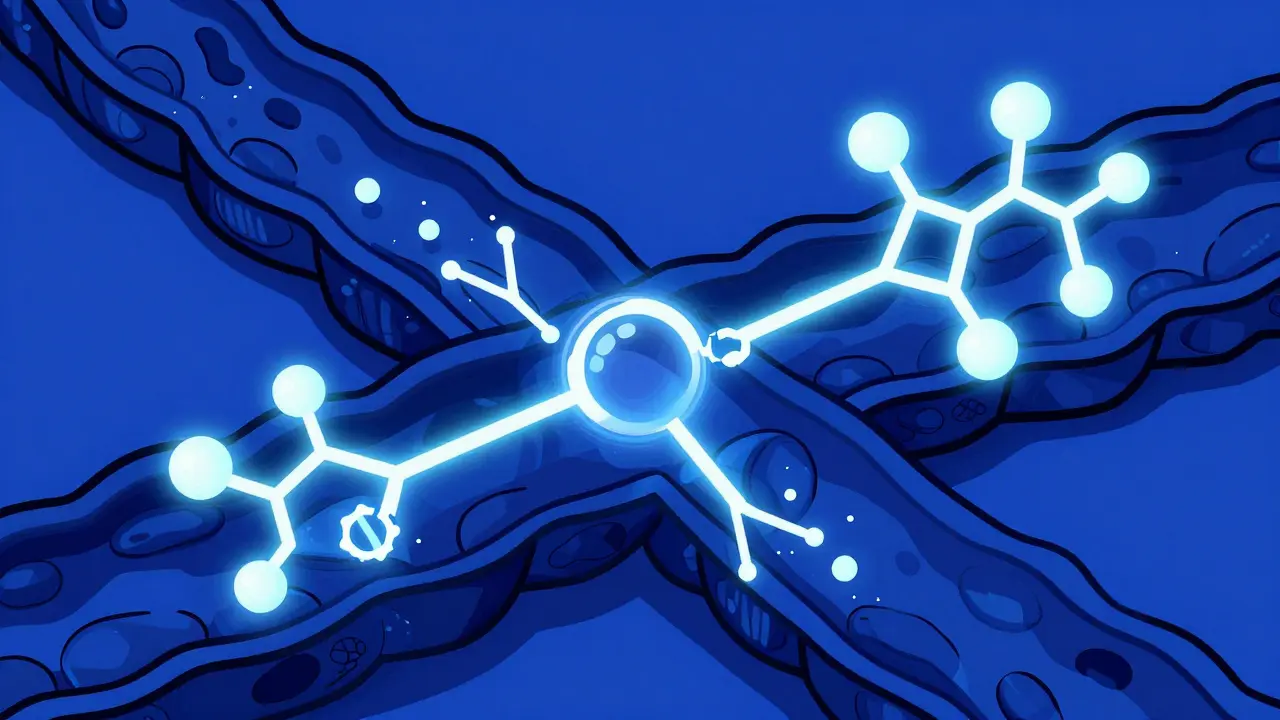
To understand the risk, you first need to see how L-Tryptophan works in your body. This amino acid serves as the building block for serotonin. When you eat protein or take a supplement, your gut absorbs it. Then, it crosses the protective membrane separating circulating blood from the brain tissue to reach your neurons. Once inside, enzymes convert L-Tryptophan into 5-hydroxytryptophan (5-HTP), and eventually into serotonin itself.
This process is straightforward in isolation. However, modern medicine intervenes here. Many common treatments target this exact system. If you flood your system with raw materials while simultaneously blocking the cleanup crew, you push chemistry into unfamiliar territory.
How Antidepressants Affect the Equation
The way these drugs work varies significantly. Most fall into the category of Selective Serotonin Reuptake Inhibitors, commonly known as SSRIs. These medications keep serotonin active in the synapse between nerve cells by stopping it from being recycled too quickly. You effectively have more signaling available in the gap.
Then you have Monoamine Oxidase Inhibitors (MAOIs). These work differently; they stop the breakdown of serotonin entirely. Adding extra precursor material like tryptophan to this mix is akin to pouring gasoline on a fire that you're already trying to control. Recent data suggests that patients on MAOIs face higher risks than those on newer generations of antidepressants, though no class is immune.
Even non-serotonergic agents like Bupropion show different interaction profiles. While Bupropion affects dopamine and norepinephrine, combining it with tryptophan doesn't usually trigger the same immediate chemical surge, making it relatively safer in terms of serotonin overload, though individual reactions vary widely.

Risk Factors and Historical Context
Safety isn't just about theory; history provides stark warnings. In 1989, a manufacturing contamination event linked specific batches of the supplement to Eosinophilia-Myalgia Syndrome. This condition caused severe muscle pain and blood cell abnormalities, resulting in hundreds of hospitalizations and dozens of deaths. The FDA restricted commercial production for decades following this incident.
| Medication Class | Risk Level | Primary Mechanism Conflict |
|---|---|---|
| MAOIs | High | Total blockage of serotonin breakdown combined with increased synthesis. |
| SSRIs | Moderate to High | Prevented reuptake plus increased serotonin production from precursor supplementation. |
| Bupropion | Low | Affects dopamine/norepinephrine primarily; minimal direct serotonin pathway interference. |
The lesson here remains vital: product quality matters immensely. Modern regulations are stricter, but supplement testing is voluntary in many regions. You cannot assume every bottle on a shelf meets pharmaceutical-grade standards. Contamination remains a variable you can't fully eliminate without independent third-party verification.
Recognizing Serotonin Toxicity
So, what actually happens when too much serotonin builds up? Your body begins showing signs of autonomic instability. Early symptoms often mimic a bad flu. You might feel agitated, confused, or experience rapid heartbeat and sweating. These signs usually appear within hours of starting a combination.
If the levels continue to climb, it progresses to physical rigidity and high fever. This state requires emergency care. The window between feeling "unwell" and needing urgent intervention can be short. Clinicians recommend tracking any change in mood or physical sensation closely if you decide to experiment with augmentation strategies under supervision.

Navigating Safe Usage
Does this mean you can never use the supplement together? Not necessarily. Some clinicians utilize low-dose augmentation to help patients who aren't responding fully to standard medication alone. Success rates for this strategy hit around 63% in partial responders according to clinical trials published recently.
However, the protocol changes how you approach dosing. Start small-usually 500mg per day. Monitor for a week. Increase only if tolerated. Never jump straight to 3 grams, which is sometimes recommended for standalone therapy. Keeping plasma levels stable, ideally between 80-120 micromoles per liter, helps mitigate sudden spikes.
You also need to watch your diet. Foods rich in tryptophan like turkey, cheese, and milk contribute to your total load. Combining a meal heavy in protein with a high-dose pill while on medication creates a cumulative effect that is hard to predict.
Monitoring and Medical Oversight
Professional guidance is non-negotiable here. A physician network survey noted that over 70% of psychiatrists avoid recommending these supplements due to unpredictable interactions. They prefer proven pharmacological interventions where dosages are precise and consistent.
If you proceed, ask for baseline blood work. Tracking serum tryptophan levels ensures you stay within the therapeutic window. The American Psychiatric Association notes that therapeutic trials require 4 to 6 weeks to assess efficacy accurately. Rushing the process leads to false conclusions about benefit versus risk.
Your specific genetic makeup also plays a role. Enzymes like tryptophan hydroxylase vary in efficiency among individuals. Two people taking the exact same amount may have vastly different internal responses. This variance makes general internet advice unreliable for personal health decisions.
Frequently Asked Questions
Can I take L-Tryptophan if I am on Zoloft?
Zoloft is an SSRI. Combining it with L-Tryptophan increases serotonin levels significantly. You should only do this under strict doctor supervision due to the risk of serotonin syndrome.
What is a safe dose of L-Tryptophan?
For general sleep support, doses of 500mg to 1,000mg are common. For depression augmentation under medical care, 3g/day is sometimes used, but starting low is critical to monitor tolerance.
Does L-Tryptophan cause serotonin syndrome on its own?
Rarely. It usually occurs when mixed with other serotonergic drugs like SSRIs or SNRIs. The additive effect pushes chemical levels beyond the body's ability to regulate them safely.
Are there safer alternatives to L-Tryptophan?
Magnesium glycinate or herbal remedies like St. John’s Wort are options, but St. John’s Wort also interacts with antidepressants. Always discuss alternatives with your provider first.
How long does it take to feel effects?
Sleep improvements may happen within days. Mood benefits typically take 4 to 6 weeks of consistent use. Rapid changes indicate potential toxicity rather than improvement.



11 Comments
Richard Kubíček-29 March 2026
Biological pathways reveal how interconnected systems function.
Serotonin regulation requires precise control mechanisms.
Supplement interaction changes these dynamics significantly.
Natural products do not guarantee safety automatically.
Chemical overlap creates potential instability zones.
Caution represents the only responsible approach here.
Science dictates specific monitoring requirements strictly.
Mismanagement triggers physiological responses quickly.
Homeostasis maintenance depends on careful inputs.
Modern medicine offers tools for verification.
Patient agency remains crucial throughout the process.
Educated decisions mitigate unforeseen adverse outcomes.
Respecting limits preserves overall wellness status.
Knowledge empowers better health management practices.
We must balance innovation with proven safety protocols.
Integration strategies require professional oversight always.
walker texaxsranger-30 March 2026
big pharma dependency loops prevent natural supplementation pathways from working correctly due to suppressed enzyme activity levels regulatory bodies prioritize stock prices over public safety data suppression happens frequently during clinical trial phases synthesis purity varies wildly across manufacturing batches trust the metabolic charts not the marketing copy always verify third party testing results independently
gina macabuhay- 1 April 2026
People continue to ignore basic biological principles daily.
They assume supplements are harmless candy.
The risk of contamination remains high despite regulations.
Medical professionals warn against self-experimentation constantly.
Yet individuals seek shortcuts online instead.
Ignoring the data on eosinophilia syndrome is foolish.
You cannot simply bypass established medical protocols safely.
Responsibility lies with the consumer ultimately.
Blaming the system while taking unchecked risks is immature.
Follow the guidelines written by experts properly.
There is no benefit to gambling with your health.
Tommy Nguyen- 2 April 2026
talk to your doctor before mixing supplements with meds
Eva Maes- 3 April 2026
The biochemical interplay creates a volatile tapestry of neurochemical signals.
Serotonin accumulation acts like a pressure cooker under tension.
Regulatory mechanisms strain under the dual assault of precursors and inhibitors.
Individual genetic variance dictates the breaking point significantly.
Some metabolize enzymes rapidly while others accumulate toxic levels silently.
Clinical oversight becomes the only reliable safeguard against catastrophe.
Statistical significance in trials rarely captures rare outliers effectively.
Personal anecdotes fail to represent aggregate safety margins accurately.
Prudence demands empirical validation before integration.
Monique Louise Hill- 4 April 2026
You really should stop trying to hack your own biology casually !!
Self medication feels empowering but carries immense consequences !!
Respect the limits set by medical professionals always !!
There is a time and place for experimentation !!
This is not one of those situations definitely !!
Safety first mentality saves lives genuinely !!
🇦🇺⏪💉❌
Austin Oguche- 5 April 2026
adherence to protocol ensures physiological stability interaction profiles require expert assessment before any supplement introduction historical context informs current safety standards patient education remains the primary defense mechanism against adverse events
Monique Ball- 7 April 2026
The chemical risks involve serious biological complications!!
You need to respect the underlying biology!!
The serotonin pathway acts as a delicate balance!!
Do not ignore the warning signs ever!!
Many people think natural means safe always!!
That mindset becomes incredibly dangerous eventually!!
Your brain chemistry remains extremely fragile!!
Too much serotonin causes severe physical issues!!
It can lead to hospitalization sadly!!
Please read the product labels carefully!!
Consult your prescribing physician beforehand!!
They possess your full medical history!!
Trust professional advice over forum posts!!
Life safety ranks as priority number one!!
Be cautious regarding health decisions!!
Always prioritize wellbeing above convenience!
🧠💊⚠️😌❤️
Devon Riley- 8 April 2026
i hear what you are saying about responsibility 😌
it is important to be careful with our choices
many people feel overwhelmed by all the information available
patience goes a long way here
understanding the history helps us move forward safely
we all want the best outcomes for health 💙
Sarah Klingenberg- 9 April 2026
conspiracy theories might miss the actual clinical data available today :)
science moves forward slowly but steady
we still need to prioritize verified medical advice over speculation
staying informed is good but paranoia helps nobody :)
let us focus on safe practices together :)
Shawn Sauve-10 April 2026
valid points about individual variance indeed :)
genetics play a massive role in metabolism rates
everyone processes chemicals differently so personalized plans matter most 👍
sticking to professional guidance ensures safety boundaries remain intact
thanks for sharing the detailed analysis 👏